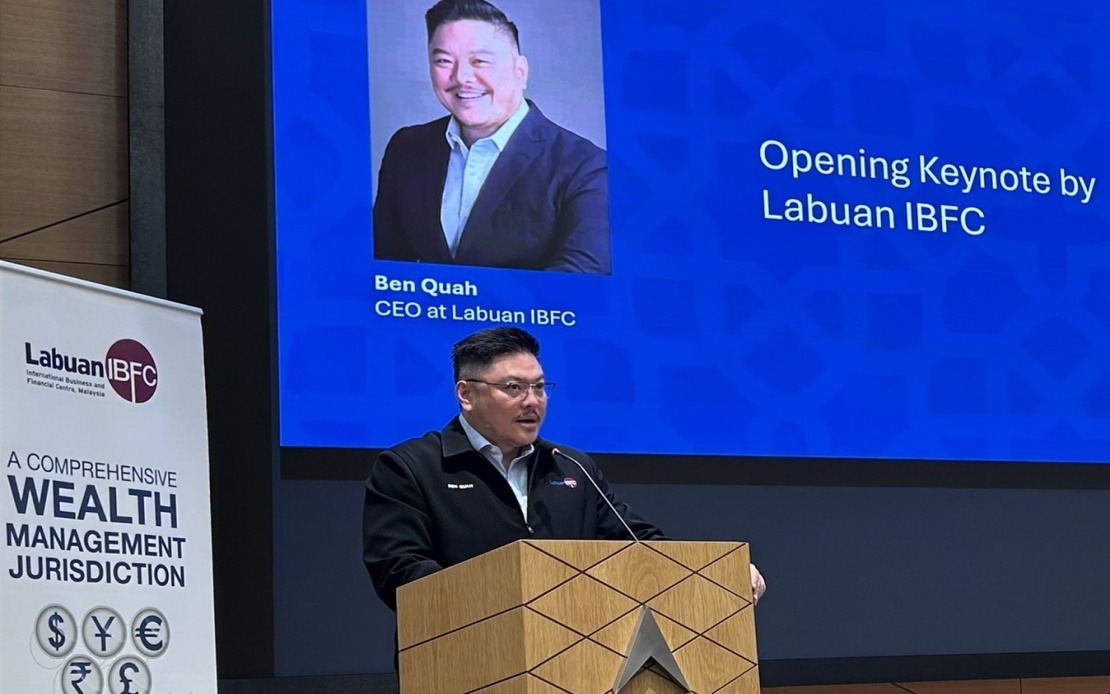
A major industry gathering in Kuala Lumpur has underscored Malaysia's commitment to positioning itself as a premier hub for Islamic private wealth management and cross-border asset structuring. Labuan IBFC Incorporated Sdn Bhd, which serves as the official promoter for the Labuan International Business and Financial Centre, organised the Islamic Wealth & Legacy Forum 2026 on August 13th alongside two prominent professional bodies: the Association of Shariah Advisors in Islamic Finance Malaysia (ASAS) and the Society of Trust and Estate Practitioners (STEP) Malaysia. The event brought together estate planners, Shariah scholars, wealth managers, legal practitioners and trust specialists to examine how Islamic principles can be integrated with contemporary financial structures to safeguard and transfer family assets across generations.
The forum's theme, "Beyond Faraid: Islamic Wealth Governance, Labuan Structures and Legacy Continuity," signals a shift in how Islamic estate planning is being approached across the region. While faraid—the classical Islamic law of inheritance—forms the spiritual and legal foundation for Muslim succession, practitioners increasingly recognise that modern family situations, international business interests and complex asset holdings demand supplementary planning mechanisms. The conference deliberately framed this expansion not as a departure from Islamic principles but as a sophisticated application of them, enabling families to fulfil both their religious obligations and practical objectives in an interconnected global economy.
Labuan IBFC Inc Chief Executive Officer Ben Quah articulated the centre's strategic positioning during his keynote address, emphasising that as wealth accumulation becomes increasingly transnational, families require flexible instruments that deliver asset protection alongside institutional continuity. Quah highlighted Labuan IBFC's capacity to serve as a platform accommodating Islamic private wealth solutions while reinforcing Malaysia's broader leadership in the global Islamic financial services sector. This positioning reflects competition among Islamic finance hubs—including the United Arab Emirates, Bahrain and Singapore—to capture the growing pool of high-net-worth individuals in Muslim-majority regions seeking compliant wealth management options.
The partnership structure underlying the forum itself merits attention. STEP Malaysia Branch Chair Farah Deba, in her welcome remarks, articulated how each organisation contributes distinct expertise to the ecosystem. STEP brings intergenerational advisory experience accumulated across multiple jurisdictions, Labuan IBFC provides the international structuring infrastructure and technical know-how for cross-border arrangements, while ASAS supplies the Shariah validation that ensures all solutions remain compliant with Islamic jurisprudence. This tripartite approach reflects a maturing recognition that Islamic wealth planning cannot be siloed into purely religious or purely technical domains but requires genuine integration of both perspectives from inception.
The forum's substantive sessions addressed several interconnected challenges facing practitioners. The opening segment, titled "Beyond Faraid—The Real Challenges in Muslim Estate Administration," examined the friction points that emerge when translating theoretical succession intentions into operational estate plans. These include scenarios where international assets fall outside classical Islamic inheritance frameworks, situations where multiple family branches span different jurisdictions with divergent legal systems, and instances where business continuity considerations create tension with strict faraid distributions. By acknowledging these real-world complications openly, the forum validated concerns that practitioners frequently encounter yet may hesitate to raise in more traditional scholarly settings.
A subsequent dialogue session concentrated on governance mechanisms and documentation practices that ensure wealth arrangements operate consistently with Shariah principles throughout their implementation phase. This reflects a critical gap in many Islamic finance products: compliance at origination does not guarantee sustained adherence as circumstances evolve, assets are reallocated or market conditions shift. Proper documentation and governance structures serve as the institutional memory and decision-making apparatus that keep arrangements aligned with their founding Islamic objectives, even as family circumstances or financial markets change over years or decades.
The afternoon programming shifted toward practical application, examining how specific financial instruments—including takaful insurance products, trust structures, liquidity vehicles and alternative asset protection mechanisms—can be deployed to support preservation objectives, manage risk exposures and facilitate orderly wealth transfer across generations. Panellists outlined how these various tools complement classical Islamic succession principles without displacing them. For instance, takaful products can be structured to ensure adequate liquidity for estate administration costs and inheritance distributions, while trusts can provide governance frameworks that stabilise family asset management across generational transitions whilst maintaining Shariah compliance through proper Shariah governance oversight.
ASAS Exco Member Yusaini Yusof delivered closing remarks emphasising that robust Shariah governance ensures legacies are properly structured, successfully implemented and ultimately serve Maqasid Shariah—the foundational objectives of Islamic law. This framing situates Shariah compliance not as an external constraint imposed upon wealth planning but as its organising principle and ultimate rationale. ASAS committed to expanding professional engagement and elevating standards across the broader Shariah practitioner community, signalling that the association views this forum as a catalyst for sectoral development rather than a singular event.
The forum builds upon a memorandum of understanding established between Labuan IBFC Inc and ASAS, representing a formal commitment to collaborative standard-setting and professional development. This partnership architecture carries significance for the Malaysian financial services sector as it demonstrates coordination between international finance infrastructure (Labuan IBFC), Islamic jurisprudential expertise (ASAS) and professional practice standards (STEP). Such integration positions Malaysia distinctly within the Islamic finance landscape, offering clients not merely compliant structures but comprehensive ecosystems combining technical sophistication with authentic Shariah scholarship.
For Malaysian wealth managers, estate practitioners and families holding significant assets, the forum signals that sophisticated Islamic wealth planning has matured considerably. Rather than treating religious compliance and financial effectiveness as competing objectives, the forum demonstrated how they can reinforce one another. The gathering also highlights how Labuan IBFC, often perceived primarily as an offshore banking hub, has evolved into a specialised platform for Islamic private wealth solutions—a positioning that may attract regional high-net-worth individuals seeking to structure assets in ways that reflect their values without compromising returns or flexibility.
The broader regional implications extend beyond Malaysia's borders. As Islamic wealth markets expand across Southeast Asia, the Middle East and beyond, established standards and professional frameworks become increasingly valuable. This forum represents Malaysia's effort to establish itself not merely as a financial centre offering compliant products but as a thought leadership platform defining best practices in Islamic wealth governance. For practitioners across ASEAN and beyond, Malaysia's ecosystem provides templates and institutional partnerships that can be adapted to local contexts, potentially attracting professional networks and clients seeking established centres of excellence in Islamic financial services.

