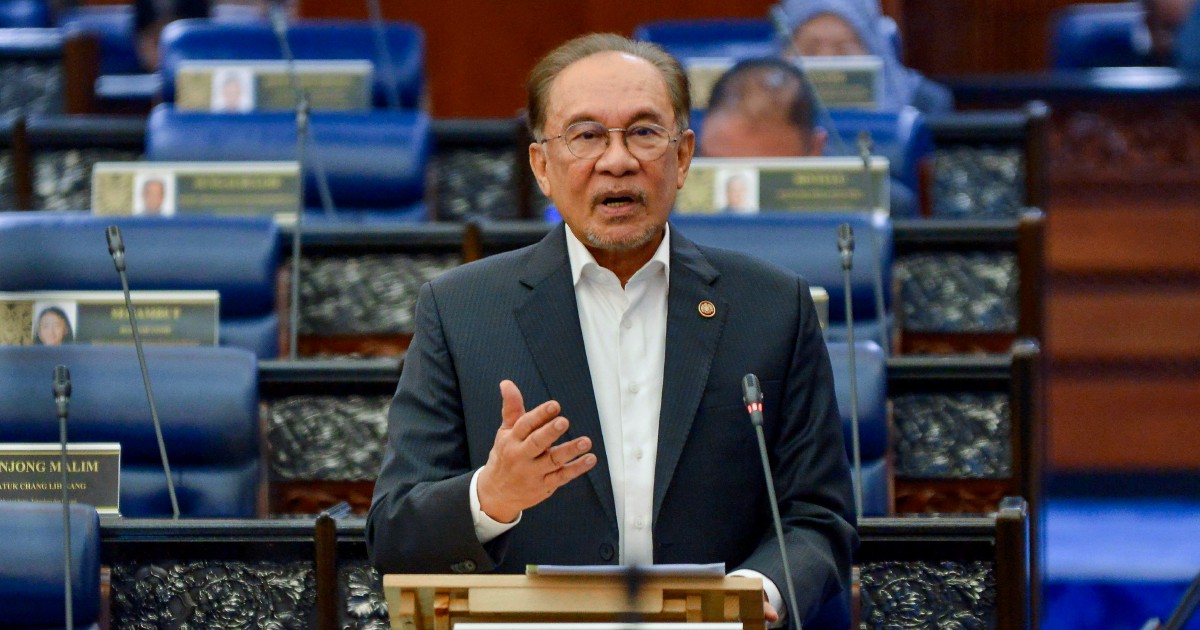
The Retirement Fund Incorporated, known locally as KWAP, generates substantial investment returns that nonetheless represent only a fraction of Malaysia's mounting public pension commitments. Prime Minister Datuk Seri Anwar Ibrahim disclosed that the fund's annual earnings of RM12.9 billion fall drastically short of the government's pension bill, which has swelled to nearly RM45 billion per year. This widening gap underscores an emerging fiscal pressure that policymakers must confront as the nation's retired civil service population expands and longevity increases.
The funding shortfall illuminates a critical aspect of Malaysia's long-term fiscal sustainability. With pension obligations consuming nearly three times the investment income that KWAP generates annually, the government must allocate general budget revenue to make up the difference. This diversion of public funds from other developmental priorities—whether infrastructure, education, or healthcare—represents a hidden cost of Malaysia's current pension structure and deserves closer scrutiny from both policymakers and taxpayers who bear the ultimate burden.
MALAYSIA's public pension system represents a defined benefit scheme established decades ago when actuarial assumptions reflected lower life expectancy and smaller retiree populations. The formula grants pensioners a proportion of their final salary indexed to length of service, a model that proved sustainable when the ratio of active workers to retirees remained favourable. However, demographic shifts have altered this calculus fundamentally. Malaysians today live substantially longer than those who drafted the original pension legislation, and the civil service has expanded considerably since the 1970s and 1980s when many of the current retirees entered government employment.
KWAP itself represents an evolution in how Malaysia manages retirement assets. Established to consolidate and professionally manage public sector pension funds, the entity invests contributions and accumulated reserves in capital markets, real estate, and other income-generating assets to supplement pension payments. Investment performance matters significantly; strong returns reduce the reliance on government transfers, while weak performance exacerbates the funding gap. At RM12.9 billion in annual earnings, KWAP demonstrates competent fund management, yet the gap between these returns and actual obligations remains mathematically insurmountable under current arrangements.
The implications for Malaysia's fiscal trajectory are substantial. Government spending on pensions already comprises a meaningful portion of the federal budget, and without structural reform, this percentage will continue rising. Future prime ministers and finance ministers will face increasingly difficult choices: raise taxes, reduce pension benefits for new retirees, increase employee contributions, extend retirement ages, or all of the above. Each option carries political and social consequences, which explains why pension reform often stalls despite obvious necessity.
Regional comparisons offer instructive context. Several Southeast Asian economies have already grappled with similar pressures and implemented reforms ranging from gradual benefit reductions to hybrid systems combining defined benefits with individual retirement accounts. Singapore's Central Provident Fund system, while different in structure, demonstrates how individual accounts with government co-contributions can spread retirement funding responsibility. Thailand and Indonesia have explored parametric reforms that adjust contribution rates and retirement ages incrementally. Malaysia's policymakers might learn from these regional experiences as they contemplate their own reform agenda.
The challenge extends beyond pure numbers. Malaysia's retirees depend on pensions as primary income sources, and any reform affecting benefit levels must be implemented thoughtfully to avoid hardship among vulnerable populations. Public sector workers who made career decisions based on promised defined benefits have legitimate expectations regarding retirement security. This creates tension between fiscal responsibility and intergenerational fairness—protecting existing retirees while establishing sustainable systems for future generations.
Anwar's public acknowledgment of the funding gap suggests growing political willingness to address the issue candidly. Previous administrations often obscured such discrepancies or treated pension obligations as inevitable costs without exploring systemic solutions. Transparency about the problem represents a prerequisite for developing public consensus around necessary reforms. Malaysian citizens and taxpayers increasingly expect their leaders to grapple with long-term fiscal challenges rather than deferring them to future budgets.
The pathway forward likely involves multiple elements rather than a single solution. Improving KWAP's investment performance through enhanced asset management could narrow the gap somewhat, though even robust returns cannot bridge a shortfall of this magnitude. Actuarial reviews might identify opportunities to streamline administration or eliminate inefficiencies. More fundamentally, policymakers must consider whether a pension system designed for the 1950s and 1960s remains appropriate for Malaysia's 21st-century economy and demographics.
For Malaysian taxpayers and public employees alike, this fiscal reality carries important implications. Current employees might face higher contribution rates or adjusted benefit formulas. Private sector workers cross-subsidizing public pensions through tax revenue deserve recognition of this arrangement. Retirees should understand that their pension sustainability depends on a functioning, solvent fiscal system—a reality that connects retirement security to broader economic management.
The RM32 billion annual gap between KWAP's earnings and pension obligations represents not merely an accounting problem but a defining fiscal challenge for Malaysia. How the government addresses this gap will influence everything from tax policy to spending priorities for decades ahead. The conversation initiated by Anwar's disclosure provides an opportunity to move beyond denying the problem toward discussing realistic, sustainable solutions.

