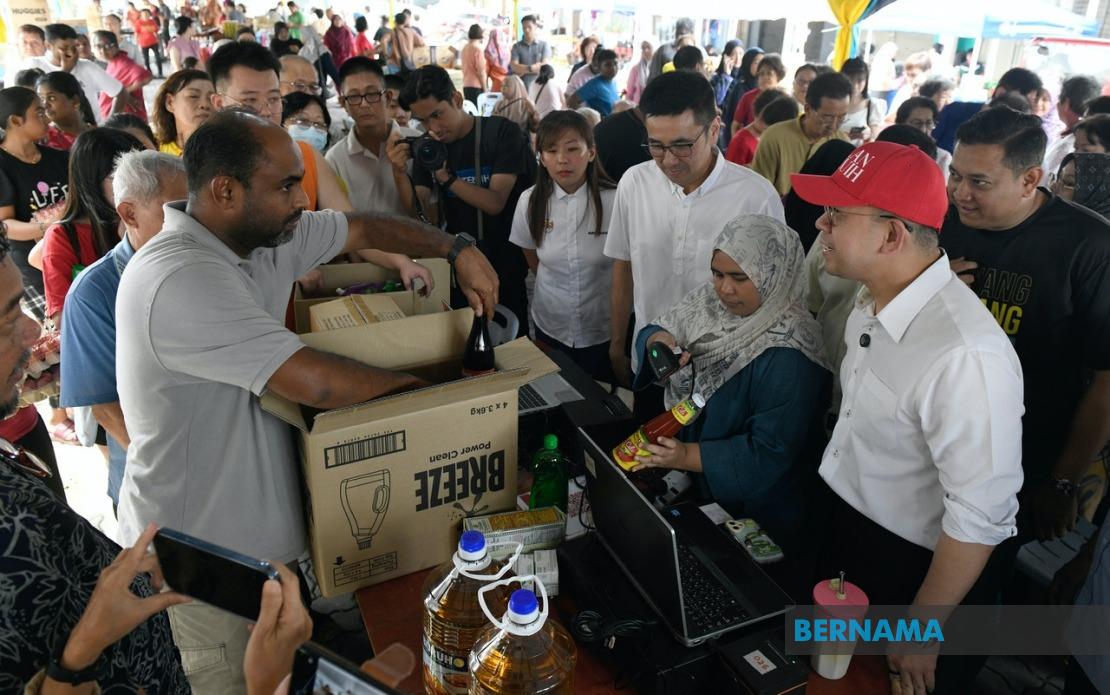
The Malaysian government is ramping up support for micro, small and medium enterprises through targeted grassroots programmes designed to help local businesses capitalise on expansion in the country's wholesale and retail sector. Speaking at the launch of a KUSKOP initiative in Nibong Tebal, Entrepreneur and Cooperatives Development Minister Steven Sim Chee Keong outlined how the Ministry of Entrepreneur and Cooperatives Development plans to deepen its engagement with MSMEs and cooperative organisations, positioning them to benefit from sustained growth in trade activities.
Data from the Department of Statistics Malaysia presents an encouraging picture of sector momentum. The wholesale and retail trade segment generated sales valued at nearly RM175 billion in April, representing a robust year-on-year expansion of 15.3 per cent. This trajectory reflects underlying domestic strength, suggesting that consumer spending and business-to-business transactions remain resilient even as international headwinds intensify. The Minister attributed this resilience to coordinated action across government and business to contain living costs, manage price inflation and lift household purchasing power, creating favourable conditions for retailers and wholesalers alike.
Sim's remarks underscore a critical policy priority: ensuring that prosperity from sector expansion reaches beyond large corporations to the entrepreneurs and cooperative networks that form the backbone of Malaysia's grassroots economy. The Jualan MADANI KUSKOP programme, unveiled at the Jawi state constituency event, exemplifies this commitment to ground-level engagement. By working directly with small operators and cooperative groups rather than relying solely on top-down stimulus, the government aims to build sustainable momentum in trade participation among segments that historically face barriers to market access and growth capital.
The global economic landscape presents both challenges and opportunities for Malaysian traders. Tariff disputes, trade tensions and geopolitical friction have created uncertainty across international markets, yet Malaysia's positioning as an open economy has allowed the nation to weather these storms better than many peers. This relative stability creates a window for local small businesses to strengthen their domestic and regional footprints before external volatility intensifies. The Ministry's intervention thus serves a dual purpose: defending the people's economy against external shocks while nurturing indigenous entrepreneurial capacity.
Sim, who represents Bukit Mertajam in Parliament, emphasised that government action alone cannot sustain growth. Instead, collaborative effort across the public sector, private enterprise and community organisations remains essential to maintaining trade momentum. This framing reflects a broader strategic shift toward shared responsibility for economic inclusion, moving away from a passive reliance on macroeconomic management toward active cultivation of grassroots business capability. For MSMEs and cooperatives, this means more accessible pathways to training, financing and market linkages.
The expansion of wholesale and retail activities opens concrete opportunities for smaller players to enlarge their customer networks and deepen participation in supply chains. Many MSMEs operate in relative isolation from formal wholesale distribution systems or modern retail environments, constraining their growth potential. KUSKOP's programmes are designed to bridge these gaps, connecting entrepreneurs with procurement networks, digital sales channels and cooperative purchasing arrangements that enhance competitiveness. Cooperatives, in particular, benefit from collective bargaining power and shared infrastructure that individual traders cannot achieve alone.
The timing of this initiative reflects awareness that prolonged global uncertainty may depress consumer confidence and business investment in some quarters. By maintaining domestic momentum and expanding the economic base among grassroots operators, Malaysia reduces vulnerability to external downturns. When local entrepreneurs succeed and employment expands, domestic spending sustains itself through internal circulation of purchasing power, cushioning the broader economy against external shocks. This countercyclical logic drives the Ministry's emphasis on nurturing broad-based participation in retail and wholesale activity.
Contextually, Malaysia's experience over recent years has highlighted both the resilience and fragility of trade sectors dependent on consumer confidence and business sentiment. Supporting MSMEs and cooperatives is therefore not merely a matter of equity or poverty alleviation, but of macroeconomic stabilisation. When small traders thrive, they hire workers, purchase from suppliers and invest in upgrades, multiplying economic stimulus throughout communities. This virtuous cycle has long been recognised in development economics, yet implementation remains inconsistent across many emerging markets.
For regional observers, Malaysia's approach offers a model of how middle-income nations can balance openness to global trade with deliberate nurturing of domestic entrepreneurial ecosystems. Rather than accepting concentration of wealth and opportunity among large firms with international reach, strategic government support for grassroots business builds resilience and spreads prosperity more widely. The success of KUSKOP initiatives will likely influence policy discussions across Southeast Asia, where similar tensions between global integration and local economic empowerment persist.
Looking ahead, the sustainability of this growth momentum depends on whether KUSKOP's programmes can overcome longstanding barriers that limit MSME participation in formal trade. Access to credit, business training, quality infrastructure and reliable supply chains remain critical constraints in many segments. If the Ministry can meaningfully address these challenges through its grassroots partnerships, the 15.3 per cent growth rate observed in April may reflect just the beginning of broader acceleration in small business participation. Conversely, if programmes remain superficial or insufficiently resourced, growth may concentrate among established players, limiting the inclusive economic expansion that government rhetoric emphasises.
Sim's statement that benefits from economic growth must be "comprehensively" distributed reflects political and economic recognition that unequal prosperity breeds social tension and undermines long-term stability. By positioning local entrepreneurs as key drivers of national development, the government signals that inclusive growth is not charity but strategic necessity. Whether KUSKOP delivers on this ambitious framing will substantially influence Malaysia's capacity to navigate coming years of global uncertainty while maintaining domestic social cohesion.

