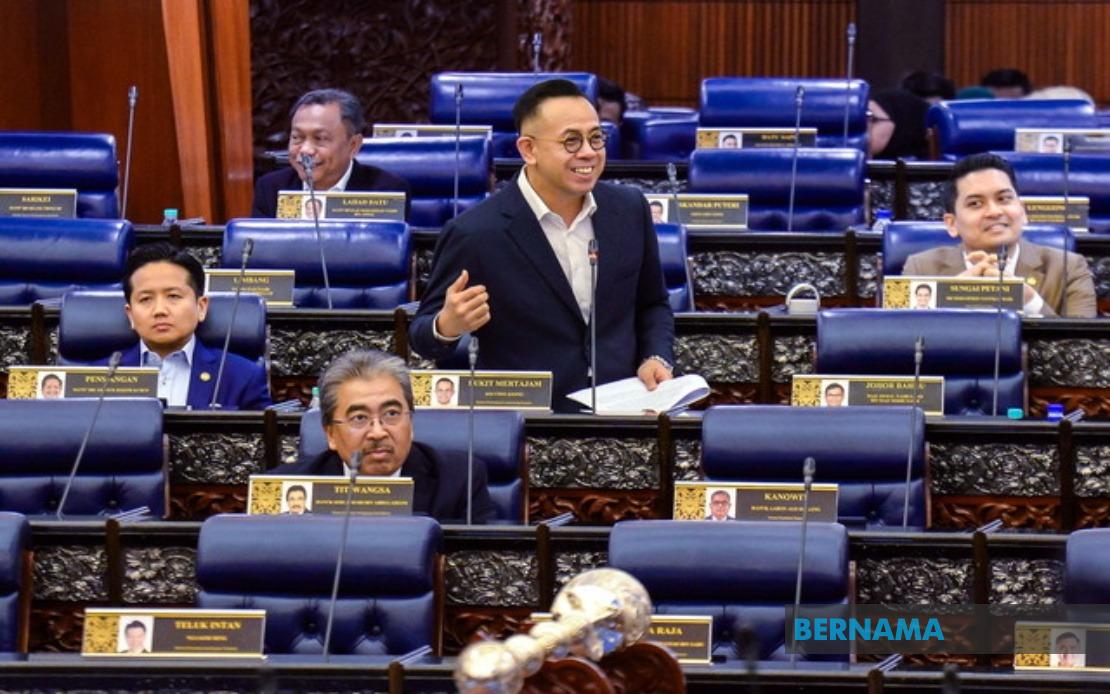
The Ministry of Entrepreneur and Cooperative Development, known as KUSKOP, has channelled nearly RM3 billion into targeted initiatives aimed at strengthening Bumiputera entrepreneurship between 2023 and 2025, according to Minister Steven Sim Chee Keong. The substantial investment underscores the government's continued focus on structured economic empowerment within Malaysia's priority economic community, a cornerstone of national policy that seeks to narrow wealth disparities and foster indigenous business competitiveness.
Sim outlined during parliamentary Question Time that the ministry evaluates programme success not merely through funds dispersed, but through concrete measurable outcomes delivered to participating entrepreneurs. The key performance indicators include a minimum 20 per cent elevation in sales revenue among programme beneficiaries and the successful expansion of approximately 150 companies that have grown their operational scale. This shift towards outcome-based assessment rather than input-focused reporting reflects an evolving maturity in how development agencies quantify returns on public investment and demonstrate tangible value to taxpayers.
For the current financial year through May, KUSKOP approved financing totalling RM5 billion that has reached nearly 180,000 entrepreneurs across all racial categories and diverse business sectors nationwide. The breadth of this outreach indicates a scaling-up of deployment mechanisms and suggests the infrastructure supporting entrepreneur access to these programmes has become more effective. Between 2025 and May 2026, a dedicated Bumiputera entrepreneur scheme channelled RM1.407 billion to over 53,000 Bumiputera business owners, demonstrating sustained allocation to this priority cohort.
Within those Bumiputera-focused allocations, younger entrepreneurs have received particular attention, with 11,469 Bumiputera youth entrepreneurs accessing support worth exceeding RM251 million. This sub-segment focus reflects government recognition that young people often face steeper capital barriers when establishing ventures, and targeted youth programming addresses both economic inclusion and unemployment concerns in this demographic. The specificity of youth-directed resources suggests KUSKOP is developing differentiated strategies rather than applying uniform interventions across all entrepreneur age groups.
Beyond direct financing, KUSKOP is advancing the halal industry ecosystem through its various agencies, supporting entrepreneurs in obtaining halal certifications that unlock expanded market access both domestically and internationally. This sectoral focus aligns with Malaysia's strategic positioning as a global halal hub and recognises that certification barriers frequently prevent otherwise capable entrepreneurs from accessing Muslim-majority markets. By embedding halal development into broader empowerment frameworks, the ministry addresses a specific structural constraint rather than treating all business challenges identically.
The complexity of coordinating entrepreneur support across government prompted parliamentary suggestions for a unified database or single-window mechanism consolidating assistance offerings from multiple agencies. Recognising this coordination challenge, KUSKOP designated SME Corp Malaysia as the central coordinating body responsible for aligning financing, grants, funds, and support systems under one institutional roof. This centralisation aims to reduce the administrative friction entrepreneurs face when navigating fragmented government programmes scattered across numerous departments.
SME Corp functions as a facilitation hub, managing information dissemination, channelling applications to appropriate agencies, and connecting entrepreneurs seeking resources with the specific government body most suited to their needs. The establishment of such intermediary coordination bodies reflects lessons learned from previous policy implementations where entrepreneurs struggled to identify which agencies offered relevant support. By creating a professional filtering and matching function, KUSKOP reduces transaction costs and improves programme effectiveness by ensuring better fit between applicant characteristics and available instruments.
Complementing institutional coordination, KUSKOP has developed a digital portal functioning as a one-stop-centre that catalogues support offerings from more than 60 government agencies. This comprehensive listing approach provides entrepreneurs with searchable access to the full universe of available assistance, addressing information asymmetries that previously disadvantaged less-connected business owners. The portal development reflects recognition that many potentially eligible entrepreneurs simply remain unaware support exists, and that technical barriers to discovering programmes perpetuate underutilisation of allocated budgets.
The scale of programming coordinated through these mechanisms raises important questions for Malaysia's broader entrepreneurship ecosystem. With RM5 billion deployed annually and tens of thousands of entrepreneurs accessing support, the sheer volume of government engagement suggests reliance on publicly-funded schemes rather than organic capital market development. While such programmes serve important equity objectives and address documented market failures, their sustainability requires continuous government budget allocation, raising questions about whether they adequately develop entrepreneurs' capacity to access private financing channels independently.
For Southeast Asian observers, Malaysia's structured approach to Bumiputera entrepreneurship offers a case study in preferential economic policies integrated with performance measurement frameworks. The explicit focus on measurable sales growth and business expansion metrics demonstrates how governments can move beyond simple disbursement reporting toward accountability for actual business outcomes. This evolution in programme design represents potential lessons for other regional governments pursuing similar wealth-redistribution objectives, though the cultural and historical contexts of other nations differ substantially from Malaysia's constitutional protections for Bumiputera status.
The programmes' emphasis on younger entrepreneurs and emerging sectors like halal industries suggests KUSKOP recognises that static protectionist approaches yield diminishing returns, and that sustainable competitiveness requires supporting innovation and market-responsive business models. Youth engagement particularly addresses demographic concerns and potential social frustration if younger generations perceive limited economic opportunity despite preferential policy frameworks. By targeting resources toward both demographic renewal and sector modernisation, the ministry attempts to balance immediate equity goals with longer-term structural economic transformation.
Looking forward, the success of KUSKOP's initiatives will ultimately depend on whether supported entrepreneurs transition toward self-sustaining profitability and market viability rather than maintaining permanent reliance on subsidised financing. The 20 per cent sales growth benchmark indicates expectation of measurable business trajectory improvement, yet sustained growth requires developing entrepreneurs' management capabilities, market positioning, and competitive differentiation beyond what initial capital infusions alone can provide. Complementary investments in business skills development, market linkage facilitation, and technology adoption may prove essential to converting KUSKOP's substantial financial commitment into durable entrepreneurial success.

