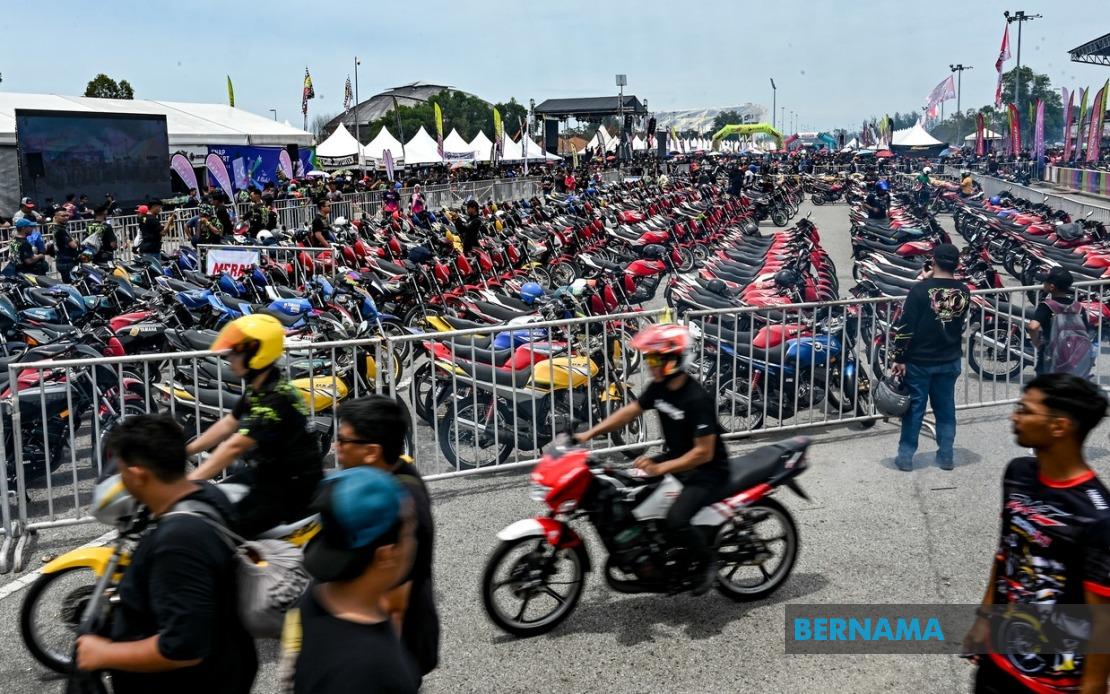
The Kuala Terengganu City Council (MBKT) has found itself bearing an unexpected financial burden after hosting the RXZ Members 8.0 event at the Gong Badak Motor Racing Circuit, with cleanup operations costing the local authority RM40,000. The motorsports gathering, held over the Friday-to-Saturday weekend, attracted crowds exceeding 100,000 people, but the scale of attendance appears to have overwhelmed waste management arrangements at the venue near Kuala Nerus.
According to Kuala Terengganu Mayor Lizan Che Mamat, the substantial expense reflects the true cost of managing a large-scale public event in the city. The RM40,000 outlay encompassed multiple operational challenges: additional payments for workers performing extended shifts, multiple trips by waste disposal lorries to transport collected material, and the extended operating hours required at the Sungai Ikan landfill facility to process the incoming waste. What began as a weekend entertainment event thus created ripple effects throughout the local council's operational structure and budget.
The volume of refuse recovered from the event site underscores the scale of the cleanup challenge MBKT faced. Sanitation crews collected approximately 130 tonnes of solid waste, with the bulk comprising food and beverage packaging from the estimated 100,000-plus attendees. This figure provides a stark illustration of the waste generation rate at large public gatherings in Malaysia—roughly 1.3 kilograms per person over the two-day period. The predominantly packaging-based composition suggests that food vendors and beverage stalls generated substantial quantities of disposable materials, a common feature of Malaysian motorsports and entertainment events.
What particularly frustrated local council officials was the apparent disregard for existing waste management infrastructure at the venue. Despite rubbish bins being strategically positioned throughout the Gong Badak circuit, attendees frequently discarded refuse indiscriminately rather than using designated collection points. This behaviour imposed an additional operational burden on MBKT's sanitation teams, who not only had to manage waste from formal collection points but also had to conduct extensive sweeping and pickup operations across the entire event site to restore cleanliness. The pattern reflects a broader challenge facing Malaysian municipalities: public awareness regarding environmental responsibility at large gatherings remains inconsistent.
Mayor Lizan acknowledged that the inadequate number of waste receptacles contributed to the problem, given that actual attendance substantially exceeded initial planning assumptions. However, he emphasized that even with insufficient bin capacity, attendees bore responsibility for depositing waste at designated zones rather than littering indiscriminately. This tension between infrastructure limitations and individual accountability represents a perennial challenge for event management in Malaysia. Large-scale events frequently attract participation levels that exceed organizer projections, rendering pre-event planning estimates obsolete within hours of commencement.
In response to this incident, MBKT has signalled an intention to implement stricter regulatory frameworks for future large-scale events. The council is considering requiring event organisers to submit comprehensive solid waste management plans as a mandatory component of the approval process. Such documentation would theoretically compel organisers to conduct detailed waste projections, designate adequate collection infrastructure, and arrange appropriate disposal capacity before events commence. This preventative approach reflects international best practices in event management, where environmental impact assessments increasingly precede approval.
Beyond regulatory changes, MBKT is also reconsidering the financial mechanisms by which event organisers contribute to cleanup costs. The council plans to review the existing cleaning deposit system imposed on event promoters. By potentially increasing these deposits or restructuring how they function, the local authority could shift more of the actual cleanup burden back to event organisers, reducing the financial exposure borne directly by ratepayers and municipal budgets. This recalibration reflects a principle that event organisers should internalize the full costs of their activities, including environmental remediation.
Mayor Lizan's comments also revealed an appreciation for the economic benefits that large-scale events bring to Terengganu. He acknowledged that motorsports gatherings and similar attractions stimulate tourism revenue and support local business activity. This pragmatic recognition indicates that MBKT does not seek to discourage major events but rather to establish conditions ensuring they occur without imposing undue financial strain on municipal resources. The challenge lies in balancing development and tourism growth against environmental stewardship and fiscal responsibility.
The RXZ Members 8.0 incident carries implications extending beyond Kuala Terengganu. As Malaysian cities increasingly bid for and host major events—from motorsports to music festivals to sporting competitions—waste management emerges as a critical planning component. Other local authorities monitoring this situation may adopt similar regulatory frameworks, creating a standardized expectation that event organisers must demonstrate environmental responsibility. For the event industry in Malaysia, this trend signals that waste management specifications will become increasingly central to event viability and approvals.
For attendees and the broader public, the RM40,000 cleanup cost serves as an instructive reminder that environmental responsibility extends beyond individual homes into public spaces. When large groups gather, the cumulative impact of poor waste practices becomes financially quantifiable and ultimately borne by taxpayers through municipal budgets. Changing public behaviour regarding littering at events requires sustained messaging about the real costs of indiscriminate waste disposal, particularly as Malaysian cities host growing numbers of large-scale entertainment and sporting activities.

