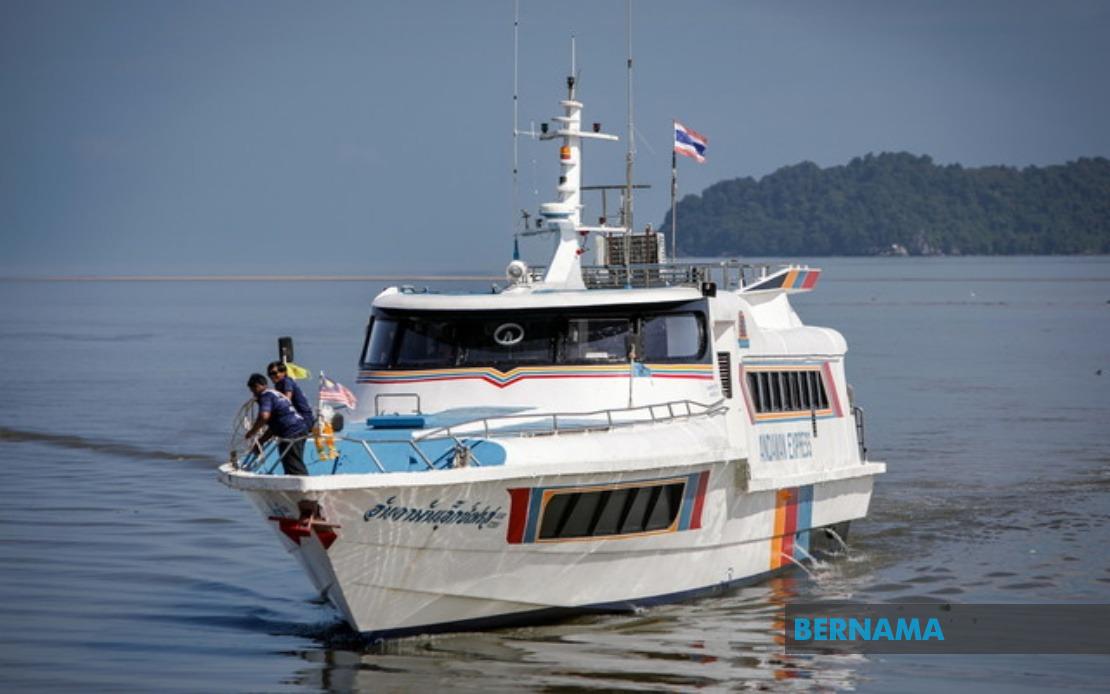
The maritime link between Kuala Perlis in Malaysia and Satun in Thailand will come back to life this Thursday, July 9, with the resumption of ferry services that have sat dormant since the COVID-19 pandemic disrupted cross-border travel across Southeast Asia. The restart of this strategic sea route represents more than a simple restoration of transport infrastructure—it signals renewed commitment to rebuilding tourism networks and deepening economic ties between two neighbouring countries that share considerable geographic and cultural proximity.
Perlis Menteri Besar Abu Bakar Hamzah unveiled the plans following a successful operational simulation conducted at Tammalang Jetty, where authorities tested protocols and coordinated procedures between Malaysian and Thai authorities. The exercise demonstrated that both governments have invested serious effort into ensuring the route functions smoothly from day one, with seamless coordination across customs, immigration, and maritime safety frameworks.
The reopening carries particular significance for regional tourism development, as it creates a potential catalyst for integrated promotional campaigns spanning three distinct UNESCO Global Geopark destinations. Abu Bakar outlined an ambitious vision in which the Perlis Geopark, Satun UNESCO Global Geopark, and Langkawi UNESCO Global Geopark would form a coordinated tourism corridor. This tripartite arrangement could allow visitors to explore diverse geological formations and natural attractions across both nations within a single itinerary, substantially enhancing the appeal of the broader region to international and domestic travellers alike.
To realise this vision, state authorities plan to establish a dedicated committee bringing together representatives from Perlis, Satun, and Langkawi. This administrative structure will address logistical challenges, harmonise marketing strategies, and develop complementary tourism packages that leverage each destination's unique characteristics. The framework acknowledges that modern cross-border tourism demands more than basic transportation—it requires coordinated branding, shared investment in visitor amenities, and aligned policy approaches to currency, visa procedures, and hospitality standards.
Fare competitiveness will be crucial to the service's commercial viability. Abu Bakar confirmed that the state government is actively negotiating with ferry operators to maintain reasonable pricing that encourages usage without compromising service quality or safety standards. The administration is additionally exploring promotional pricing schemes for the launch phase, recognising that rekindling passenger confidence after a three-year interruption requires strategic incentives. Such tactics help offset initial hesitancy and build customer habits that sustain demand once introductory offers expire.
Operations will commence with a cautious single daily departure, allowing operators to refine procedures, monitor safety protocols, and assess demand patterns before scaling up frequency. This measured approach reflects lessons learned from pandemic-era transportation disruptions and demonstrates a commitment to reliability rather than aggressive expansion that could overwhelm infrastructure. As passenger volumes grow and market demand becomes clearer, the frequency will increase accordingly, potentially expanding to multiple sailings during peak tourism seasons.
Simultaneously, Malaysia is conducting substantial physical upgrades at the Kuala Perlis Roll-on-Roll-off Terminal. Construction of a dedicated ferry route represents a targeted investment designed to streamline vehicle and passenger processing, reduce congestion during peak periods, and improve the overall terminal experience. Such infrastructure improvements signal confidence in the route's long-term viability and reflect recognition that adequate physical facilities directly influence traveller satisfaction and operational efficiency.
The simulation at Tammalang Jetty validated that both Malaysian and Thai stakeholders have established compatible safety protocols, standard operating procedures, and operational systems. All key agencies—encompassing ferry operators, port authorities, and maritime regulators—demonstrated readiness to manage the service safely and professionally. This institutional preparedness is particularly important given that cross-border maritime operations involve complex jurisdictional questions and require seamless communication between sovereign governments.
From a regulatory standpoint, the resumption required meticulous coordination with multiple Malaysian authorities including the Royal Malaysian Customs Department, Malaysian Immigration Department, and Marine Department, alongside their Thai counterparts. Abu Bakar confirmed that all necessary compliance requirements have been fulfilled, meaning travellers and cargo can move across the border through established legal frameworks designed to balance facilitation with security and revenue collection. This alignment of regulatory processes eliminates bureaucratic friction that might otherwise deter usage.
For Malaysia and Thailand more broadly, the ferry service's restart addresses the tourism sector's ongoing recovery from pandemic impacts. Regional economies throughout Southeast Asia have prioritised reopening cross-border routes as a foundational step in tourism recovery, recognising that international visitor spending drives employment in hospitality, retail, transport, and related sectors. The Kuala Perlis-Satun corridor, though modest in scale compared to major international hubs, carries outsized importance for Perlis and surrounding regions where tourism revenues significantly contribute to state gross domestic product.
The geographic position of the route creates natural advantages. Perlis, Malaysia's smallest state, has historically leveraged its location as a gateway to southern Thailand's islands and cultural attractions. Conversely, Satun's coastal communities benefit from access to Malaysian shopping, dining, and entertainment options. Reviving the ferry service restores this mutually beneficial exchange while reducing travel friction that previously forced visitors onto longer, more expensive alternative routes.
Looking forward, the success of this initiative may establish a model for other cross-border maritime connections throughout Southeast Asia that similarly deteriorated during pandemic years. Policymakers across the region have recognised that transportation restoration requires not just confidence in travel safety but also coordinated infrastructure investment, attractive pricing, and integrated tourism marketing. The Kuala Perlis-Satun example demonstrates that such restoration is achievable when neighbouring governments prioritise cooperation and commit resources to regional economic integration.
As the ferry departs Kuala Perlis on its inaugural post-pandemic voyage Thursday morning, it carries symbolic weight beyond its passenger manifest. The journey represents regional resilience, transnational partnership, and the tourism sector's determination to reclaim its role as a driver of prosperity across Southeast Asia.

