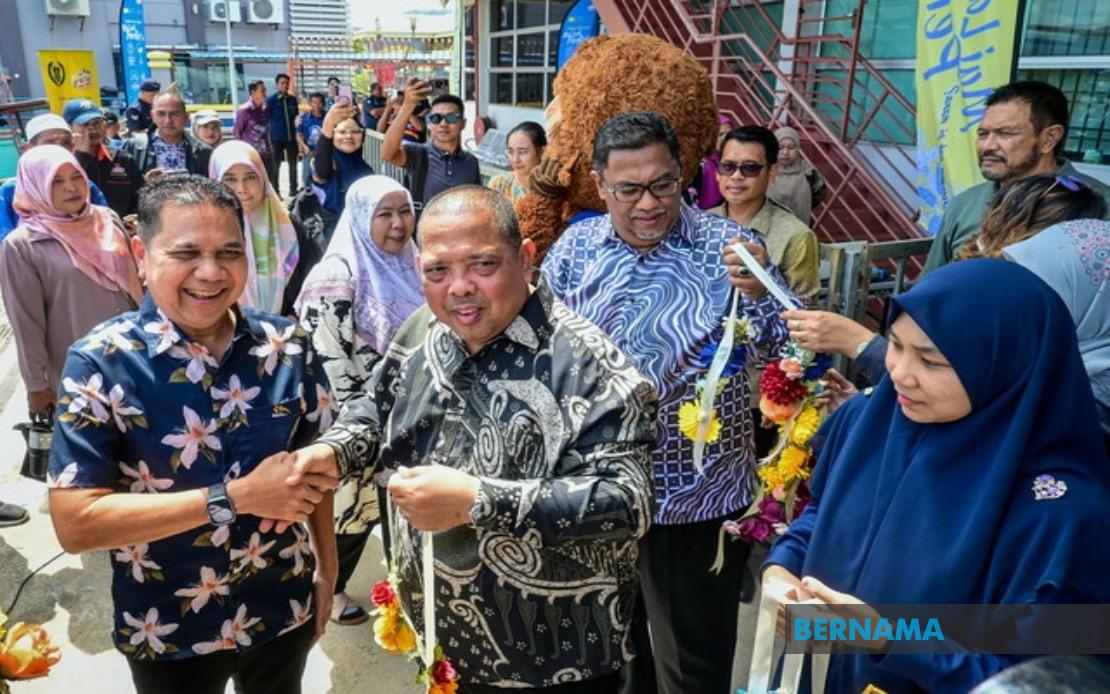
The resumption of maritime ferry operations between Kuala Perlis and the Thai province of Satun marks a significant milestone for tourism development in Malaysia's northernmost state. Perlis is projecting visitor numbers of between 5.5 million and six million during 2024, a target that Menteri Besar Abu Bakar Hamzah attributes directly to the reactivation of the sea crossing, which had been suspended for nearly four years due to the COVID-19 pandemic.
The strategic importance of reopening this maritime corridor extends beyond mere convenience for holiday makers. Abu Bakar believes the service will catalyse a broader economic transformation across northern Perlis, particularly benefiting communities in Kuala Perlis by attracting retail customers from across the border. Thai tourists visiting the terminal zone will have direct access to local shops and attractions without requiring a lengthy overland journey through Padang Besar, potentially redistributing tourism revenues across the state more equitably than previous patterns of visitor concentration.
The ferry crossing itself offers practical advantages that complement existing transportation infrastructure. The 40-minute journey from Kuala Perlis to Satun provides an alternative to conventional land routes and delivers passengers a distinctive experience of the region's coastal landscape. This scenic quality transforms what might otherwise be a mere transport necessity into an integral part of the visitor experience, adding value to what Perlis can market as a destination.
Beyond tourism promotion, the ferry service addresses genuine infrastructure challenges at Padang Besar, the primary overland frontier crossing between Malaysia and Thailand. Congestion at this checkpoint has historically spiked during regional public holidays and festive seasons, creating bottlenecks that frustrate both leisure and commercial travellers. By offering a maritime alternative, authorities hope to distribute traffic flows more evenly and reduce wait times for those using traditional land routes.
Yet Abu Bakar's remarks reveal a government conscious of structural constraints that currently limit the ferry terminal's operational efficiency. Water level fluctuations and the shallow draft of the natural harbour at Kuala Perlis present recurrent challenges to vessel berthing and scheduling reliability. To address this limitation, the state government intends to install a floating pontoon system that adapts to tidal variations and bathymetric irregularities, a pragmatic engineering solution that allows operations to continue despite natural geographic obstacles.
Longer-term planning reveals even more ambitious aspirations. Authorities are simultaneously exploring the possibility of reactivating the Ro-Ro service between the two ports, which would permit direct vehicle transit and unlock commercial transport potential that pure passenger ferries cannot capture. This development would particularly benefit cross-border trade and regional supply chains, extending the economic impact beyond tourism alone.
Most dramatically, the state government is in advanced discussions regarding a proposed RM500 million megastructure—a bridge extending approximately two kilometres into the sea to create permanent deep-water access. Such infrastructure, if realised, would represent a transformative investment in Perlis's connectivity and regional positioning. The bridge concept reflects recognition that geography need not impose permanent limitations on development ambitions; modern engineering can reshape the spatial constraints that have historically constrained the region.
These complementary initiatives—the floating pontoon, Ro-Ro service discussions, and the proposed bridge—constitute a coherent strategic framework for addressing persistent shallow-water navigation difficulties. Individually, each solution tackles specific operational challenges; collectively, they demonstrate government determination to remove infrastructure barriers that might otherwise constrain growth and competitiveness.
For Malaysia's broader engagement with Thailand, the ferry service carries diplomatic significance alongside commercial implications. Cross-border cooperation in tourism infrastructure reinforces bilateral relationship foundations and signals to the private sector that both governments support regulatory environments conducive to regional development. The welcoming of delegations from Satun and formal ceremonies attending the service resumption underscore the political commitment to making this initiative succeed.
Perlis's tourism ambitions must be contextualised within the state's economic position. As Malaysia's smallest state by area and population, Perlis lacks the diversified economic base of larger neighbours. Tourism represents a strategic priority for employment generation, foreign exchange earnings, and tax revenue. The ferry service therefore occupies importance disproportionate to its immediate transport volume, functioning as a catalyst for broader sectoral development and foreign visitor engagement.
The projection of 5.5 to 6 million annual visitors, while optimistic, reflects confidence that pent-up demand for cross-border travel and Thai interest in Malaysian shopping and attractions justify the investment. These figures remain modest compared to major Malaysian tourism states, but represent meaningful growth trajectories for a peripheral region that has historically struggled to compete for visitor attention.
Success, however, requires complementary investments beyond infrastructure. Accommodation capacity, dining facilities, retail experiences, and cultural attractions must collectively offer compelling reasons for visitors to extend stays and increase spending. The ferry service solves a transportation problem but cannot independently create a complete tourism destination. State and private sector coordination in developing supporting infrastructure and services will ultimately determine whether this corridor achieves its full economic potential.
As regional competition for tourism intensifies across Southeast Asia, Perlis positioning itself as an accessible, scenic alternative to congested major hubs demonstrates strategic clarity. The ferry service, pontoon installation, Ro-Ro considerations, and proposed bridge represent cumulative commitment to removing friction from visitor engagement and facilitating the cross-border flows upon which contemporary regional tourism increasingly depends.

