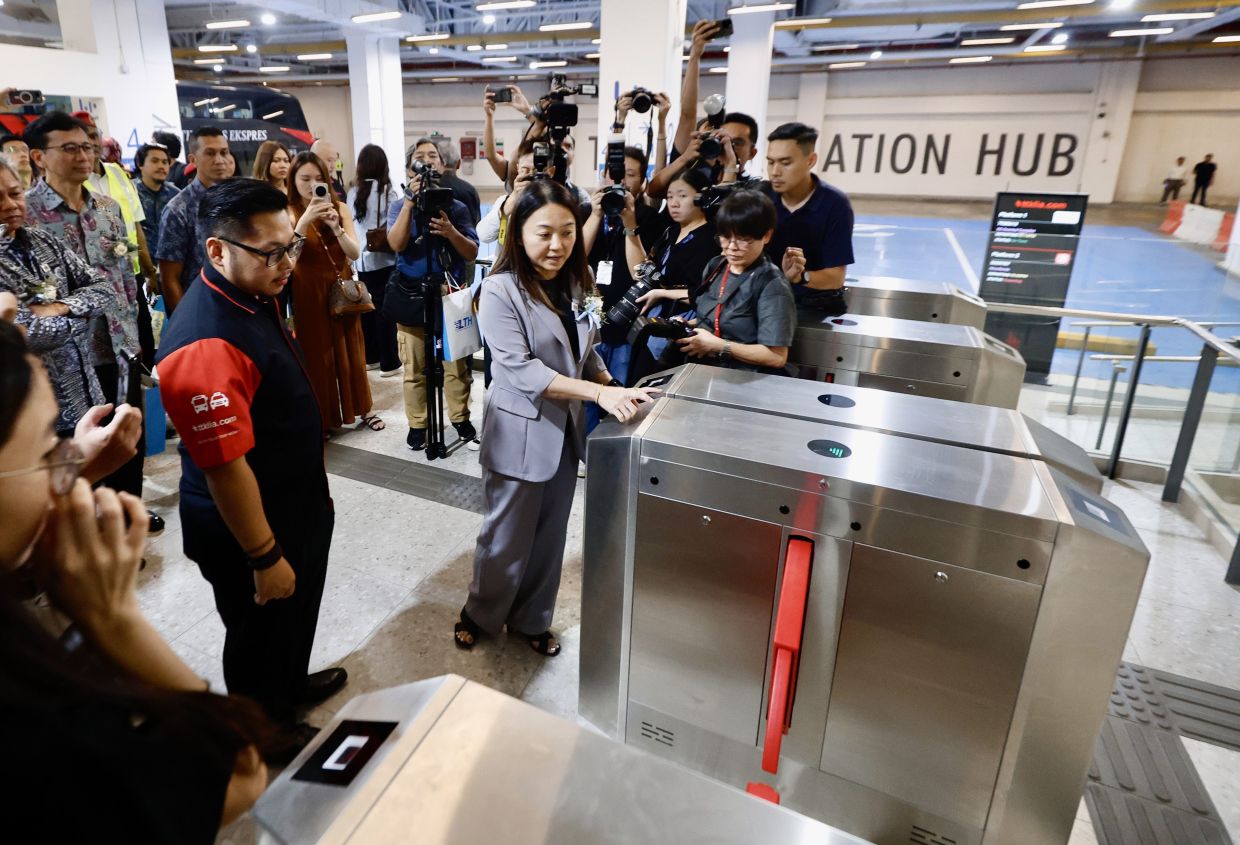
Kuala Lumpur's latest infrastructure push to combat urban congestion has taken shape with the official launch of the LaLaport Transportation Hub in the Bukit Bintang district, a facility designed to centralise bus operations and integrate multiple transport modes into a single, user-friendly location. The hub, which has been operating in phases since February, officially opened on Thursday when Minister in the Prime Minister's Department (Federal Territories) Hannah Yeoh oversaw the launch ceremony, underscoring the government's commitment to reshaping how residents and visitors move around the capital.
The facility will eventually accommodate approximately 30 licensed bus operators, according to data from the Land Public Transport Agency (Apad), with an anticipated daily passenger throughput of 3,000 journeys. This initial projection, while modest, carries significant potential for growth, as the hub's design allows capacity to scale to 10,000 daily passengers as demand increases and more operators integrate their services. This expansion potential positions the hub as a cornerstone of Kuala Lumpur's longer-term mobility strategy rather than a one-off infrastructure investment.
The rationale for such an investment becomes clearer when examining the sheer volume of transportation demand the city experiences. According to figures presented by Kuala Lumpur City Hall (DBKL), the capital witnesses approximately 1.2 million vehicles entering its boundaries each day, while the broader metropolitan area records 5.5 million individual journeys in and out of the city daily. These numbers illustrate why policymakers view urban mobility as a non-negotiable priority, particularly in a rapidly growing megacity where traffic congestion has become endemic and quality-of-life concerns increasingly centre on commute times and transport accessibility.
Physically situated on Level LG1 of LaLaport Bukit Bintang City Centre's East Atrium, the hub operates with thoughtful passenger infrastructure that extends beyond basic bus boarding facilities. The facility includes 11 dedicated bus bays designed to streamline the loading and unloading process, an air-conditioned waiting lounge that provides comfort during peak hours or inclement weather, multiple ticketing counters for conventional payments, self-service machines catering to tech-savvy commuters, and real-time passenger information screens displaying live bus schedules. This blend of traditional and modern amenities suggests a design philosophy attentive to diverse passenger preferences and technological literacy levels.
The location within a major shopping mall represents a strategic choice with implications beyond mere convenience. Positioning the transport hub within LaLaport creates a natural synergy with retail and entertainment activities, potentially increasing foot traffic to the mall while making the hub itself more accessible to casual users who might otherwise bypass dedicated transport facilities. Furthermore, the placement within an established commercial district ensures the hub benefits from existing service infrastructure, security, and management systems.
Connectivity to the broader public transport network amplifies the hub's utility considerably. The facility's proximity to the Hang Tuah interchange allows passengers seamless transition to Kuala Lumpur's LRT and Monorail systems via sheltered pedestrian walkways, eliminating exposure to inclement weather and creating a genuine multi-modal transport ecosystem. This integration is crucial for passengers undertaking longer journeys that require combining bus services with rapid transit alternatives, a common necessity in a sprawling metropolitan area.
Beyond traditional bus services, the hub functions as a comprehensive transport interchange addressing multiple travel needs. Shuttle van services operate dedicated routes to Kuala Lumpur International Airport's Terminals 1 and 2, catering to the substantial volume of passengers requiring airport connectivity. The inclusion of demand-responsive transport (DRT) services acknowledges the growing preference for flexible, on-demand mobility over fixed-route offerings. Designated zones for taxis and e-hailing vehicles such as ride-sharing applications ensure that passengers uncomfortable with public transport alternatives retain access to door-to-door services, albeit at higher cost.
The phased operational approach since February allowed operators and transport authorities to identify inefficiencies and adjust processes before the formal public launch, a pragmatic methodology that reduces disruption and maximises the facility's effectiveness from the outset. This gradual rollout contrasts with the often chaotic experience of hastily opened transport infrastructure elsewhere in the region, suggesting DBKL and Apad have learned from previous implementations.
For Malaysian observers and transport analysts, the hub's opening represents incremental progress toward the integrated urban mobility vision articulated in successive city development plans, though questions remain regarding whether consolidating bus services alone suffices to address Kuala Lumpur's chronic congestion. The success of the facility will largely depend on whether the 30 bus operators utilise the hub effectively, maintain frequency schedules, and whether the projected 3,000 daily passengers materialises into sustained demand rather than initial novelty interest.
The hub's existence also reflects broader regional trends in Southeast Asian urban development, where major cities increasingly recognise that car-centric transport models are economically and environmentally unsustainable. Jakarta, Bangkok, and Ho Chi Minh City have similarly invested in consolidated transport facilities and rapid transit upgrades, suggesting Kuala Lumpur is aligning with continental best practices.
Looking forward, the facility's success metrics will likely influence investment decisions in similar projects across other Malaysian cities and districts. Should the LaLaport hub demonstrate genuine improvements in passenger satisfaction, reduced commute times, and operational efficiency, it could catalyse replication in other urban centres facing comparable congestion challenges. Conversely, underperformance might prompt reassessment of consolidation strategies versus other mobility interventions such as congestion pricing, expanded rapid transit, or workplace flexibility policies.

