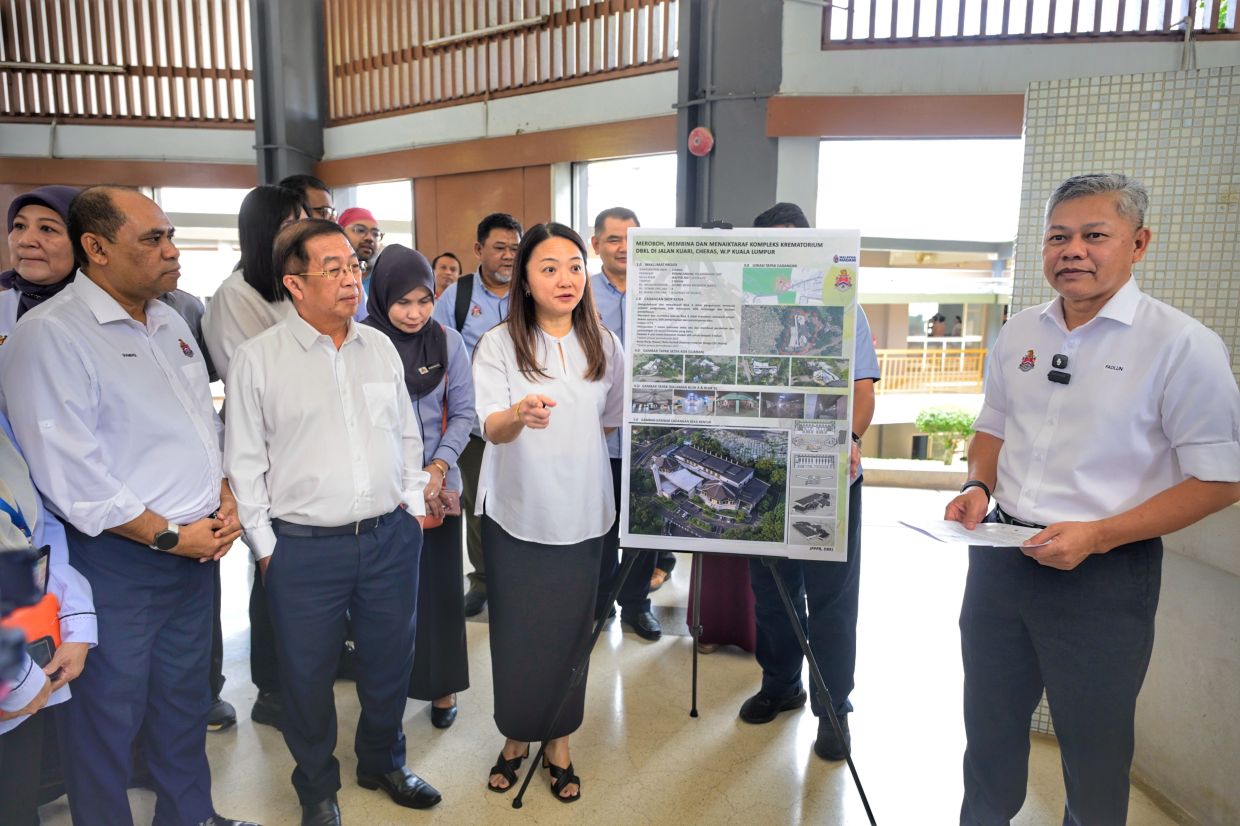
Kuala Lumpur City Hall is embarking on a RM45 million overhaul of the Cheras crematorium complex to address surging demand from the city's non-Muslim communities, representing a significant infrastructure investment that underscores demographic shifts within Malaysia's capital. The renovation programme, located on Jalan Kuari in Cheras, will commence in February 2025 and is expected to conclude within two years, bringing the crematorium's operational capacity to ten units compared with its current seven.
The upgrade reflects changing service requirements in an increasingly diverse metropolis. DBKL mayor Datuk Seri Fadlun Mak Ujud outlined the expansion during a Wednesday inspection of the facility, emphasizing that the initiative responds directly to evolving community needs rather than reactionary policymaking. The project has secured approval through the 13th Malaysia Plan, indicating federal-level recognition of infrastructure gaps within the federal capital. This institutional backing suggests that cremation facility expansion now constitutes part of broader national planning frameworks, a notable shift in how authorities approach religious and cultural service provision across urban centres.
The crematorium has operated continuously since 1977, serving as Kuala Lumpur's sole municipal cremation facility. Annual throughput currently exceeds 5,800 cremations, statistics that underscore both the facility's critical importance and mounting pressure on existing infrastructure. The complex operates under considerable strain, with demand patterns reflecting both natural population growth and changing residential patterns across the metropolitan region. Four cremation units will remain in full operation throughout the renovation period, ensuring service continuity and preventing backlogs that would otherwise affect bereaved families during an already challenging period.
Cheras MP Tan Kok Wai articulated the urgency behind the modernization drive, noting that infrastructure commissioned during the late 1970s increasingly struggles to serve a city whose population has more than doubled since then. The aging facility now confronts a fundamental capacity constraint affecting service quality and operational efficiency. Tan's intervention signals that this issue has transcended administrative concerns to occupy parliamentary attention, suggesting cross-party recognition that cremation services constitute essential public infrastructure requiring comparable investment and planning as other municipal utilities.
The federal dimension of this infrastructure challenge emerged clearly during the site visit, which included Hannah Yeoh in her capacity as Minister in the Prime Minister's Department overseeing Federal Territories. Her attendance reflected Putrajaya's acknowledgment that Kuala Lumpur's demographic pressures—whether cremation facilities or burial grounds—require coordinated federal-state responses. This is particularly evident in her disclosure regarding ongoing discussions with Selangor authorities concerning Muslim cemetery expansion in Semenyih, indicating that resource constraints in the federal capital are prompting cross-border solutions.
Yeoh's remarks revealed complementary infrastructure challenges affecting different faith communities. Kuala Lumpur's geographical limitations mean that Muslim burial grounds have reached capacity, necessitating spillover arrangements with neighbouring Selangor. This dual-facility crisis—simultaneous demand surges for both cremation and burial services—reflects the capital's role as a national centre of gravity attracting diverse populations. The spatial squeeze within federal territories demonstrates how urban planning decisions made decades ago increasingly constrain contemporary service delivery, requiring creative intergovernmental arrangements to maintain functionality.
The RM45 million investment represents substantial capital commitment to a service infrastructure often overlooked in public discourse despite its cultural and social significance. Religious funeral practices constitute sensitive matters across Malaysian society, with adequate provision signalling state respect for community autonomy and dignity. Municipal investment in cremation facilities carries particular importance given demographic trends and the increasingly multicultural character of Malaysia's major cities. The Cheras project thus transcends routine infrastructure maintenance to constitute a statement about how governance structures accommodate religious and cultural pluralism.
Implementation timelines and service continuity measures suggest sophisticated project management. Maintaining four operational units during renovation prevents the crisis scenarios that cremation backlogs would trigger—situations with profound emotional and practical consequences for grieving families. This operational planning reflects lessons learned from infrastructure upgrades elsewhere, where service disruptions caused disproportionate hardship. The two-year completion estimate provides a realistic timeline for expanding facility capacity while maintaining municipal service standards, though execution risks remain inherent to any major infrastructure project.
Broader implications extend beyond Cheras to other Malaysian metropolitan centres facing similar demographic pressures and aging infrastructure. Kuala Lumpur's experience suggests that other states and municipalities may confront comparable cremation and burial facility constraints as urbanization continues and populations age. The Cheras project thus offers a template for other jurisdictions contemplating comparable expansions, demonstrating how coordinated federal-state planning, adequate capital allocation, and maintenance of operational continuity can address these sensitive service requirements. The 13th Malaysia Plan's inclusion of this project indicates Putrajaya's recognition that religious and cultural service infrastructure constitutes legitimate planning priority rather than peripheral concern.

