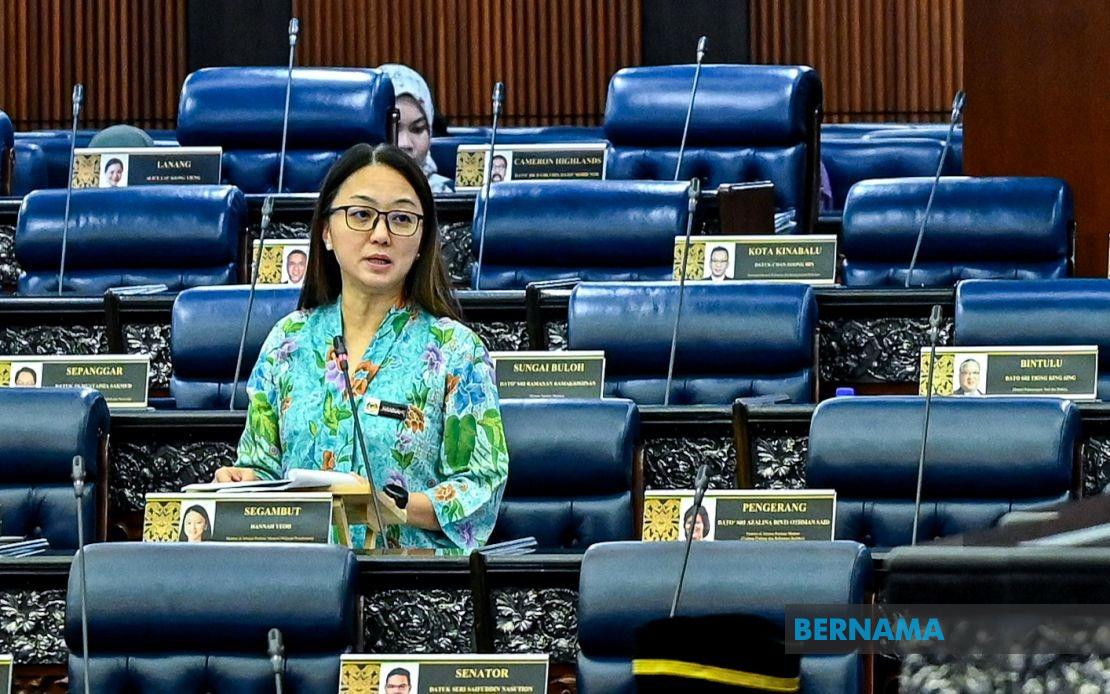
Kuala Lumpur City Hall (DBKL) has embarked on an ambitious administrative overhaul, introducing 16 separate governance and reform measures in response to what amounts to a damning anti-corruption assessment. Minister in the Prime Minister's Department (Federal Territories) Hannah Yeoh revealed on July 16 that the institution had achieved a mere 0.08 per cent out of a possible 5 per cent allocation in the Public Service Corruption Ranking under the 2025 Local Authority Star Rating System—a result that triggered immediate and comprehensive institutional restructuring.
The severity of the performance gap prompted DBKL to fundamentally reassess its operational framework. The groundwork for these changes emerged following an engagement session with Members of Parliament from the Federal Territory of Kuala Lumpur conducted on March 2, during which researchers from the International Islamic University Malaysia (IIUM) identified four key recommendations aimed at strengthening administrative systems, governance structures, institutional integrity, and service delivery mechanisms. The findings effectively prescribed a template for systemic rehabilitation that would reshape how the city's local authority functions at every level.
At the core of the reform agenda lay the Malaysian Anti-Corruption Commission's (MACC) identification of five distinct procedural vulnerabilities within DBKL's operations. These weaknesses encompassed the oversight of a radio studio broadcast content production initiative, the allocation procedures governing Ramadan Bazaar site allocations, contractual management relating to business licensing service provision, governance arrangements for the Malaysian Statutory Bodies Association Sports Championship, and the collection and management of rental payments for people's housing and public housing projects under DBKL's purview. Each represented a discrete point of institutional vulnerability where control mechanisms had proven inadequate.
Among the most significant structural changes was the dissolution of the Special One Stop Centre (OSC) Committee, a decision designed to enforce the separation of powers and eliminate opportunities for political interference in development decision-making processes. This move signals a deliberate shift away from centralised authority toward distributed institutional responsibility. Complementing this action, Hannah announced that all Members of Parliament representing constituencies within the Federal Territory of Kuala Lumpur would gain access to the OSC 3.0 Plus Portal, enabling them to review development applications and lodge their perspectives with the mayor before final approvals are granted—a transparency measure that establishes parliamentary oversight as a built-in feature of the approval mechanism.
Financial controls represent another pillar of the reform architecture. DBKL has implemented a stringent cap on mayoral authority to approve contributions at RM3,000, with any larger requests now requiring Top Management Committee deliberation. This constraint effectively redistributes decision-making power away from a single executive position toward collective oversight, reducing the scope for arbitrary spending or patronage. The measure reflects a broader philosophical reorientation toward institutional rather than individual-centred governance.
Three new committees have been established to provide layered oversight and accountability mechanisms. The Audit Committee, the Governance and Integrity Committee, and the Mayor's Contributions Committee collectively create multiple avenues for institutional scrutiny and conflict-of-interest management. Notably, the mayor no longer chairs the Audit Committee—a change that prevents executives from overseeing their own performance and creates independence in the audit function. This structural separation is fundamental to effective institutional control and reflects international governance best practice.
Operational reforms extend to personnel management and accountability infrastructure. DBKL has introduced mandatory job rotation protocols for officers occupying sensitive positions, a practice designed to prevent the entrenchment of corrupt networks and ensure continuous disruption of potential collusive arrangements. Meanwhile, the deployment of body-worn cameras for enforcement personnel represents a technological approach to accountability, with phased implementation scheduled to begin in the fourth quarter of this year. This surveillance mechanism functions as both a deterrent against misconduct and a documentary record of official interactions.
Digitalisation constitutes perhaps the most transformative dimension of the reform package. By eliminating human intermediaries and shifting processes to automated digital systems, DBKL aims to remove opportunities for bribery, manipulation, and corrupt discretion. As of July, the institution had introduced 170 online application services, with a target of 180 end-to-end digital services by year's end. The aspiration to process all applications entirely online by 2030 represents a fundamental reimagining of the city hall's operational model, one predicated on reducing human contact points and creating transparent, auditable transaction records.
The e-Lesen digital licensing system exemplifies this approach. By eliminating the necessity for intermediary runners—traditionally conduits for informal payments and facilitation—and integrating the system with the Departmental Enforcement System (SPJ), DBKL has compressed the licensing process into an integrated digital framework. A new licensing renewal policy effective July 1 extended validity periods from shorter intervals to three years, reducing transactional frequency and the cumulative opportunities for corrupt practices while simplifying business operations.
Hannah articulated the overarching aim of these reforms as a fundamental cultural transformation within DBKL—a shift from decision-making centred on individual discretion and authority toward systems predicated on institutional integrity, collective governance, and transparent procedures. This represents not merely a technical administrative adjustment but a conceptual reorientation regarding the proper functioning of local government. Rather than concentrating power, the reforms systematically disperse authority across multiple institutional nodes, each equipped with distinct accountability mechanisms.
For Malaysian readers and businesses engaging with local government, these changes carry immediate practical implications. The expanded digital services infrastructure promises faster, more transparent permit and licensing processes. Expanded parliamentary oversight of development decisions creates additional channels through which constituents can advocate their interests. The structural insulation of audit functions from executive control enhances the integrity of financial oversight, potentially benefiting Malaysian taxpayers through more rigorous scrutiny of municipal spending.
Beyond Kuala Lumpur's borders, DBKL's comprehensive institutional overhaul offers a cautionary and instructive example for other Malaysian local authorities. The severity of the corruption rating—scoring at just 1.6 per cent of available points—suggests that systemic institutional dysfunction had become deeply embedded. The breadth of reforms required demonstrates that combating institutional corruption demands not piecemeal measures but wholesale restructuring of governance frameworks, oversight mechanisms, and operational processes. Other Malaysian cities and local councils facing similar assessments may find both warning and template in Kuala Lumpur's experience.
The timeline for these initiatives remains ongoing. While some reforms have already taken effect, others remain in phased implementation extending through 2030. This extended timeline reflects realistic acknowledgment that institutional culture cannot be transformed overnight; rather, systematic pressure applied through accumulated structural changes, technological constraints, and distributed oversight mechanisms creates the cumulative conditions necessary for genuine transformation. The effectiveness of these measures will ultimately depend on sustained political commitment to reform and genuine institutional capacity to implement and enforce the new procedures across DBKL's sprawling bureaucracy.

