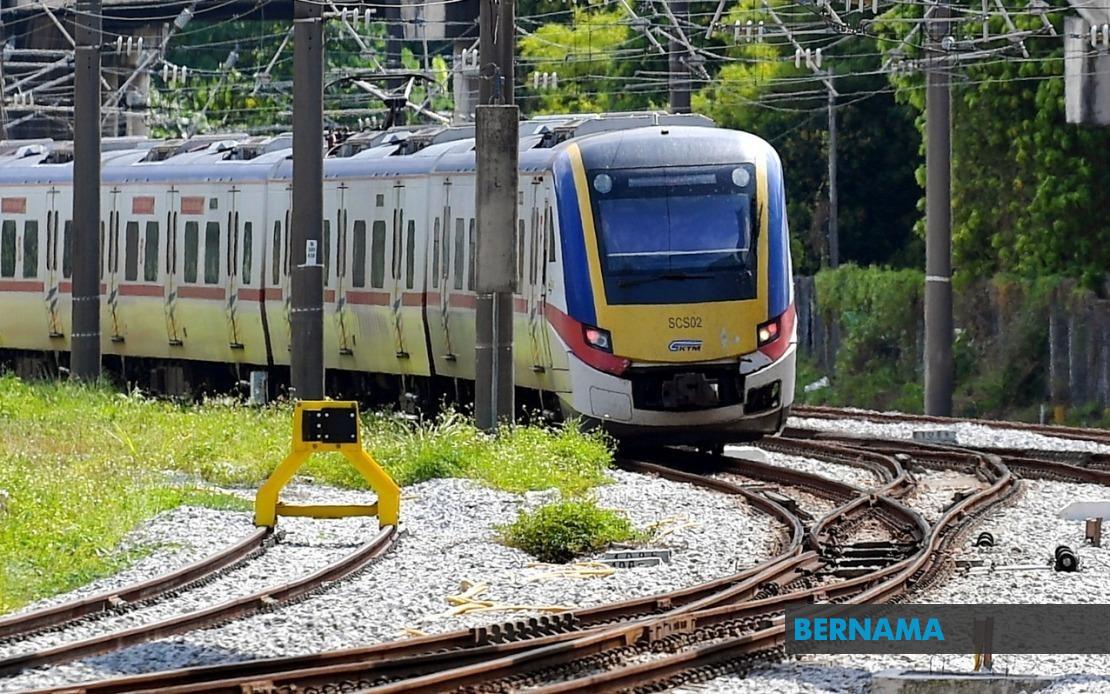
Malaysia's largest rail operator, Keretapi Tanah Melayu Berhad (KTMB), is preparing for one of the year's busiest travel periods by significantly expanding its train capacity across both premium and standard services. The operator announced on August 14 that it would introduce 124 additional services with a combined capacity of 38,944 seats to accommodate surging passenger numbers during the National Day period and school holidays. This strategic expansion underscores the growing importance of rail transport in managing domestic travel demand during peak seasons when road congestion typically intensifies across major Malaysian highways.
The bulk of the expansion centres on the Electric Train Service (ETS), KTMB's flagship high-speed offering that connects major urban centres. The operator will deploy 100 ETS services across three distinct travel windows: August 21 to 23, August 28 to 31, and September 4 to 6. These additional trains will inject 31,600 seats into the network, effectively increasing travel flexibility for commuters and holiday travellers during a period when conventional road transport becomes increasingly congested. The timing reflects KTMB's sophisticated understanding of travel patterns, targeting the long weekend surrounding Merdeka Day on August 31st and the subsequent school holiday period when families typically undertake interstate journeys.
Complementing the ETS expansion, KTMB will operate 24 supplementary Electric Multiple Unit (EMU) Plus services, providing 7,344 additional seats across selected dates spanning August 21 through September 6. Notably, this service extension will reach Bandar Tasik Selatan, a development that widens access for southern suburban communities. The EMU Plus designation indicates a premium positioning compared to standard commuter rail, offering enhanced comfort for passengers willing to pay higher fares. This tiered service structure allows KTMB to serve different market segments efficiently—the ETS capturing long-distance travellers and business commuters, while EMU Plus addresses passengers seeking improved amenities on medium-distance routes.
In its northern network, KTMB has dedicated additional resources to the Padang Besar-Butterworth-Padang Besar commuter route, a critical corridor serving both Malaysian and cross-border Thai passengers. Eight supplementary KTM Komuter services will operate from August 27 to 31, elevating the daily service frequency to 46 trains on this route. This enhancement proves particularly significant for residents in Perlis, Kedah, and northern Perak who depend on rail connectivity, especially during holiday periods when leisure travel and family visits surge. The focus on this northern sector reflects KTMB's recognition that transport demand extends beyond the Klang Valley and into Malaysia's peripheral regions.
Ticket reservations for all additional services opened immediately, with KTMB making bookings available through its established sales channels. This prompt ticketing mechanism aims to prevent last-minute bottlenecks and allow passengers adequate time for holiday planning. The railway operator's willingness to absorb operational costs for these temporary services suggests confidence in revenue generation during peak demand periods, though it also reflects competitive pressure from budget airlines and highway transport operators who aggressively target holiday travellers with discounted fares.
The expansion announcement coincides with KTMB's commemoration of the ETS's 16th anniversary, marked by customer appreciation initiatives running from August 10 to 14. These celebrations included voucher distributions, promotional meals through major fast-food partners, complimentary travel tickets, and discount offers reaching RM16 per ticket—a modest but symbolically meaningful gesture honouring the service's establishment date in 2010. Such activities serve dual purposes: they generate goodwill among existing passengers while subtly encouraging new customers to trial premium rail services before peak demand periods arrive.
Datuk Azlan Shah Al Bakri, KTMB's group chief executive officer, framed the expansion within a broader narrative of institutional success and customer confidence. The ETS's operational trajectory since its August 12, 2010 launch demonstrates Malaysia's evolving transport infrastructure. Beginning with a single Ipoh route, the service systematically expanded to Butterworth in 2015 and subsequently to Padang Besar, creating a comprehensive high-speed network spanning Peninsular Malaysia's key economic corridors. This incremental expansion strategy minimised operational risk while allowing KTMB to refine service delivery before committing to further geographical extension.
Passenger statistics reveal the ETS's accelerating penetration into Malaysian travel patterns. Across its 16-year existence, the service has carried 44.3 million passengers—a substantial figure reflecting institutional maturity. More tellingly, January-to-July 2024 data showed 3.67 million passengers, representing a 56 percent year-on-year increase from the 2.36 million recorded during the same 2023 period. This dramatic growth trajectory suggests shifting consumer preferences towards rail transport, driven by factors including fuel price volatility, increasing highway congestion, and improved service reliability. For a Southeast Asian developing economy, such modal shift towards public transport carries positive implications for urban air quality and congestion management.
KTMB's expansion strategy reflects sophisticated demand forecasting and operational planning. By introducing capacity ahead of anticipated peak demand rather than responding reactively to bottlenecks, the operator positions itself advantageously against competing transport modes. Airlines and express coaches can adjust capacity only marginally without significant infrastructure investment, whereas rail's inherent scalability through train composition adjustments provides more flexible short-term responses. This capacity injection during predictable peak periods demonstrates that KTMB possesses both the operational competence and financial resources to execute such expansions—essential credibility for a government-linked transport operator.
The implications for Malaysian travellers are manifold. Enhanced rail capacity reduces reliance on road-based alternatives, particularly relevant given Malaysia's notorious highway safety statistics during holiday periods when accident rates spike dramatically. Expanded train services also offer economical advantages for budget-conscious families, with rail fares typically undercutting fuel costs for multi-person household travel. Furthermore, improved connectivity supports regional economic activity by facilitating business travel and tourism, particularly to secondary cities like Ipoh and Butterworth that benefit from reliable rail access to the central corridor.
Looking forward, KTMB's expansion during this peak period establishes precedent for routine capacity augmentation during future holiday seasons. If these services prove operationally sustainable and financially viable, the operator may justify permanent route expansions or increased baseline service frequencies. Conversely, any operational challenges—whether stemming from staff fatigue, maintenance bottlenecks, or revenue shortfalls—would provide valuable data for refining future holiday period strategies. The 2024 initiative thus functions as both immediate response to peak demand and longer-term pilot programme informing KTMB's strategic direction.
For Malaysian policymakers overseeing transport infrastructure, KTMB's proactive capacity expansion validates the economic case for sustained public rail investment. As Southeast Asian urbanisation accelerates and highway infrastructure reaches saturation in metropolitan areas, rail transport increasingly represents essential national infrastructure rather than discretionary amenity. Malaysia's ETS expansion demonstrates that premium rail services can attract substantial patronage when properly resourced and marketed, potentially justifying future investments in additional intercity corridors or technology upgrades.
The upcoming National Day and school holiday period will provide comprehensive real-world testing of KTMB's expanded rail network. Success would strengthen Malaysia's multimodal transport ecosystem and reinforce public confidence in domestic rail operations—outcomes extending well beyond the immediate August-September travel season.

