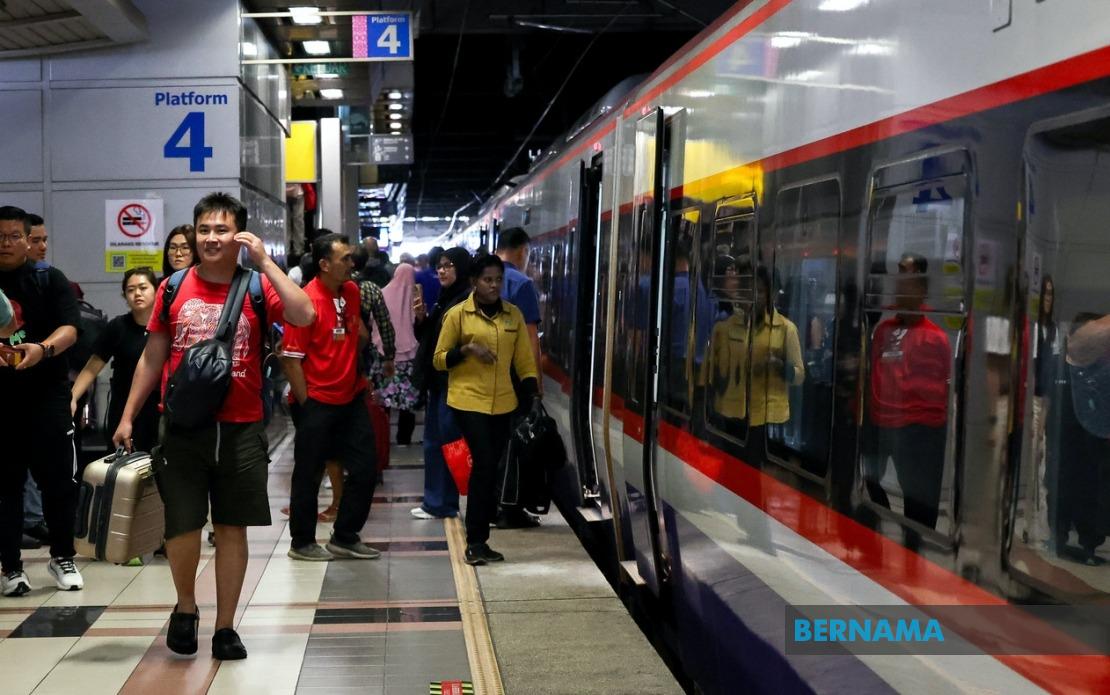
Keretapi Tanah Melayu Berhad (KTMB) is substantially expanding its Electric Train Service capacity in response to anticipated voter migration ahead of Johor's closely watched state election this weekend. The national rail operator announced it will inject 7,464 additional seats into its southern corridor network, a move that reflects both operational preparedness and the significant logistical challenge of accommodating Malaysians traveling to their home constituencies during election periods.
The transport initiative encompasses two key corridors: the JB Sentral-Gemas-JB Sentral route and the KL Sentral-JB Sentral-KL Sentral corridor. Between them, KTMB will deploy eight additional train services over a concentrated three-day window spanning July 10 through 12, each equipped with 2,488 seats daily. This represents a calculated response to demonstrated public demand, following the complete sell-out of a preliminary batch of supplementary tickets released on June 19, which revealed robust appetite for rail travel among returning voters.
The Johor election campaign has already generated considerable anticipation across the peninsula, with political observers viewing the contest as a significant barometer of public sentiment midway through the national electoral cycle. For many voters based in Kuala Lumpur and surrounding regions for work or education, the election necessitates travel home to exercise their voting rights—a phenomenon that regularly strains Malaysia's transport infrastructure during major electoral events. KTMB's proactive expansion of capacity addresses this recurring challenge by offering a coach-based alternative to congested highways.
Ticket sales commenced in staggered fashion, with the JB Sentral-Gemas-JB Sentral route opening for reservations at 3 p.m. on July 7, followed by the KL Sentral-JB Sentral-KL Sentral service opening the following morning at 9 a.m. This phased approach allows KTMB to manage demand fluctuations and optimize seat allocation across both routes based on real-time booking patterns. The deliberate timing reflects operational experience gleaned from previous elections and major public holidays.
To enhance affordability and incentivize modal shift away from private vehicles, KTMB is applying a uniform 20 per cent discount across all supplementary ETS services during the three-day promotional period. This pricing strategy aims to position rail travel as a cost-competitive option relative to fuel expenses and toll charges for the 400-kilometer journey from Kuala Lumpur to Johor. Such fare reductions are typical during high-demand periods and serve dual purposes: managing congestion while supporting ridership growth targets.
The rail operator is directing the public toward digital ticketing platforms, urging prospective passengers to complete advance purchases through the KITS Style mobile application, KTMB's official website, or self-service kiosk machines stationed throughout the network. This emphasis on cashless, contactless booking reflects post-pandemic operational norms and reduces bottlenecks at physical ticket counters. For voters in various parts of Malaysia juggling work and family commitments, advance purchasing removes scheduling friction and guarantees seat availability during peak demand periods.
Operational efficiency considerations underpin several passenger advisories issued by KTMB alongside this announcement. The rail operator explicitly recommends travelers arrive at stations a minimum of 30 minutes prior to scheduled departures, cautioning that platform access will be restricted five minutes before train departure. Such directives help prevent last-minute congestion and ensure orderly boarding procedures, particularly important when handling elevated passenger volumes across major terminals like KL Sentral and JB Sentral.
From a broader Malaysian perspective, this initiative exemplifies how state-owned enterprises adapt service delivery around electoral cycles. The concentration of train services within a tight 72-hour window demonstrates KTMB's capacity for flexible deployment, though it also highlights the structural mismatch between predictable election-driven demand spikes and standard scheduled operations. Policymakers frequently grapple with optimizing transport provision during these periods without incurring prohibitive underutilization during non-election intervals.
The Johor election carries particular significance for the ruling coalition and opposition parties alike, with implications extending beyond state-level governance toward broader national political trajectories. Robust voter turnout—facilitated partly through accessible transport—therefore gains strategic importance for all political participants. KTMB's expanded service offering, while ostensibly apolitical, contributes to the electoral infrastructure enabling informed voter participation.
Regional observers also note that Malaysian rail operators' responsiveness to electoral demand provides useful benchmarking for other Southeast Asian nations managing similar challenges. As infrastructure development accelerates across the region, capacity planning during concentrated demand periods remains a persistent policy consideration. KTMB's experience demonstrates that even relatively mature rail networks benefit from surge-capacity planning when predictable demand spikes materializes.
For passengers requiring additional information, KTMB operates a dedicated call center accessible at 03-9779 1200, while updates are regularly posted across the agency's official social media accounts. This multi-channel communication strategy acknowledges diverse information-access preferences among Malaysia's traveling public and ensures announcement reach extends beyond initial media coverage to encompass voters across digital and traditional platforms.
Ultimately, the 7,464-seat expansion represents manageable operational adjustment that addresses immediate electoral period demand while maintaining system reliability. However, the complete sell-out of preliminary tickets and necessity for this expanded offering underscore persistent questions about optimal year-round ETS capacity, particularly for routes connecting Malaysia's economic centers with secondary cities experiencing periodic surge demand.

