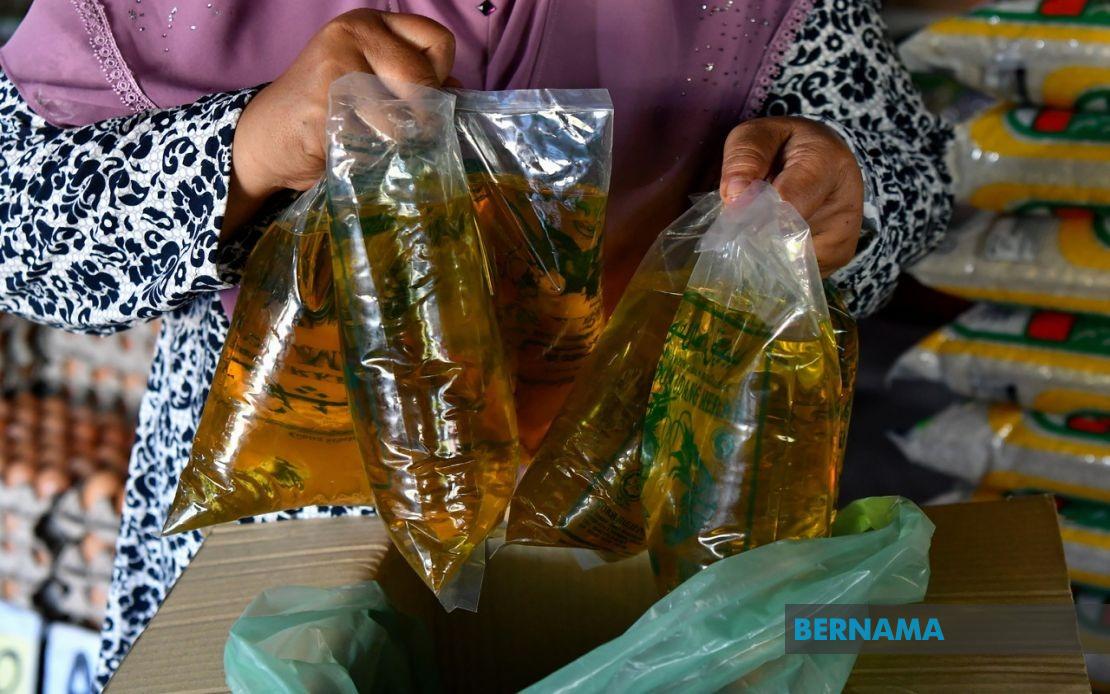
The Domestic Trade and Cost of Living Ministry (KPDN) has committed to thoroughly reviewing recommendations from the Public Accounts Committee (PAC) regarding the management of cooking oil price controls and subsidy distribution. Minister Datuk Armizan Mohd Ali outlined the plans in response to findings presented in PAC Report DR. 27 of 2026, which was tabled in Parliament on July 16, signalling heightened scrutiny of how Malaysia administers one of its most politically sensitive commodity interventions.
Central to the ministry's strategy is accelerating the rollout of the Cooking Oil Stabilisation Scheme System (eCOSS), a digital platform designed to track subsidies from refineries through to consumers and eliminate the fraud and diversion that has historically plagued Malaysia's price control architecture. The eCOSS initiative, which commenced development in 2023, is advancing through two concurrent workstreams: systematic deployment across the entire supply chain and expansion via a mobile application that commenced pilot testing in May 2025. This twin-track approach reflects recognition that technology alone cannot solve the problem without complementary operational changes throughout the distribution network.
The financial stakes underlying this initiative are substantial. Malaysia's cooking oil subsidy regime represents a significant fiscal commitment, and leakage—whether through diversion to unintended beneficiaries, smuggling, or fraudulent record-keeping—directly erodes the targeted support intended for ordinary households. Armizan emphasised that eCOSS's core functionality lies in preventing manual manipulation and supply misappropriation by replacing paper-based processes with auditable digital records. This represents a shift toward what officials describe as a risk management strategy, positioning subsidy reform not merely as a cost-saving exercise but as essential governance improvement.
A forthcoming enhancement will integrate the National Registration Department's new identity card system with eCOSS, enabling QR code-based verification at purchase points. This technological integration serves multiple objectives: it will facilitate targeted distribution by confirming the legitimacy and residency status of buyers while simultaneously preventing foreign nationals from accessing subsidised cooking oil—a concern that has featured prominently in public debate about subsidy efficiency. The measure reflects an implicit acknowledgement that previous identity verification mechanisms were insufficient or inconsistently enforced, allowing non-citizen access to government support intended for Malaysian households.
Beyond technology, KPDN is confronting structural imbalances in the cooking oil refining sector, where foreign-owned firms have historically held dominant market positions. The PAC specifically recommended a redistribution of refining quotas to favour competitive local companies, addressing concerns that Malaysia's subsidy system inadvertently strengthens foreign commercial interests. Armizan clarified that under the current Cooking Oil Stabilisation Scheme (COSS), the ministry has not formally allocated refineries quotas; instead, repackers independently select suppliers based on practical factors including logistics costs, credit availability, pricing, supply reliability, and facility proximity. This market-driven selection, while flexible, has apparently concentrated supply relationships with larger, foreign-backed operators.
In response, KPDN is implementing phased interventions designed to incentivise repackers to source from locally owned refineries without imposing hard quotas. These measures include quota replacement requirements—effectively creating preferential procurement conditions—and establishing business matching mechanisms to connect local refiners directly with repacking companies. This gradualist approach aims to reorient market dynamics without triggering supply disruptions or complaints from incumbent suppliers, though success will depend on whether local refiners can meet price, quality, and reliability standards that currently favour larger competitors.
Complementary enforcement measures underscore the ministry's commitment to plugging specific vulnerability points. Prohibiting the sale of one-kilogramme cooking oil packets to non-citizens addresses a known retail-level leakage channel where small quantities could be aggregated for resale or smuggling. Integration of eCOSS with the Sumbangan Asas Rahmah (SARA) system—Malaysia's unified assistance database—will enable cross-verification of subsidy recipients across multiple schemes, preventing individuals from claiming subsidised cooking oil whilst simultaneously receiving other means-tested government support. Streamlined enforcement, meanwhile, signals renewed operational focus on inspecting refineries, repackers, wholesalers, and retailers throughout the value chain.
Armizan's statement frames these measures within a broader commitment to subsidy sustainability, referencing internal reviews, a National Audit Department audit conducted in July 2025, and the PAC report as collectively informing the enhancement strategy. This multi-layered oversight architecture reflects international best practice in subsidy governance, where periodic external audits help identify recurring vulnerabilities and evidence-based recommendations from legislative committees drive administrative reform. For Malaysia, where subsidy leakage has previously drawn criticism from fiscal watchdogs and economists, demonstrating responsiveness to independent scrutiny carries both practical and symbolic importance.
The ministry's willingness to consider PAC findings also signals broader political dynamics. Cooking oil subsidies represent a direct transfer to households, making them electorally sensitive across all demographic groups. Parliamentary scrutiny, even from committees dominated by the government, creates space for legitimate criticism while maintaining the underlying policy commitment. By transparently addressing recommendations, KPDN positions itself as reform-minded whilst defending the subsidy's necessity—a delicate balance in an environment where opposition voices frequently attack subsidies as economically inefficient and regressive.
For Malaysian consumers and businesses, the practical implications are multifaceted. The shift toward digital verification and targeted distribution may improve subsidy targeting and reduce shortages caused by diversion, but it could also introduce friction at retail points if QR code systems experience technical problems or if merchants lack adequate scanning infrastructure. Repackers and retailers will need to integrate eCOSS into existing inventory systems, creating implementation costs that regulators must monitor to ensure they do not inadvertently push smaller players out of the market. Local refinery operators, meanwhile, face an opportunity to expand market share if they can meet performance standards, though the phased quota mechanism leaves room for negotiation and potential pushback from incumbents.
Regionally, Malaysia's experience with cooking oil subsidy reform carries relevance for other Southeast Asian economies managing similar price interventions. Indonesia, Thailand, and Vietnam have all grappled with subsidy leakage and fiscal sustainability; Malaysia's digital platform approach and quota rebalancing mechanisms may offer lessons—positive and cautionary—for policymakers elsewhere. As global commodity prices fluctuate and fiscal pressures mount across the region, efficient subsidy administration becomes increasingly critical to government credibility and economic stability.
Armizan's concluding call for continued PAC and stakeholder support, coupled with emphasis on strict enforcement against violations throughout the supply chain, reflects an implicit acknowledgement that technical and procedural improvements alone cannot succeed without consistent political will and operational rigour. The coming months will test whether eCOSS implementation accelerates as promised and whether phased local refinery preferences translate into meaningful market share shifts. Until then, Malaysia's cooking oil subsidy system remains a work in progress, shaped by technological innovation, structural reform, and the perpetual tension between political palatability and fiscal prudence.

