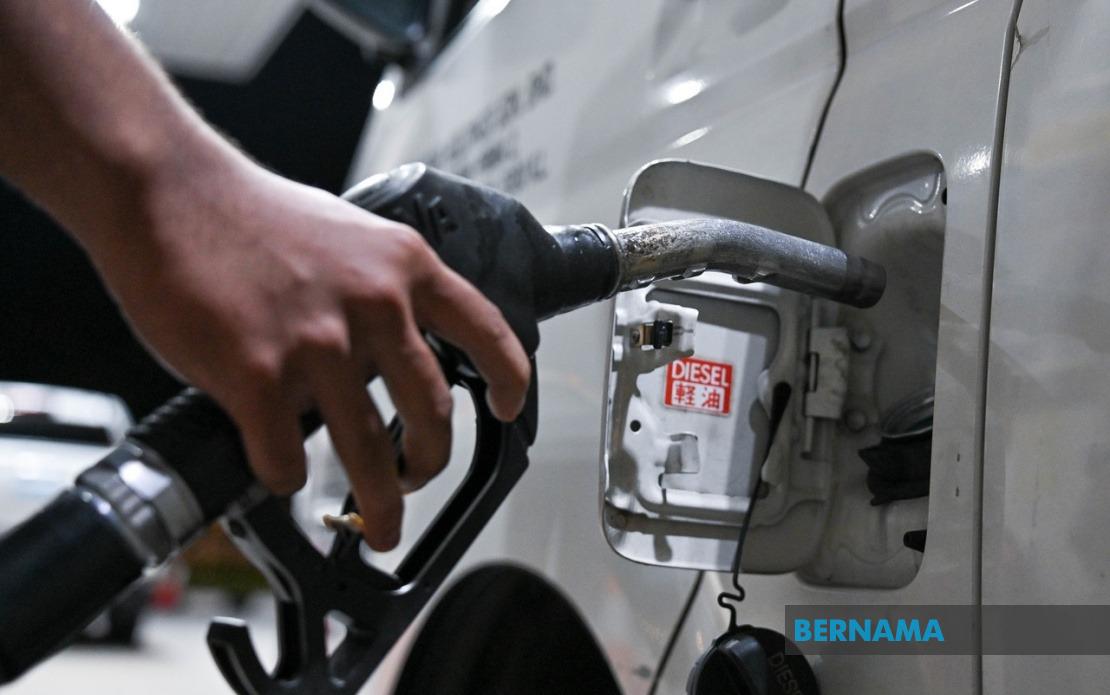
The Ministry of Domestic Trade and Cost of Living (KPDN) has rescinded restrictions that previously governed diesel sales to land transport operators across Sabah, Sarawak, and the Federal Territory of Labuan, with the changes taking effect from July 1. The decision eliminates tiered purchase caps that had limited buyers to either 50 litres, 100 litres, or 150 litres per transaction, freeing up fuel availability for commercial hauliers and logistics providers in these regions who have long chafed under the controls.
The ministry's director-general of enforcement, Datuk Azman Adam, confirmed the cancellation of the March 27, 2026 directive that had previously constrained fuel distribution in the eastern states and the offshore federal territory. He tied the regulatory reversal directly to Prime Minister Datuk Seri Anwar Ibrahim's announcement on June 21, which unified the subsidy framework under the BUDI Diesel Programme and fixed the subsidised price at a consistent RM2.10 per litre across all eligible purchasing zones. This pricing standardisation removes one of the key justifications regulators had maintained for supply rationing in these geographically dispersed regions.
Simultaneously, the government has introduced a fresh purchasing mechanism centred on MyKad verification at petrol station pumps, also launching tomorrow. This digital authentication system represents a fundamental shift in how the state manages fuel subsidy access, replacing the previous bureaucratic allocation system with real-time identity verification. The approach theoretically streamlines transactions for qualified consumers while creating an audit trail that regulators can monitor to prevent abuse and diversion to ineligible users or the black market.
For Malaysia's transport and logistics sectors, which shoulder significant fuel costs as a proportion of operating expenses, the removal of purchase caps promises meaningful relief. Trucking companies and bus operators serving the long distances across Sabah and Sarawak's interior, where fuel infrastructure remains sparse, had previously faced operational friction when topping up at government-designated pumps. The old system required multiple visits or advance planning to accumulate sufficient quantities, adding administrative burden to fleet management. East Malaysian hauliers now enjoy parity with their Peninsular counterparts, who already operated without such volume restrictions.
The standardised RM2.10 pricing itself represents a delicate policy balance for Kuala Lumpur. Diesel subsidies constitute a substantial budgetary commitment, and locking in a uniform price across regions with vastly different logistics costs—Sabah and Sarawak require maritime or air freight links to supply their markets—signals the federal government's commitment to regional equity despite fiscal pressures. The decision reflects broader concerns about ensuring economic competitiveness and cost-of-living relief in East Malaysia, where transport and energy costs typically exceed Peninsula levels.
The MyKad-based purchasing system emerging tomorrow embodies a modern governance philosophy that leverages digital infrastructure to target subsidies more precisely. Rather than relying on administrative judgement or purchase history tracking, the system instantly verifies eligibility at the point of sale. This technological approach reduces opportunities for smuggling subsidised fuel to neighbouring jurisdictions or hoarding by commercial buyers claiming subsidy access they should not receive. It also generates granular data about consumption patterns that policy-makers can analyse to refine future subsidy architecture.
Retailers holding scheduled controlled goods licenses for fuel distribution across Sabah, Sarawak, and Labuan now face revised compliance obligations. The ministry's statement explicitly notified all licensed petrol and diesel retailers in these jurisdictions that the diesel sale restriction order ceased to exist as of July 1. This communication protects retailers from inadvertent violations while signalling clear expectations: honour the new MyKad verification protocol and abandon any residual enforcement of the old quantity caps. Retailers who fail to transition smoothly could face sanctions, making a coordinated implementation period essential.
The policy evolution also reflects structural lessons learned over previous subsidy cycles. Malaysia's history of fuel price management reveals recurring patterns: rigid controls create supply inefficiencies, encourage evasion, and eventually require administrative overhaul. By moving toward digital verification rather than quantity-based restrictions, authorities attempt to decouple subsidy access from bureaucratic gatekeeping. This approach theoretically permits more fluid market operations while maintaining targeted assistance for eligible users—a resolution to a longstanding tension in subsidy design.
Regional considerations loom large in this decision. Sabah and Sarawak operate as economic cornerstones for the broader Malaysia Inclusivity framework, and fuel cost pressures there have historically fuelled political grievances about unequal development. Eliminating diesel purchase caps signals respect for commercial operators in these states and acknowledgment that development aspirations depend on removing friction from logistics networks. For Malaysian businesses competing in Southeast Asia, efficient fuel access at predictable prices strengthens competitiveness against regional rivals.
The success of tomorrow's rollout ultimately hinges on execution. MyKad infrastructure must function reliably across all petrol stations in these regions, where digital connectivity sometimes falters. Retailers require training on the new verification protocols, and consumers need clear communication about eligibility criteria. Any technical glitches or implementation delays could frustrate the supply chain and generate public backlash, particularly if transport operators find themselves unable to access fuel efficiently during the transition period.
Looking ahead, this restructuring may serve as a template for subsidy reform across other commodities and sectors where Malaysia maintains price controls. The model of combining fixed pricing with digital verification and the elimination of administrative quantity caps offers a replicable framework that could be adapted for cooking oil, sugar, or other essentials should political will and budgetary space permit. The changes to diesel policy in East Malaysia thus carry significance extending well beyond fuel distribution, signalling a potential broader recalibration of how Malaysia's government manages subsidised access to essential goods in an increasingly digital economy.

