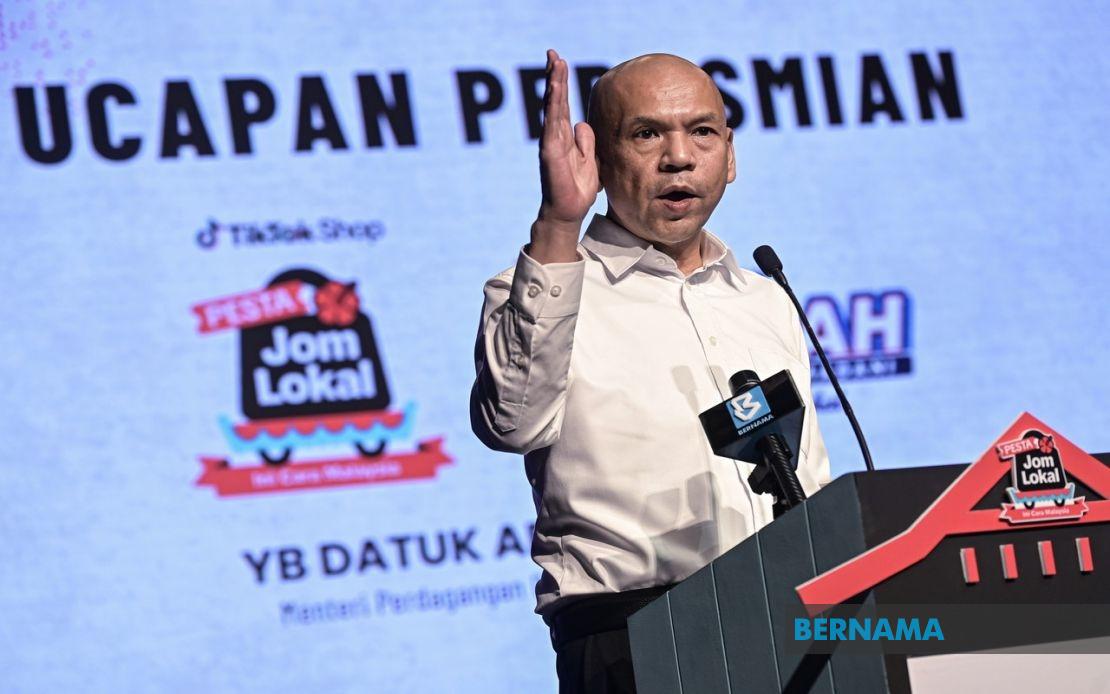
The Ministry of Domestic Trade and Cost of Living (KPDN) has successfully extended its popular RAHMAH Sales initiative into the digital marketplace, launching the Jualan Ihsan RAHMAH programme in partnership with TikTok Shop. The move represents a strategic pivot to meet evolving consumer shopping patterns while maintaining the government's core objective of providing affordable access to essential goods. Minister Datuk Armizan Mohd Ali unveiled the initiative at the JomLokal 2026 festival in Ampang, positioning TikTok Shop as the first e-commerce platform to formally collaborate with KPDN on this cost-of-living support scheme.
The digital expansion of RAHMAH Sales addresses growing consumer expectations for online shopping convenience without sacrificing affordability. While the government had received suggestions to move the programme online, Armizan explained that policymakers must carefully evaluate resource availability and implementation feasibility before rolling out large-scale initiatives. The partnership with TikTok Shop emerged as a pragmatic solution, with the platform taking the lead in developing the online framework before the government launched its own dedicated platform. This approach allowed the initiative to reach consumers faster while leveraging the technology company's existing infrastructure and user base across Malaysia.
The programme grants consumers access to 75 stock-keeping units across selected essential product categories, with participating retailers HeroMarket and KedaiFGV offering their goods through TikTok Shop's marketplace. Shoppers can benefit from discounted prices that reflect the original spirit of RAHMAH Sales—making necessities affordable for ordinary Malaysians facing cost-of-living pressures. The curated product selection ensures that the programme remains focused on genuine essentials rather than expanding into discretionary items, maintaining the integrity of the government's affordability mission.
TikTok Shop's financial commitment underscores the significance of this partnership, with the platform pledging RM180 million to support three key programme components. The first involves discount vouchers that offer savings of up to 30 per cent on eligible essential goods, directly reducing the out-of-pocket expenses for consumers. This incentive structure targets price-sensitive shoppers who benefit most from bulk discount opportunities. The voucher system also encourages repeat purchases and customer loyalty, creating sustainable engagement between retailers and their customer base.
Beyond consumer incentives, the programme implements substantial cost-reduction measures for participating sellers operating on the TikTok Shop platform. Zero per cent commission applies to 56 product subcategories, eliminating platform fees that typically eat into retailer margins. For a further 39 subcategories, TikTok Shop reduces platform fees, ensuring that merchants can maintain competitive pricing without sacrificing profitability. Additionally, the RM2 shipping rebate on every eligible nationwide order directly subsidises logistics costs, one of the largest operational expenses for e-commerce retailers. These layered cost controls create a multiplier effect, allowing savings to pass through to consumers while preserving business viability.
Armizan articulated three core objectives driving the programme: elevating local Malaysian products, alleviating cost-of-living pressures, and supporting entrepreneurial income growth. By channelling sales through local retailers rather than exclusively international suppliers, the initiative strengthens domestic commerce and keeps spending circulating within the Malaysian economy. The programme particularly benefits small and medium-sized enterprises that have embraced e-commerce but struggle with platform fees and logistics costs. By reducing these friction points, KPDN and TikTok Shop enable local entrepreneurs to compete more effectively against larger international sellers dominating online marketplaces.
The Jualan Ihsan RAHMAH initiative operates in tandem with the Buy Malaysian Products Campaign, or JOM MALAYSIA, launched on June 27. This complementary approach reinforces a whole-of-nation strategy prioritising local economic resilience and consumer preference for domestically-produced goods. While JOM MALAYSIA establishes the cultural and patriotic framework encouraging Malaysians to favour local products, Jualan Ihsan RAHMAH provides the practical financial mechanism to make that choice affordable. Together, these programmes create a cohesive narrative linking patriotic consumption with tangible cost savings.
For Southeast Asian observers, the Malaysia-TikTok Shop partnership illustrates how emerging e-commerce platforms can serve as partners in government policy implementation rather than purely commercial entities. TikTok Shop's willingness to invest substantial resources into reducing consumer costs and merchant fees demonstrates a strategy of building ecosystem value rather than extracting maximum short-term profits. This model contrasts sharply with traditional retail platforms that historically prioritised commission revenues over stakeholder welfare. The collaboration also indicates regional governments' growing sophistication in leveraging private sector capabilities to amplify policy reach.
The online expansion addresses critical gaps in the original RAHMAH Sales programme, which operated through physical retail locations with inherent geographic and accessibility limitations. Rural consumers, working professionals unable to visit participating shops during business hours, and those living far from retail outlets can now access RAHMAH pricing through their smartphones. This democratisation of access represents meaningful progress in making cost-of-living support genuinely universal rather than limited to populations convenient to physical stores.
Consumers navigating Malaysia's inflation pressures face a complex retail landscape where price differences across platforms and retailers can significantly impact household budgets. The RAHMAH Sales programme on TikTok Shop consolidates comparative shopping by providing transparent discounts on verified essential items through trusted retailers. This reduces the decision-making burden on shoppers and eliminates information asymmetries that typically disadvantage less digitally literate consumers. The 30 per cent discount ceiling also sets clear expectations, preventing false advertising or misleading promotional claims.
Looking forward, the Jualan Ihsan RAHMAH programme could establish a blueprint for government-private sector collaboration in digital commerce across Southeast Asia. As other nations grapple with inflation and cost-of-living concerns, Malaysia's model demonstrates that e-commerce platforms can become instruments of social policy without requiring direct government operation or substantial budget allocation. The risk-sharing arrangement, where TikTok Shop funds programme implementation while KPDN provides regulatory legitimacy and consumer trust, creates a sustainable partnership model. Success in this initiative could encourage similar programmes across the region, potentially establishing TikTok Shop as a preferred partner for government affordability initiatives in emerging markets.
The timing of this launch reflects Malaysia's broader digital transformation agenda and consumer shift toward online shopping, accelerated by pandemic-era habits that have persisted post-recovery. Young Malaysians particularly favour TikTok's integrated shopping features that blur entertainment and commerce, making the platform a natural choice for reaching price-conscious digital natives. By establishing RAHMAH Sales on TikTok Shop rather than exclusively through government or traditional retail channels, KPDN signals recognition of where consumers actually shop and how purchasing behaviour has fundamentally changed. This adaptive governance approach, prioritising consumer convenience over bureaucratic preference, suggests institutional learning and pragmatism in Malaysian policymaking.

