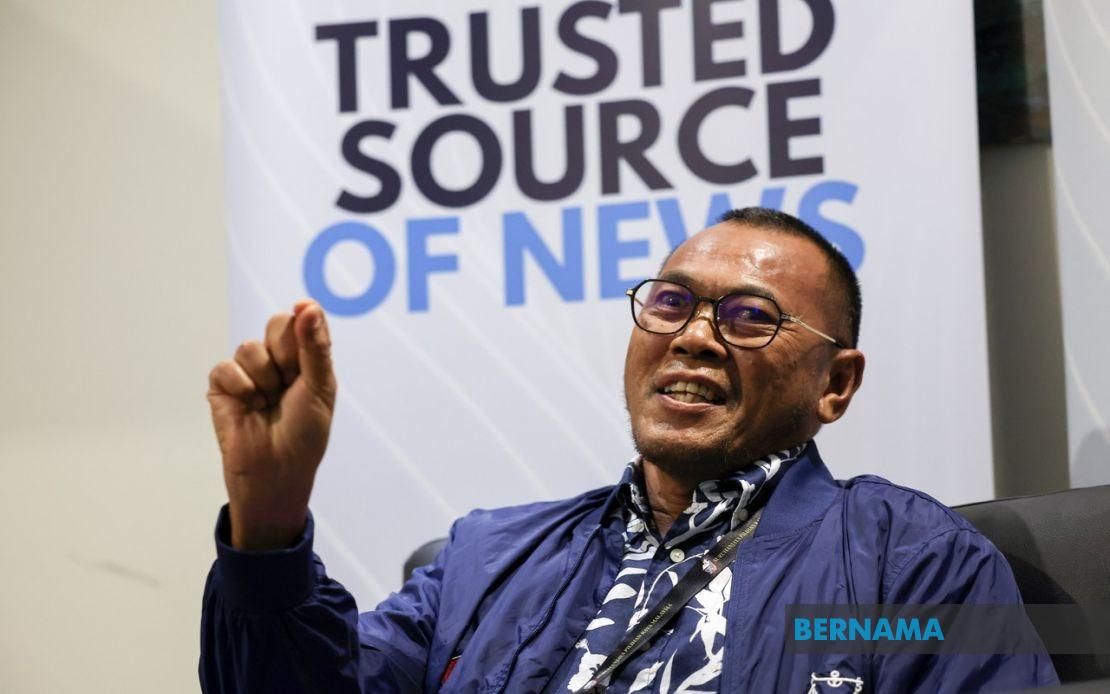
Datuk Pandak Ahmad, the incumbent assemblyman for Kota Iskandar, is pitching his re-election bid on a foundation of accessible governance, framing his role as a conduit between the aspirations of his constituents and the delivery of tangible services. Running under the Barisan Nasional banner, Pandak argues that his approach—rooted in listening, comprehension, and pragmatic problem-solving—has defined his tenure and should inform voters' decision-making as they head to the polls on July 11.
Central to Pandak's campaign narrative is the Johor People's Housing Programme, under which 12,000 affordable housing units have been constructed within his constituency. This initiative carries particular resonance in a district experiencing rapid urbanisation and demographic shifts. The availability of homeownership opportunities for middle-income families addresses a chronic challenge in Malaysia's property market, where young professionals and growing households struggle to transition from renting to ownership. For Kota Iskandar specifically, a constituency of 132,579 registered voters with youth comprising more than 131,000 of that total, housing affordability directly affects the economic stability and family planning of a significant portion of the electorate.
Beyond residential construction, Pandak points to infrastructure and religious facility development as evidence of his administration's breadth. The establishment of a mosque in Pulau Emas and the Tunku Mohkata Ismail Youth Centre reflect dual priorities: catering to both spiritual needs and the recreational and developmental aspirations of younger residents. These projects signal an understanding that effective representation requires attention to multiple dimensions of community life, not merely economic or administrative matters.
The assemblyman's administrative reforms merit closer examination as they illustrate how governance mechanisms can be streamlined to benefit entrepreneurs and small traders. By working with the Iskandar Puteri City Council to expedite licensing approvals to a single day, Pandak has addressed a frustration point that directly impacts business formation and economic mobility. This operational improvement, while unglamorous, removes friction from the foundation of local economic activity and reflects a focus on institutional efficiency as a service delivery tool.
A particularly noteworthy achievement cited by Pandak involves the recovery of nine acres of land previously held by the private sector, now designated for development as a commercial fishing hub. This represents not merely infrastructure development but a deliberate effort to formalise and upgrade the livelihoods of fishing communities whilst maintaining their cultural and economic identity. The orderly relocation of traders' stalls indicates a philosophy of development that preserves community cohesion rather than displacing it.
The transformation of Kampung Sungai Melayu from a traditional fishing settlement into a tourism destination illustrates this philosophy in practice. A village of over 160 years' standing has been repositioned as a tourism asset through nearly RM22 million in infrastructure investment, attracting over 100,000 visitors in conjunction with Visit Johor Year 2026. For rural and semi-rural constituencies in Malaysia where traditional livelihoods face pressure from modernisation, this approach offers a model: preservation and formalisation of heritage sectors through tourism development. It generates income diversification whilst maintaining cultural continuity.
However, Pandak acknowledges persistent challenges that complicate his narrative of successful stewardship. Traffic congestion on key routes—particularly between Universiti Teknologi Malaysia and Pulau Indah, and between Gelang Patah and Kampung Ulu Pulai—reflects the friction points inherent in rapid suburban expansion. His proposed remedies, including smart traffic light systems, two new flyovers, and an elevated interchange, suggest awareness that infrastructure must evolve alongside development intensity. Yet such projects require state and federal coordination, introducing variables beyond an assemblyman's unilateral control.
Looking forward, Pandak's plan to construct approximately 300 housing units in Gelang Patah and over 800 in Taman Damai, Pulau Hijauan, priced below RM300,000 per unit, continues his housing affordability focus. His vision to develop Pendas as a tourism destination by building on its fishing sector strengths, replicating the Kampung Sungai Melayu model, demonstrates strategic thinking about economic diversification and community-based development. The notion of combining fishing activities with ecotourism to augment household incomes reflects an understanding that sustainable livelihoods require multiple income streams.
The campaign itself reveals evolving political practice within Malaysian constituencies. Whilst traditional face-to-face engagement remains central to Pandak's strategy, his deployment of Facebook, Instagram, and Threads to reach voters under 40 acknowledges demographic reality: over 131,000 young voters in Kota Iskandar represent a constituency segment that consumes information and processes political messaging through digital channels. This dual approach—ground-level and digital—reflects adaptive campaigning necessary in the social media age.
Kota Iskandar's electoral contest is notably competitive, featuring a four-cornered race between Pandak (Barisan Nasional), Dzulkefly Ahmad (Pakatan Harapan), S. Anna Pravina (Perikatan Nasional), and Sahrudin Omar (Parti Bersama Malaysia). The presence of four significant contenders indicates voter choice extending beyond the traditional BN-PH binary and reflects increasing fragmentation in Malaysian electoral politics. For Pandak, consolidating traditional support whilst appealing to young voters becomes essential given the split opposition field.
The timing of early voting on July 7, with main polling on July 11, provides the constituency with a week-long voting window. For an assemblyman seeking re-election, the final weeks of campaigning offer opportunity to mobilise existing networks whilst articulating a forward vision that addresses both persistent concerns—traffic, housing—and emerging opportunities for economic diversification and community enhancement.
Ultimately, Pandak Ahmad's pitch rests on a philosophy of incremental, service-oriented governance: addressing problems as they emerge, formalising informal sectors, and improving institutional efficiency. Whether this resonates with Kota Iskandar's increasingly diverse electorate—particularly its substantial youth cohort and rapidly growing middle-income families—will become apparent on July 11.

