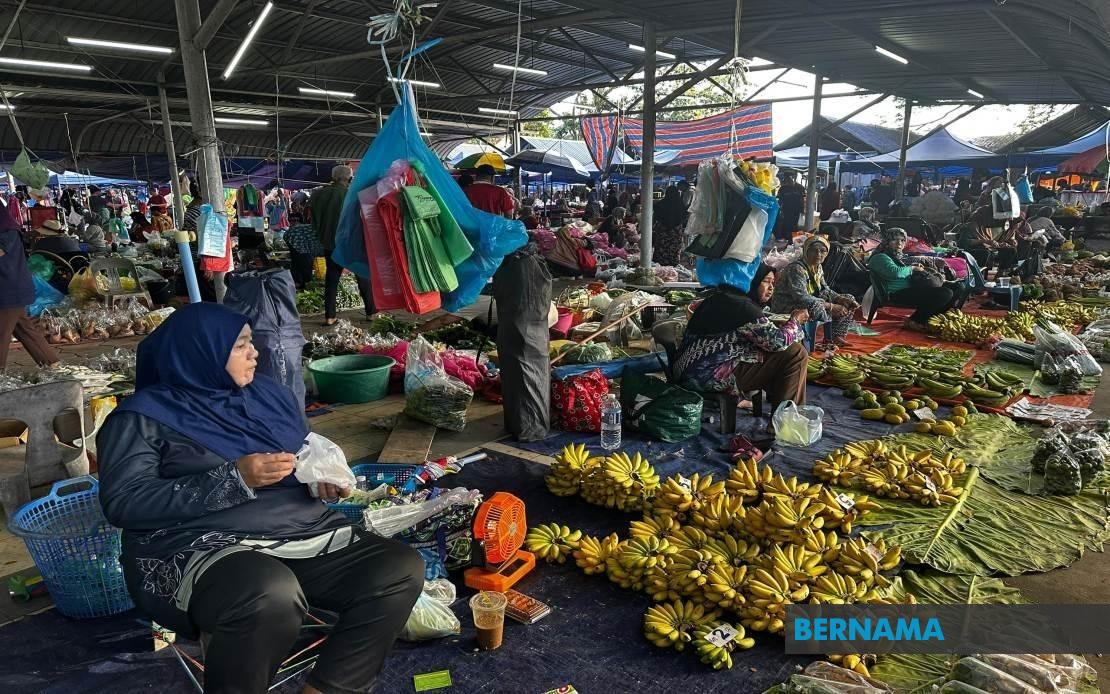
The Sabah State Legislative Assembly heard on July 21 that efforts to secure UNESCO World Heritage Site status for Kota Belud Tamu, the district's renowned traditional market, will demand substantial investigative work and careful preparation before the nomination can advance. Dr Andi Md. Shamsureezal, serving as Assistant Minister of Tourism, Culture and Environment, outlined the complexity of the process to lawmakers, emphasising that the journey toward international recognition involves far more than a simple application submission.
The nomination pathway, according to Dr Andi, requires layered assessments that examine both the physical and spiritual dimensions of cultural significance. The government must conduct thorough examinations of the tangible heritage elements—structures, archaeological features, and material artefacts—alongside documentation of intangible cultural aspects such as traditions, practices, and community knowledge systems associated with the market. This dual-track investigation reflects UNESCO's comprehensive approach to heritage preservation, which goes beyond preserving buildings to encompassing the living customs and social practices tied to a location.
Crucially, any successful nomination must rest upon robust historical and scientific foundations. The documentation process demands rigorous evidence gathering, scholarly research, and cross-verification to establish the site's credentials within UNESCO's evaluation framework. Officials must construct a compelling narrative that positions Kota Belud Tamu within broader cultural and historical contexts, demonstrating why this particular market deserves recognition alongside globally significant heritage sites. This evidentiary burden represents a significant undertaking that typically involves collaboration between government agencies, academic institutions, and heritage specialists.
A core requirement involves demonstrating what UNESCO terms "Outstanding Universal Value"—essentially proving that Kota Belud Tamu possesses significance extending beyond regional or national importance to hold meaning for humanity as a whole. This threshold demands presenting evidence that the market represents exceptional examples of cultural traditions, architectural significance, or historical processes. The criterion itself is deliberately demanding, ensuring that World Heritage designations remain meaningful and exclusive rather than proliferated across numerous sites.
Responseding to a parliamentary query from Datuk Mohd Arsad Bistari (GRS-Tempasuk) regarding heritage recognition initiatives, Dr Andi contextualised these efforts within Sabah's existing international designations. The district has already achieved international status through its inclusion within the Kinabalu UNESCO Global Geopark, which received official designation in May 2023. This earlier recognition positions Kota Belud advantageously for potential World Heritage consideration, as it has already undergone international scrutiny and gained acceptance as a geologically and culturally significant area.
The geopark designation has catalysed various conservation and promotion activities orchestrated through Sabah Parks, the lead managing agency. These initiatives extend beyond passive preservation to active engagement with community stakeholders and commercial interests. The so-called "Tamu Geopark" programme exemplifies this integrated approach, functioning as a vehicle for simultaneously promoting cultural expression and generating economic participation among residents.
Through these coordinated efforts, Kota Belud Tamu has emerged as a multi-faceted cultural showcase. The market platform now highlights local culinary traditions, indigenous textiles and apparel, artisanal crafts, contemporary artistic expression, and regional merchandise. Simultaneously, community members have developed geoproducts—items leveraging the geopark's scientific and cultural significance—that appeal to visitors seeking authentic local experiences. This integration of heritage promotion with economic development reflects a contemporary approach to cultural preservation that acknowledges the necessity of financial sustainability for long-term community engagement.
The approach carries particular resonance for Southeast Asian heritage conservation efforts. Throughout the region, traditional markets and community gathering spaces face pressure from modernisation and urbanisation. By positioning Kota Belud Tamu not merely as a historical artifact requiring protection but as a dynamic economic asset with contemporary relevance, Sabah's government demonstrates a pragmatic model. Communities prove more likely to maintain cultural practices when those practices generate tangible livelihood benefits, creating alignment between cultural preservation and economic self-interest.
For Malaysian heritage advocates and policymakers, the extended timeline and rigorous requirements outlined by Dr Andi underscore the gap between aspiration and international recognition. Numerous Malaysian sites possess undoubted cultural significance yet remain undesignated partly due to documentation deficiencies, inadequate research infrastructure, or insufficient coordination among stakeholders. The Kota Belud experience suggests that successful UNESCO nominations demand sustained institutional commitment, adequate resourcing, and patient engagement with international evaluation processes rather than expedited submissions.
Moreover, the emphasis on demonstrating Outstanding Universal Value raises fundamental questions about how Southeast Asian cultural heritage translates to globally recognised significance. UNESCO's criteria, developed through Western-centric frameworks, sometimes struggle to adequately capture non-Western cultural expressions. Sabah's challenge involves translating the living significance that indigenous Kadazan-Dusun and other communities perceive in Kota Belud Tamu into language and evidence formats that UNESCO evaluators readily understand and recognise as meeting international standards.
The geopark designation provides intermediate validation and infrastructure support while more extensive preparation proceeds toward potential World Heritage candidacy. This staged approach offers practical advantages, allowing communities to benefit from international recognition and associated tourism and development support whilst accumulating the documentary evidence and scholarly research required for higher-designation attempts. For other Malaysian regions harbouring heritage ambitions, this sequential strategy warrants consideration as a realistic pathway to ultimate recognition.

