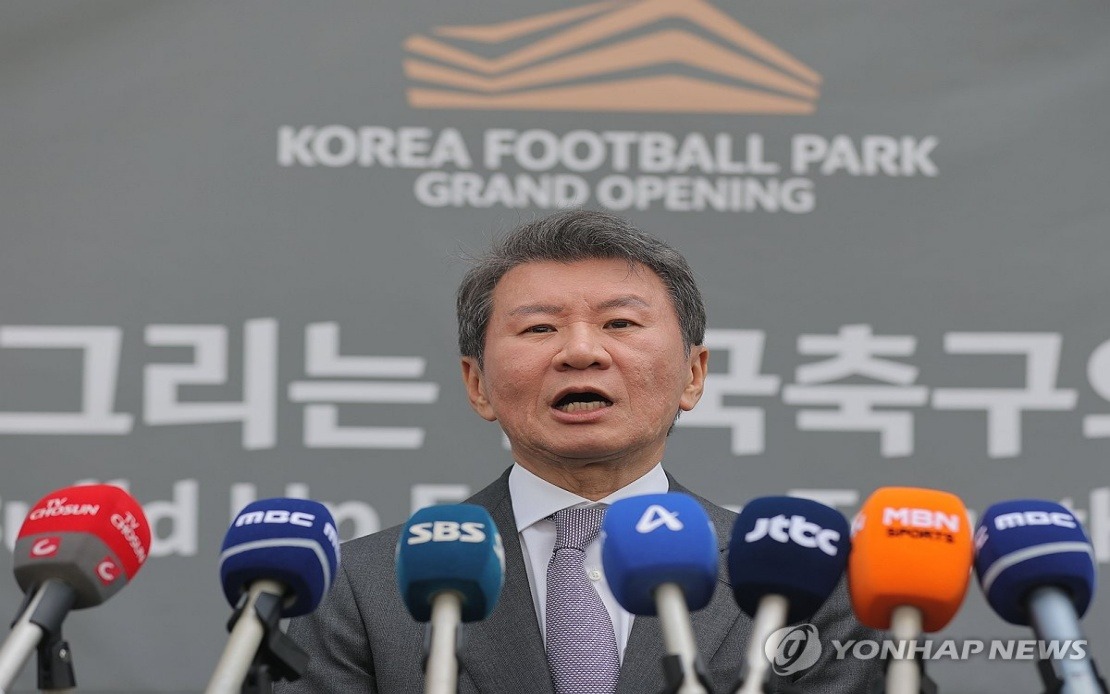
The Korea Football Association's leadership has undergone a significant transition with the resignation of president Chung Mong-Gyu on Monday. His decision to step down from the helm of the national football federation marks a dramatic conclusion to a turbulent period for South Korean football, occurring two weeks before the World Cup concludes on July 20.
Chung formalized his departure by submitting a resignation letter following what he described as his final executive meeting at Korea Football Park in Cheonan, located approximately 90 kilometres south of Seoul. While he had previously announced in May that he would leave his position once the World Cup concluded, the accelerated timeline reflects the depth of disappointment surrounding South Korea's performance at the tournament. The national team's premature elimination from group stage competition, finishing with only three points from one victory and two defeats, proved a decisive catalyst for his early exit.
South Korea's inability to progress past the group stage represented a significant setback, particularly as the team failed to secure a position among the eight best-performing third-place finishers who would advance to the knockout rounds. The responsibility for the team's tactical approach fell to coach Hong Myung-bo, who immediately resigned once the mathematical elimination became certain. This rapid succession of leadership departures underscores the gravity with which the South Korean football establishment views competitive underperformance at the World Cup.
Chung's tenure has been shadowed by considerable institutional friction and governance questions. The appointment of Hong Myung-bo as national team coach in July 2024 sparked widespread criticism over the KFA's selection methodology, with observers contending that the process lacked transparency and proper oversight. These concerns prompted South Korea's Ministry of Culture, Sports and Tourism to launch a comprehensive investigation into the football association's operations, ultimately concluding that disciplinary measures were warranted for Chung and several other senior KFA officials due to documented irregularities throughout the year.
The relationship between the KFA and governmental authorities has deteriorated significantly, with legal disputes emerging from the ministry's investigations and enforcement efforts. The organization now faces the prospect of additional audits as authorities examine the administrative and competitive implications of the World Cup departure. This escalating tension reflects broader questions about accountability and administrative standards within Korean sports governance.
Under existing KFA regulations, an interim president will be selected from among the organization's four vice presidents to maintain operational continuity pending formal elections. The electoral timeline presents an important consideration: since Chung retained nearly three years remaining on his fourth consecutive term as association president, successor elections must proceed within a mandatory 60-day window established by KFA protocols. This compressed schedule will require the organization to rapidly mobilize its electoral machinery.
The KFA's presidential election process involves an electoral college comprising regional football association administrators, K League club executives, professional players, coaches, and referees. The previous year's election demonstrated substantial participation, with 183 of 192 eligible voters participating in the selection process. However, government officials have begun questioning whether this established framework adequately serves public interests and expectations.
Chae Hwi-young, who leads the Ministry of Culture, Sports and Tourism, has publicly expressed reservations about the KFA's existing electoral mechanisms. His recent statements emphasizing public disappointment with South Korea's World Cup performance suggest growing political pressure for institutional reform. The ministry appears positioned to leverage this moment to demand governance improvements, operating from the premise that the football association's current structures insufficiently reflect popular sentiment regarding athletic performance and administrative standards.
The Korean Sport and Olympic Committee, functioning as the nation's supreme sports authority, has scheduled a significant rules modification session for July 16 to address these emerging concerns. Officials from the KSOC have indicated that the meeting will examine possibilities including an extension of the mandatory 60-day electoral window and potentially introducing a direct election system that would bypass the current collegiate voting arrangement. These prospective changes would represent substantial shifts in how South Korean football leadership is selected and could establish precedents for other sports organizations.
In addressing his departure, Chung acknowledged both accomplishments and failures during his tenure. He emphasized that his primary focus consistently centered on advancing Korean football's international standing and competitive achievements. His statement attempting to balance responsibility while crediting collective effort reflects the delicate positioning required of departing leaders in high-profile sports governance roles, particularly when institutional legitimacy faces scrutiny from multiple directions.
Chung's resignation occurs within a broader context of Southeast Asian sports governance evolution, where transparency, accountability, and participatory decision-making increasingly characterize expectations for major sporting bodies. The KFA situation demonstrates how competitive underperformance intersects with governance concerns to create pressure for institutional modernization. As Malaysian and regional sports administrators observe these developments, the Korean experience illustrates tensions between traditional electoral structures and contemporary public demands for more inclusive and transparent leadership selection processes in national sports organizations.
The succession question now confronting the KFA will likely determine whether institutional reform occurs, potentially influencing governance standards throughout Asian football. The organization's ability to navigate the coming electoral process while addressing governmental concerns will establish important precedents for how sports bodies respond to simultaneous competitive crises and administrative challenges.

