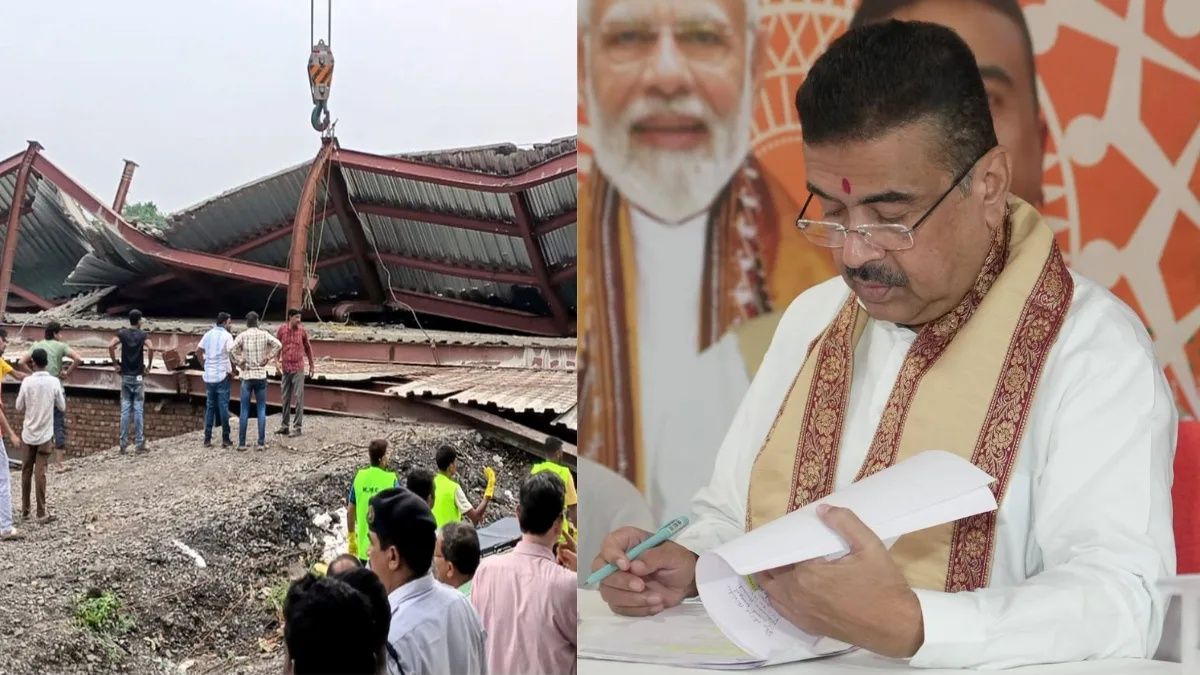
The death toll from a warehouse collapse in Kolkata's Taratala district has reached 11, with rescue teams continuing their efforts to locate workers feared buried beneath the rubble. The latest fatality was recovered on Thursday afternoon at around 1.15pm, when the body of an unidentified victim was transported to the Trauma Care Centre at SSKM Hospital. The incident, which occurred on Wednesday, has triggered a massive coordinated response involving the Indian Army, the National Disaster Response Force (NDRF), and multiple state agencies working in tandem to extract survivors from the debris and assess the scale of the tragedy.
The response from both national and state authorities has demonstrated unusual coordination during a crisis that raises serious questions about infrastructure oversight in India's densely populated urban centres. Personnel from various government departments remain stationed at the collapse site, and officials acknowledge that several workers remain unaccounted for, suggesting the final death toll may yet rise. The incident has exposed significant vulnerabilities in how construction projects are supervised and approved in major metropolitan areas, concerns that extend well beyond West Bengal and resonate across India's burgeoning cities where rapid development often outpaces safety mechanisms.
West Bengal Chief Minister Suvendu Adhikari used his appearance in the state assembly to launch a comprehensive critique of the approval process that permitted the warehouse to be constructed. Presenting what he described as documentary evidence, Adhikari asserted that the Taratala building plan had received approval despite containing documented structural deficiencies in its design. He specifically referenced signatures from the former Kolkata Municipal Corporation Mayor, Firhad Hakim, suggesting that officials had knowingly sanctioned a flawed construction scheme. The Chief Minister's accusations point to a pattern of regulatory capture where officials tasked with protecting public safety may have prioritised other considerations.
The alleged negligence extends beyond mere administrative oversight, according to Adhikari's allegations. He claimed that corruption and the systematic extraction of "cut money"—unofficial payments demanded by officials—had fundamentally compromised the integrity of Kolkata's building approval system. These accusations underscore a broader problem afflicting Indian cities: the intersection of bureaucratic weakness, political patronage, and organised corruption that creates environments where unsafe structures can be erected and occupied without meaningful intervention. The Chief Minister characterised this pattern as having transformed Kolkata into a "city of death," a stark indictment of governance failures under the previous administration.
Law enforcement has already moved to hold individuals accountable for the disaster. Five people have been arrested in connection with the collapse, including the construction company's site supervisor, the contractor responsible for the iron structure, the individual who leased the land, a labour contractor operating under the Trimex framework, and a broker involved in securing KMC approval. However, the primary accused individual, identified as Azgar, remains at large. The broad sweep of arrests suggests investigators are examining the entire chain of responsibility from initial design approval through construction execution and site management, recognising that disasters of this magnitude typically result from failures across multiple points in a system rather than isolated lapses.
Adhikari has announced that his government will implement a four-week moratorium on construction activity throughout Kolkata and surrounding municipalities including Rajarhat-New Town, Maheshtala, Budge Budge, Pujali, Bishnupur, Sonarpur, and Baruipur. This suspension, excepting only essential services, represents an extraordinary intervention that will disrupt development schedules across a vast metropolitan region. The pause exists primarily to facilitate a comprehensive audit of all previously approved building plans within these jurisdictions, an admission that the scale of potential danger may extend far beyond this single warehouse. The decision signals official recognition that the approval process itself may have been systematically compromised.
To oversee this massive auditing exercise, the state government has constituted a high-level committee chaired by Additional Chief Secretary Rajesh Pandey. The committee's composition reflects an attempt to bring diverse technical expertise to bear on assessing structural safety. Membership includes senior bureaucrats alongside representatives from IIT Kharagpur, RITES (Rail India Technical and Economic Service), IRCON (Indian Railway Construction Limited), the Fire Services Department, the Public Works Department, and the KMC itself. This multi-agency approach seeks to overcome the institutional insularity that may have enabled previous failures, introducing external technical scrutiny and oversight mechanisms.
The Chief Minister's stern pronouncements regarding consequences for those found guilty underscore a shift in how the state government appears prepared to address infrastructure failures. Beyond conventional imprisonment, Adhikari indicated that authorities would pursue confiscation of properties belonging to convicted individuals, with proceeds directed toward victim compensation. This approach, if implemented, would represent an unusually aggressive stance in holding officials and contractors financially accountable for disasters resulting from their negligence or malfeasance. Such measures acknowledge that victims and their families require substantive recompense beyond symbolic justice.
The Taratala warehouse collapse carries implications extending throughout South Asia, where rapid urbanisation routinely outpaces the development of robust safety infrastructure and enforcement mechanisms. For Malaysia, which has experienced similar pressures as industrial capacity expands and construction accelerates across urban and suburban areas, the incident serves as a cautionary example of what occurs when regulatory frameworks lack adequate resources or political will to enforce compliance. The Kolkata disaster illustrates how systemic corruption and bureaucratic inadequacy can transform routine construction approvals into public hazards, a risk that remains present wherever oversight institutions are weak or compromised.

