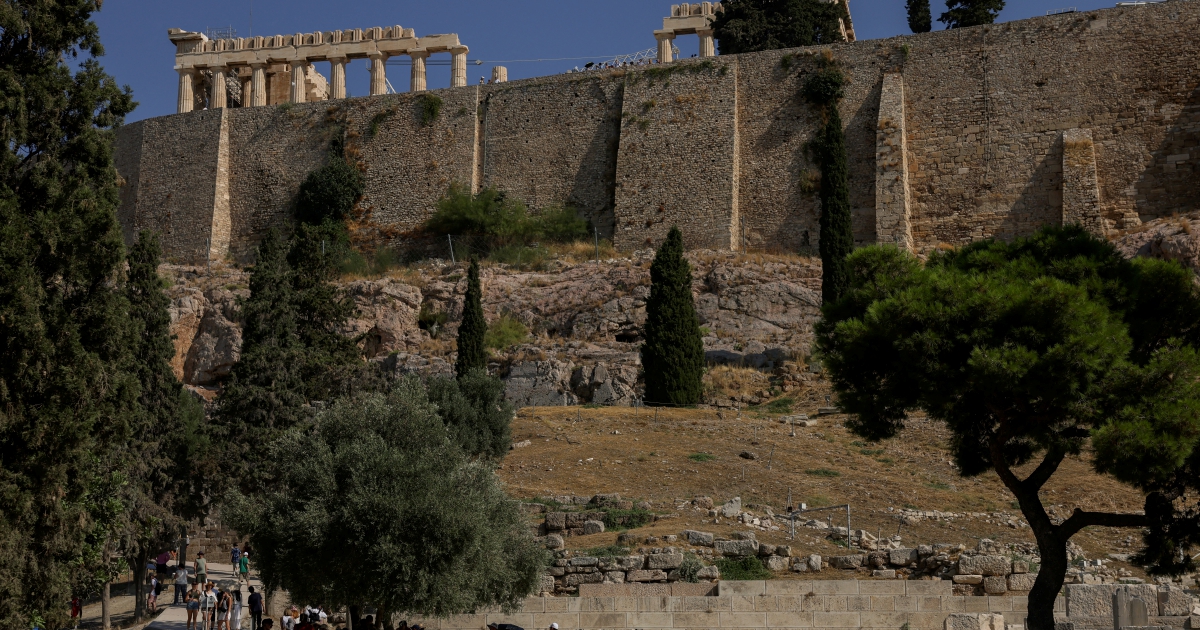
A disturbing incident unfolded in central Athens on Tuesday when a 60-year-old man wielded a knife against two Greek-American tourists in the vicinity of the Acropolis, one of the world's most recognisable archaeological sites and a cornerstone of ancient Greek civilisation. The attack, which occurred in an area frequented by thousands of international visitors daily, prompted a swift police response that resulted in the suspect's apprehension. The incident underscores growing concerns about visitor safety at major cultural landmarks in Greece, a nation heavily dependent on tourism revenue.
The Acropolis area represents far more than just a historical attraction; it serves as the heartbeat of Athens' tourism economy and a symbol of Western civilisation's cultural heritage. Perched on a rocky outcrop above the capital, the complex draws millions of tourists annually from across the globe, making it essential infrastructure for Greece's post-financial-crisis economic recovery. The presence of security incidents in such a high-profile location inevitably reverberates through both local and international travel communities, influencing visitor confidence and travel decisions.
For Malaysian and Southeast Asian travellers, particularly those who regularly venture to European heritage sites, such incidents warrant serious consideration when planning trips. The attack raises practical questions about personal safety protocols at major attractions, appropriate times to visit crowded sites, and the necessity of remaining vigilant in urban tourist zones. Many Southeast Asian visitors prioritise cultural tourism, with Greece featuring prominently on itineraries as travellers seek to connect with ancient civilisations that influenced global artistic and philosophical traditions.
Greece's tourism sector has shown resilience following the nation's economic upheaval during the debt crisis of the 2010s. International arrivals have rebounded substantially, with visitors viewing the country as an increasingly attractive destination compared to more volatile Mediterranean alternatives. However, occasional security incidents threaten to undermine carefully rebuilt confidence among potential visitors from long-haul markets, including Asia-Pacific regions where awareness of European tourism safety is an important factor in destination selection.
The circumstances surrounding this particular attack remain subject to investigation by Greek authorities. The motivation behind the assault—whether random or targeted—significantly influences how the incident reflects upon the broader security environment. Police procedures and investigation outcomes will likely receive scrutiny from international media outlets and tourism boards seeking to reassure nervous potential visitors that the Acropolis remains a safe destination for cultural exploration.
Athenian law enforcement has traditionally managed security within the Acropolis archaeological precinct through both visible and plainclothes personnel. The rapid arrest in this case demonstrates operational effectiveness, yet the incident inevitably raises questions about resource allocation and whether current security measures adequately protect the estimated four to five million annual visitors to the complex. Balancing open public access with meaningful security represents a perpetual challenge for heritage site administrators worldwide.
The Acropolis holds extraordinary significance beyond its role as a tourist attraction. The Parthenon and surrounding temples constitute foundational elements of European cultural identity and Western philosophical tradition. Protecting these sites and their visitors represents both a security imperative and a cultural responsibility. Greek authorities understand that security breakdowns at such symbolically important locations generate disproportionate international attention and concern.
For travel operators and tourism agencies, particularly those serving markets in Malaysia and the broader Southeast Asian region, the incident necessitates updated risk assessments and client communication strategies. Reputable operators typically provide detailed safety guidance to clients visiting major attractions, including information about emergency procedures, secure bag practices, and optimal visiting times to minimise crowd-related risks. The attack may prompt increased discussion of these protocols within industry circles.
Greece's tourism recovery narrative has been compelling in recent years, with visitor numbers increasingly approaching pre-crisis levels. The government has invested substantially in destination marketing across Asian markets, recognising the growth potential from middle-class expansion in countries like Malaysia, Singapore, and Indonesia. Safety concerns directly undermine these strategic marketing efforts and potentially redirect tourism spending toward alternative Mediterranean destinations perceived as offering superior security environments.
The investigation into the attacker's background and motives will prove instructive. Determining whether the assault resulted from mental health issues, personal disputes, or other factors will influence how authorities frame the incident to international audiences. Greek officials typically move quickly to contextualise such events, emphasising their exceptional nature and providing statistical context about violent crime rates at tourist destinations relative to broader Athens crime trends.
Tourism authority responses will likely emphasise enhanced visitor information programmes and potentially expanded security presence during peak visiting hours. The Acropolis Museum, located adjacent to the archaeological site, and surrounding attractions including the Plaka district may see increased police and security coordination. These measures aim to provide both genuine safety improvements and visible reassurance to visiting populations.
For Southeast Asian potential visitors, this incident should be understood within appropriate context. Greece remains substantially safer than many tourism destinations globally, and security incidents at major attractions, while notable, remain statistically rare. The attack represents an outlier rather than an indication of systematic safety problems. However, it legitimately prompts conversations among travel planners and family groups about destination risk profiles and personal safety preparation before international travel.

