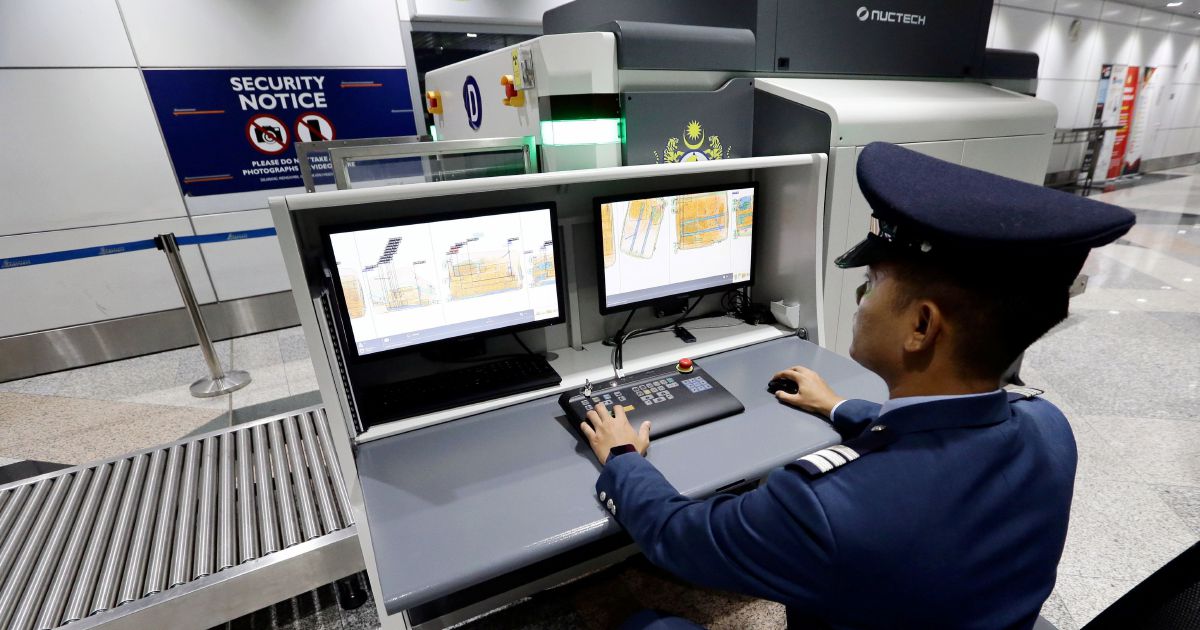
Malaysia's Home Minister Datuk Seri Saifuddin Nasution Ismail has clarified that sophisticated scanning equipment deployed at Kuala Lumpur International Airport possesses the technological capability to identify illicit substances, yet security vulnerabilities stem from how personnel operate these systems rather than equipment limitations. Speaking from Putrajaya, Saifuddin attributed the recurring discovery of contraband smuggling cases to procedural gaps that have historically concentrated on intercepting weapons rather than systematically detecting narcotics and other prohibited items.
The minister's statement addresses growing public concern surrounding repeated seizures of drugs and controlled substances at Malaysia's busiest aviation hub, with observers questioning whether aging or inadequate scanner technology contributed to enforcement failures. Instead, Saifuddin's remarks redirect responsibility toward standard operating procedures that have shaped how screening officers prioritize different security threats. This distinction carries significant implications for how Malaysia approaches aviation security reform, suggesting that equipment replacement alone would prove insufficient without simultaneous revision of operational protocols.
KLIA processes approximately 60 million passengers annually, making it Southeast Asia's fourth-largest airport by passenger traffic. The facility handles substantial international transit flows, particularly from neighbouring regions where drug trafficking networks maintain established routes. Security breaches at major transportation hubs represent critical vulnerabilities within Malaysia's broader counter-narcotics architecture, as international trafficking organisations frequently exploit procedural inconsistencies or resource constraints at congested checkpoints. The government's awareness of these gaps indicates acknowledged operational shortcomings requiring systematic remediation.
Saifuddin's emphasis on standard operating procedures rather than hardware deficiency suggests the government recognises that institutional frameworks and staff training protocols warrant urgent review. Security screening involves nuanced decision-making where officers must balance thoroughness with processing speed, and existing procedures may have inadvertently deprioritised narcotics detection amid competing demands for weapons interdiction. The prioritisation reflects post-9/11 aviation security paradigms globally, where preventing aircraft hijackings or bombings has traditionally dominated risk assessment hierarchies.
However, Southeast Asia's escalating methamphetamine crisis, combined with heroin trafficking through major aviation corridors, necessitates recalibration toward equally rigorous drug-detection protocols. Malaysia faces particular vulnerability given its geographic positioning between production regions in the Golden Triangle and consumption markets in East Asia and Australia. Failure to systematically intercept narcotics at airports undermines both domestic law enforcement objectives and regional cooperation frameworks established through ASEAN narcotics control initiatives.
The minister's disclosure implicitly acknowledges that KLIA's security apparatus requires procedural modernisation rather than capital-intensive equipment replacement. This represents a pragmatic recognition of fiscal constraints facing Malaysian authorities while indicating commitment to enhanced detection capacity through operational restructuring. Implementing revised screening protocols requires relatively modest investment compared to acquiring new scanners, though demands substantial institutional reform including retraining personnel and revising checkpoint workflows.
Implementing priority shifts toward narcotics detection raises complex operational questions regarding screening duration and passenger processing efficiency. KLIA's substantial throughput necessitates maintaining reasonable passenger flows, and enhanced contraband screening could create bottlenecks affecting travel convenience. Security planners must develop approaches balancing interdiction effectiveness with operational capacity, potentially through risk-based screening frameworks that allocate intensive scrutiny to high-risk passengers or cargo while maintaining efficiency for lower-risk traffic.
Regional context matters considerably here, as other Southeast Asian hubs compete for transit passenger volume and cargo business. Singapore's Changi Airport maintains reputation for stringent security through sophisticated procedures rather than equipment alone, demonstrating that operational excellence can sustain competitive advantage. Malaysia's aviation sector cannot afford extended processing delays, yet cannot simultaneously tolerate security compromises that enable major drug seizures, creating genuine tension between competing priorities requiring strategic resolution.
Saifuddin's statement also suggests internal government recognition that public confidence in KLIA security requires visible corrective action. Recent high-profile drug seizures have generated media attention and political scrutiny regarding whether Malaysia adequately secures critical transportation infrastructure. Public discourse around aviation security transcends mere procedural detail, touching upon governmental competence and national reputation. Addressing procedural deficiencies through enhanced protocols allows authorities to demonstrate responsiveness while avoiding expensive hardware acquisition.
The distinction Saifuddin articulates between equipment capability and operational procedure reflects evolving understanding of security effectiveness. Modern research indicates that well-trained personnel following rigorous procedures consistently outperform poorly-trained operators managing superior equipment. Consequently, enhancing screening effectiveness requires integrated attention toward personnel development, procedural clarity, supervisory oversight, and accountability mechanisms ensuring consistent compliance with revised protocols.
Moving forward, Malaysian authorities should utilise Saifuddin's acknowledgment as catalyst for comprehensive operational audit examining why existing procedures de-emphasised narcotics detection. This review should establish measurable narcotics-seizure targets, allocate adequate staffing and resources toward contraband screening, and implement performance metrics ensuring sustained compliance. Coordination with customs authorities, police narcotics divisions, and airport operators remains essential for coherent implementation across screening checkpoints.
International best practices offer templates for redesigning KLIA protocols, particularly approaches developed at major regional hubs handling comparable passenger volumes and trafficking pressures. Thailand, Indonesia, and the Philippines each maintain lessons regarding balancing security thoroughness with operational efficiency that could inform Malaysian implementation strategies. Adopting international standards would simultaneously enhance effectiveness and facilitate reciprocal security cooperation benefiting broader regional aviation security objectives.
Ultimately, Saifuddin's clarification that equipment capabilities rather than deficiency explain contraband detection gaps establishes foundation for targeted remediation focusing on institutional and procedural reform. This provides realistic pathway toward enhanced security without defending existing failures as inevitable consequences of inadequate technology. Whether Malaysian authorities translate acknowledgment into sustained operational improvement remains critical question determining whether KLIA maintains reputation as secure, efficiently-managed major international aviation hub.

