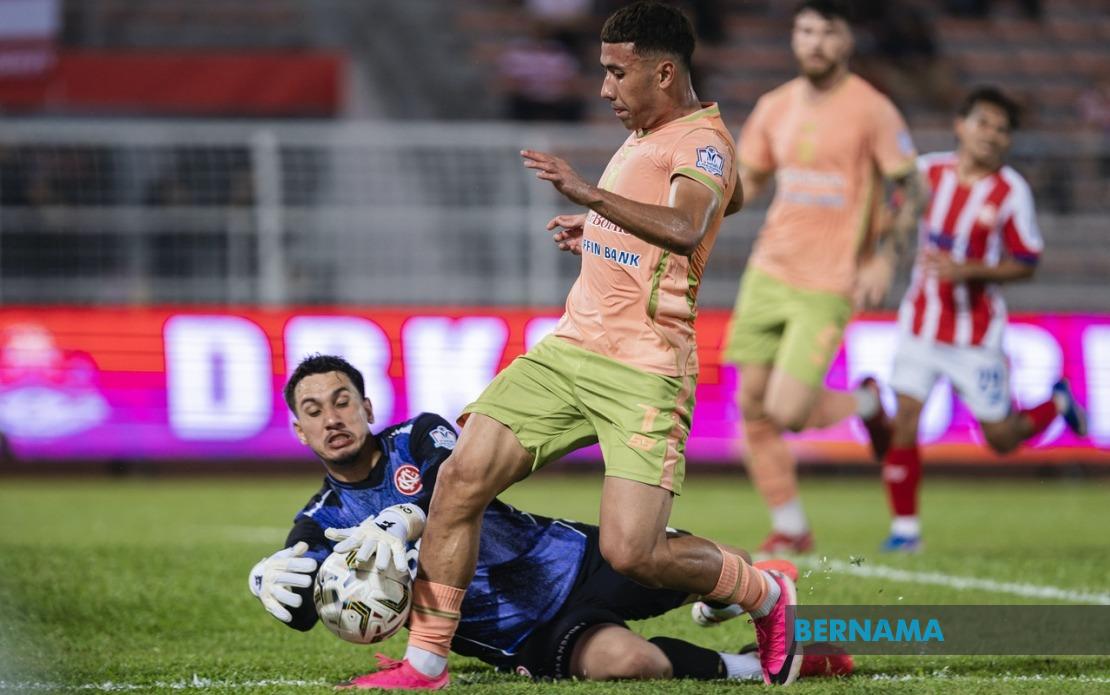
Kuala Lumpur City FC's campaign in the 2026-2027 Super League has begun under the shadow of an extraordinary crisis that has left their head coach searching for answers. Datuk Dollah Salleh took the field against Kuching City FC at the Kuala Lumpur Football Stadium in Cheras on the night of August 26, equipped with only 10 outfield players and a single substitute—a situation that resulted in a crushing 0-6 defeat. For a coach with nearly a quarter-century of experience navigating Malaysia's football landscape, the experience represents uncharted and deeply troubling territory.
The roots of KL City's predicament run deep and reveal systemic vulnerabilities within the club's operations. Thirteen players and two officials were simultaneously sidelined after contracting influenza, a sudden health crisis that compounded existing administrative failures. These administrative problems centered on player registration difficulties, suggesting that KL City has struggled to maintain proper compliance with league registration protocols. The convergence of these two distinct challenges—one biological and unpredictable, the other administrative and arguably preventable—created a perfect storm that left the coaching staff with minimal options and dwindling resources.
Dollah's candid reflection on his predicament underscores the gravity of what unfolded. Speaking to journalists after the match, he articulated the emotional toll of confronting a scenario he never anticipated encountering across his entire coaching tenure. The weight of the situation affected not only his professional mindset but his personal demeanor, as those around him observed visible signs of distress in the days leading up to the fixture. This admission from a veteran coach carries significance—it suggests that even experienced professionals operating within Malaysian football can face circumstances beyond their conventional crisis-management playbook.
The tactical narrative of the match itself reveals how KL City attempted to salvage their position despite overwhelming disadvantages. For the initial forty-four minutes, both sides competed with reduced numbers, with Kuching City captain James Okwuosa receiving a red card at that juncture. However, the numerical parity that followed did little to restore balance. Dollah's assessment of the contest acknowledged that while his players demonstrated resilience and commitment during the opening period, the accumulated fatigue from their opening-half exertions rendered them vulnerable to systematic breakdown in the second half. Without adequate substitutes to rotate tired limbs and provide fresh energy, KL City's defense progressively disintegrated.
Dollah's strategic response to the crisis reflected pragmatic acceptance of his constrained circumstances. Rather than pursuing attacking options that his severely limited squad could not sustain, he instructed his players to prioritize defensive organization and damage limitation. This defensive-minded approach represented a calculated acknowledgment that preserving the scoreline mattered more than chasing goals against superior numbers. The coach's remarks about avoiding excessive criticism of his players revealed an understanding that blame serves little purpose when circumstances are entirely outside the control of those taking the field. Instead, he emphasized the psychological necessity of maintaining morale and encouraging continued effort despite the inevitable outcome.
The administrative implications of KL City's failure to field a proper team extend beyond mere sporting disappointment. The Malaysia Football League's decision to award Negeri Sembilan FC a 3-0 victory and three points from their scheduled opening encounter at Stadium Tuanku Abdul Rahman in Paroi, combined with the RM50,000 fine imposed on KL City, represents tangible consequences for the club's organizational shortcomings. These penalties strike at the club's competitive position at the season's outset, placing additional pressure on subsequent performances and compounding the financial burden already mounted by administrative and operational difficulties.
The FIFA transfer ban that had previously constrained KL City's player acquisition capabilities represented another layer of institutional challenge. However, recent developments offer a glimmer of operational improvement. The club's president announced that FIFA has lifted the transfer embargo, restoring the team's ability to register new players for upcoming fixtures. This clearance removes one significant obstacle to rebuilding squad depth and quality, though Dollah characterized it diplomatically, noting that the team can no longer invoke the ban as an explanation for inadequate performance. The timing of this approval—coming after the season has already commenced with disastrous results—creates an unusual situation where administrative resolution arrives only after substantial competitive damage.
The sequence of events surrounding KL City's opening fixtures reveals organizational fragmentation that extends across multiple departments. When a club simultaneously confronts health crises affecting dozens of personnel, player registration complications, FIFA compliance issues, and insufficient operational contingency planning, the picture that emerges is one of institutional dysfunction rather than isolated incidents. For Malaysian football observers, KL City's circumstances raise broader questions about governance standards and crisis preparedness across domestic clubs, particularly those operating at the top tier of competition.
Dollah's immediate focus centers on recovery and restoration of basic operational competence. His team faces DPMM FC at home this Saturday, a fixture that ostensibly should offer a significantly improved experience compared to the opening debacle. With the transfer ban lifted and time to address immediate player registration issues, KL City should be able to field a substantially fuller squad. For Dollah personally, the upcoming matches represent an opportunity to move beyond crisis management and return to conventional coaching practice. However, the scars of this opening sequence—both competitive and psychological—will likely influence decision-making and team confidence throughout the early weeks of the season. The extraordinary circumstances that shaped KL City's launch serve as a sobering reminder that Malaysia's football ecosystem, despite its passionate following and rich tradition, faces ongoing structural challenges that periodically overwhelm even experienced navigators.

