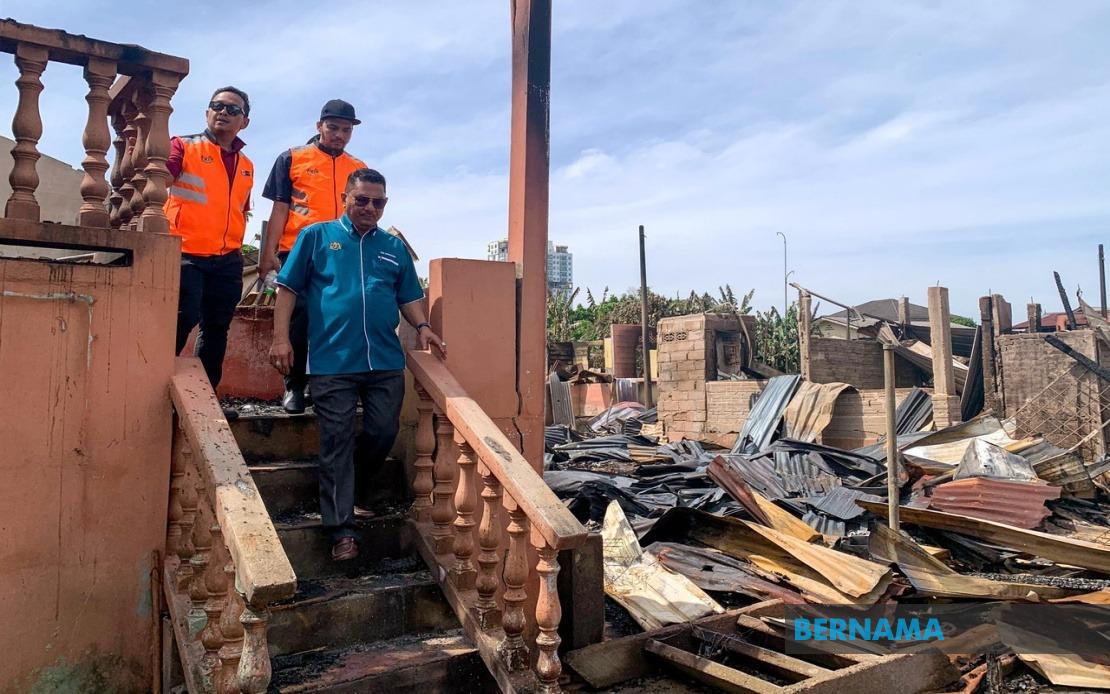
A major residential fire that devastated Kampung Gok Kapur in Kota Bharu on June 8 originated from an act of negligence involving the burning of papers in a kitchen, according to the Kelantan Fire and Rescue Department. The blaze consumed 27 homes and rendered more than a hundred residents homeless, making it one of the more significant fire incidents in the district recently. The department's investigation has now concluded, shedding light on how a routine household activity spiralled into a major conflagration affecting an entire village community.
Kelantan's Fire and Rescue Department director Farhan Sufyan Borhan explained that his agency's Fire Investigation Forensic Unit had traced the fire's origin to direct burning of papers using an open flame source within the residential structure. The forensic analysis combined physical evidence collected at the scene with recorded statements from witnesses and residents to reconstruct the sequence of events leading to the disaster. The investigators determined that a gas lighter was applied directly to combustible papers in the kitchen area of one of the homes, a decision that would have catastrophic consequences for the surrounding community.
The initial act of burning papers appeared confined to the kitchen itself, but the open flame quickly ignited nearby combustible materials within the same dwelling. The fire then spread with alarming speed through the structure, consuming wooden beams, furnishings, and other materials typical of Malaysian rural homes. What began as a contained kitchen fire soon jumped to adjacent houses, which in the densely packed village layout were positioned in close proximity. The rapid lateral spread across multiple properties suggests that the homes shared common walls or were constructed with minimal separation, a common characteristic in Malaysian kampung settlements where space efficiency and community closeness take precedence over fire breaks.
Farhan Sufyan Borhan characterised the incident as resulting purely from human carelessness during the burning activity itself. The decision to use an open flame source for waste disposal indoors, rather than utilising safer disposal methods or designated outdoor burning areas, represented a serious lapse in fire safety judgment. This finding underscores a critical gap between awareness and practice in fire prevention across Malaysian residential areas, particularly in rural communities where traditional methods of waste disposal remain commonplace. The department has indicated that it will forward its formal investigation report to police and other relevant authorities for consideration of further action, leaving open the possibility of civil or criminal charges against the household responsible.
The human cost of this negligence proved substantial. A total of 110 villagers lost their homes and were displaced by the fire, requiring emergency shelter arrangements. Local authorities established a temporary evacuation centre at the nearby Mukim Banggol Mosque to accommodate the displaced residents, transforming the place of worship into an emergency refuge for an entire community. The psychological impact of such displacement extends far beyond immediate shelter needs, affecting livelihoods, family routines, and the social fabric of the village. Fortunately, no fatalities or serious injuries were recorded in the incident, a mercy that likely reflected either the fire's timing or the presence of functioning early warning systems and evacuation procedures.
The Fire and Rescue Department has used the incident to launch a broader public awareness campaign about fire hazards in residential areas. Officials have specifically cautioned against using open flame sources for any burning activities within or near homes, recognising that such practices remain prevalent across Malaysia's rural regions where waste management infrastructure may be limited. The department's messaging emphasises that traditional burning methods, while familiar to many older residents, pose unacceptable risks in modern residential densities. This educational outreach represents an attempt to shift cultural practices around waste disposal and fire safety in communities where such practices have been normalised through generations.
The Kampung Gok Kapur fire reflects broader challenges that Malaysian fire safety authorities face in preventing residential incidents. Unlike urban areas where municipal waste collection systems and fire codes are rigorously enforced, rural settlements often operate with less formal oversight of building standards and fire safety practices. The proximity of homes in traditional village layouts, combined with the prevalence of wooden construction materials, creates conditions where a single household fire can rapidly become a community disaster. The June 8 incident illustrates how quickly a momentary lapse in judgment can destroy not just one family's shelter but entire neighbourhoods.
For Malaysian householders, the incident carries important lessons about fire prevention in daily life. The choice of waste disposal method might seem trivial until viewed through the lens of community safety and structural vulnerability. Open flames represent a particular hazard because they are difficult to control once ignited and can spread with unexpected speed through structures containing multiple combustible materials. Residents throughout Malaysia, whether in urban apartments or rural homes, are being reminded that safer alternatives exist for virtually every household burning activity that was previously conducted with open flames indoors.
The incident also reflects questions about building compliance and enforcement in Malaysian villages. While individual negligence triggered this fire, the extent of damage suggests that building separation standards and fire-resistant construction materials may not have been optimally implemented or maintained. This raises considerations for future development and renovation of rural residential areas, where improved fire safety infrastructure could reduce the catastrophic spread of incidents initiated by individual households. Local authorities in Kelantan and other states with significant rural populations may need to examine whether current building codes and enforcement mechanisms provide adequate protection for densely settled kampung communities.
Moving forward, the investigation's conclusions will inform policy discussions about fire prevention strategies in Malaysian communities. The straightforward finding of negligence does not diminish the need for systematic approaches to reducing residential fire risk. This includes improving access to safe waste disposal facilities in rural areas, enhancing public education about fire hazards, and potentially strengthening building codes for residential areas. The displacement of 110 people serves as a potent reminder that fire prevention is not merely an individual responsibility but a collective necessity requiring coordination between households, local authorities, and fire safety agencies.