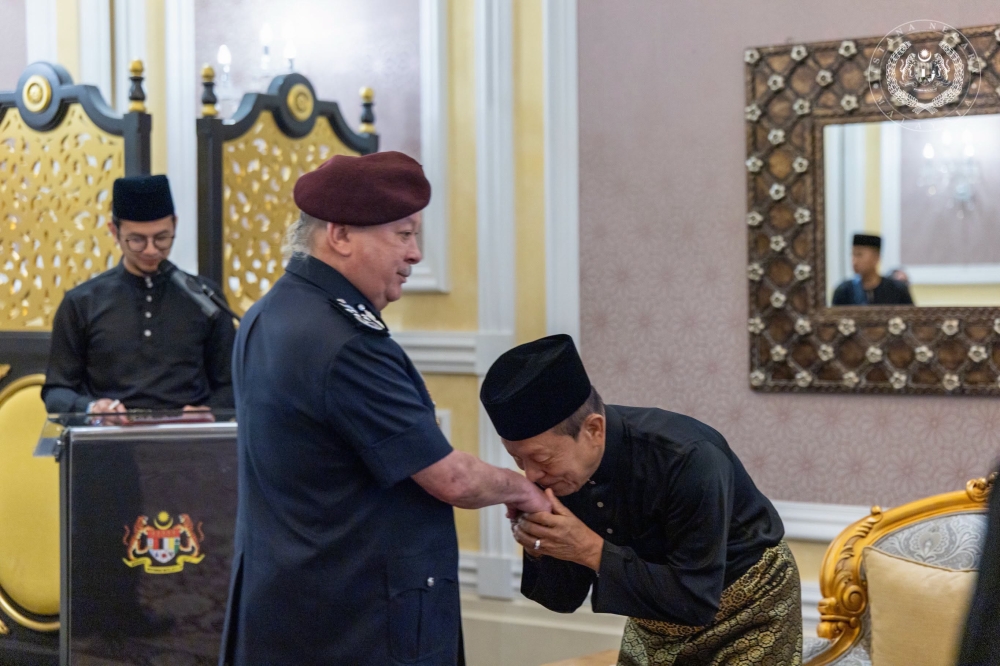
His Majesty Sultan Ibrahim, King of Malaysia, has granted an audience to Malaysian Anti-Corruption Commission Chief Commissioner Abdul Halim Mohamad at the national palace in Kuala Lumpur. The meeting, held on July 14, provided an opportunity for the MACC's top administrator to update the sovereign on recent progress, organisational initiatives, and key operational matters affecting the commission's oversight of corruption-related cases across the nation.
The briefing represents a continuation of formal consultations between Malaysia's constitutional head of state and senior government officials responsible for critical public institutions. Such engagements underscore the monarchy's ongoing interest in the performance and direction of agencies tasked with upholding public integrity and institutional accountability. The MACC, as an independent body operating under constitutional framework and statutory authority, maintains regular communication channels with the highest levels of state administration to ensure transparency and alignment with national governance objectives.
As chief commissioner, Abdul Halim carries significant responsibility for steering the commission through an increasingly complex landscape of financial crime, asset misappropriation, and systemic corruption. The MACC operates as Malaysia's primary anti-corruption enforcement agency, investigating allegations of misconduct involving public officials, government-linked companies, and private sector entities involved in transactions with state institutions. The timing of this audience suggests the commission may have pursued notable investigations or policy reforms meriting direct communication with the head of state.
The royal audience reflects broader institutional expectations that Malaysia's anti-corruption efforts remain coordinated with the nation's constitutional framework and democratic institutions. Regular briefings between agency heads and the monarchy ensure that enforcement actions align with principles of rule of law, proportionality, and institutional integrity. Such dialogue mechanisms strengthen public confidence that anti-corruption campaigns operate within established legal parameters rather than pursuing partisan objectives or selective enforcement patterns that undermine institutional credibility.
For Malaysian readers observing domestic governance, the meeting carries implications for the perceived independence and operational autonomy of the MACC. Public trust in anti-corruption institutions depends significantly on their demonstrated ability to investigate misconduct across political divides without external pressure or interference. Direct engagement with constitutional authorities, when properly structured and transparently documented, can reinforce perceptions that the commission operates according to established procedures rather than responding to ad-hoc political direction.
The briefing also occurs within broader regional context of Southeast Asian anti-corruption initiatives. Malaysia's MACC has positioned itself among the region's more established and technically sophisticated corruption-fighting bodies, though comparative studies note varying levels of institutional independence and prosecutorial success across ASEAN member states. The commission's continued development and capacity enhancement remain significant factors in Malaysia's regional standing on governance metrics and investor confidence assessments that influence foreign direct investment patterns and international partnership opportunities.
Recent years have witnessed evolving challenges in Malaysia's anti-corruption landscape, including sophisticated financial schemes, cross-border asset movements, and institutional corruption spanning multiple government agencies and corporate structures. These developments require the MACC to continuously upgrade investigative methodologies, technology platforms, and inter-agency coordination mechanisms. The commission's briefing to the king likely encompassed discussion of such operational enhancements and resource allocation decisions necessary to maintain investigative effectiveness amid growing complexity of financial crime.
The audience underscores the constitutional role of Malaysia's monarchy in observing and commenting on governance matters within established frameworks. While the king does not exercise executive authority over the MACC directly, maintaining informed understanding of the commission's operations enables the royal institution to provide relevant constitutional counsel to the prime minister and cabinet regarding institutional performance and policy coherence across government agencies responsible for public integrity and rule of law implementation.
From a governance perspective, transparent communication between the MACC leadership and constitutional authorities can enhance public perception of institutional legitimacy and procedural regularity. Malaysian citizens monitoring anti-corruption effectiveness have expressed interest in whether such agencies maintain genuine investigative independence while remaining accountable to constitutional processes and parliamentary oversight mechanisms. Public disclosure of such briefings, when appropriately detailed, demonstrates that anti-corruption institutions function within Malaysia's established constitutional architecture rather than operating as autonomous power centres removed from democratic accountability structures.
The meeting also represents routine institutional protocol that demonstrates continuity in Malaysia's approach to constitutional governance and anti-corruption policy implementation. Regular communication between agency leaders and the head of state reflects procedural normalcy in well-functioning governance systems where constitutional institutions maintain structured engagement channels rather than operating in institutional isolation from higher authorities or from parliamentary and public scrutiny mechanisms.
Moving forward, observers of Malaysian governance may assess whether the MACC's briefing results in visible operational adjustments, enhanced prosecutorial outcomes, or policy developments addressing previously identified institutional constraints or investigative challenges. The effectiveness of such high-level communication ultimately depends on whether enhanced understanding and coordination translate into measurable improvements in corruption case resolution, recovery of misappropriated assets, or streamlined procedures that accelerate investigation timelines while maintaining prosecutorial rigour and due process protections essential for legitimate convictions.

