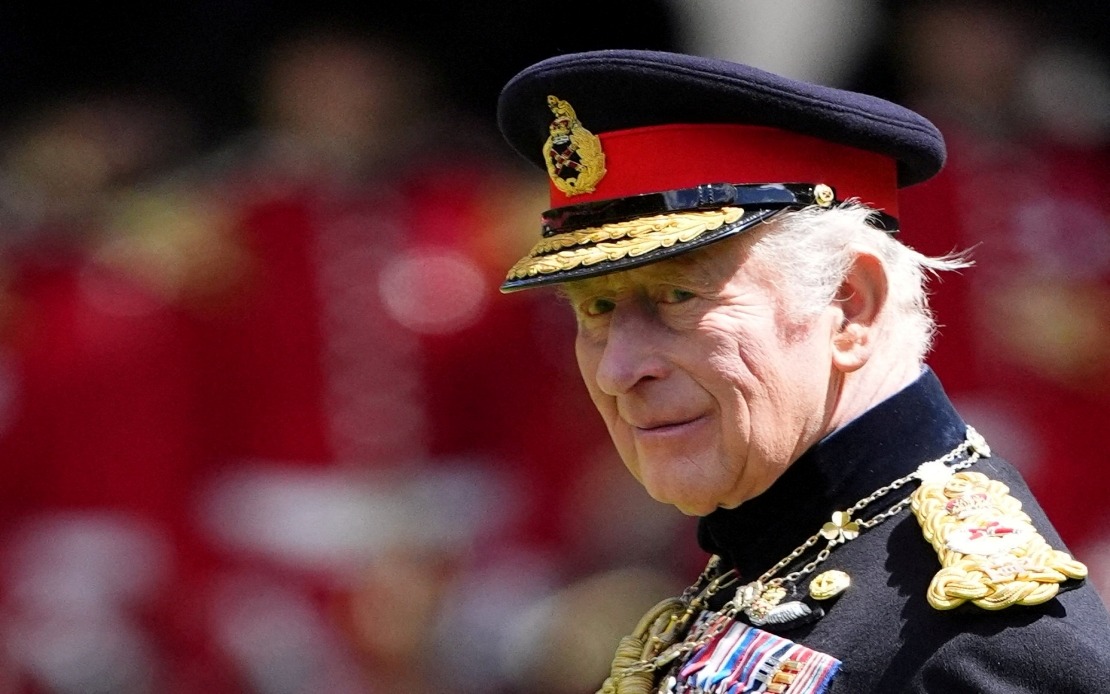
King Charles III has made a significant break with centuries of royal tradition by becoming the first reigning British sovereign to publicly reveal his personal tax payment. Buckingham Palace announced on Thursday that the king paid £12.9 million during the 2024-2025 tax year, marking a watershed moment in the monarchy's approach to financial accountability. This disclosure, equivalent to approximately US$17 million, represents an unprecedented level of openness regarding the monarch's personal finances and reflects broader institutional efforts to restore public confidence in the institution.
The revelation carries particular significance given the historical precedent it establishes. While King Charles disclosed his tax payments during his lengthy tenure as Prince of Wales, the voluntary publication of such figures by a reigning monarch represents genuinely uncharted territory in British constitutional practice. The decision to make this information public underscores a deliberate shift toward greater scrutiny and transparency, even at the highest echelons of power. For observers accustomed to traditional royal insularity, the move signals recognition that modern governance demands accountability regardless of rank or privilege.
Looking at the broader financial picture, the Palace revealed that Charles paid £11.7 million in personal taxes during the preceding 2023-2024 fiscal year. Cumulatively, since his accession to the throne in September 2022, the king's tax contributions have surpassed £30 million. These substantial payments underscore the significant personal wealth derived from his private holdings and investment portfolios. The figures also demonstrate consistent compliance with voluntary taxation arrangements that were initially established during the 1990s, long before Charles assumed the throne.
A critical distinction worth noting is that British monarchs possess no legal obligation to pay income tax, capital gains tax, or inheritance tax. Despite this exemption, Charles has chosen to voluntarily contribute to the exchequer under long-standing conventions negotiated decades earlier. This arrangement represents a negotiated balance between maintaining the crown's traditional privileges and acknowledging modern expectations of fiscal responsibility. The voluntary nature of these payments makes their continued discharge particularly meaningful, as they reflect personal commitment rather than statutory compulsion.
The Palace released these figures as part of a comprehensive Royal Household financial statement designed to illuminate the complex mechanisms underlying royal finances. The accompanying documentation outlines the various streams generating royal income and expenditure, providing unprecedented granularity regarding institutional spending patterns. This transparency initiative reflects recognition that royal finances can appear opaque to public understanding, and that clarity serves the institution's long-term credibility. By demystifying the financial architecture supporting the monarchy, officials hope to counter persistent misconceptions about how taxpayer funds are deployed.
Charles's personal income derives from multiple sources, including returns on his substantial personal investment portfolio and revenues generated by his privately owned estates at Balmoral and Sandringham. Unlike the official Crown Estate revenues that support state functions, these privately held properties generate income that flows directly to the monarch for personal use. This arrangement has existed for generations and remains a crucial distinction between public and private royal finances. The king utilizes income from these sources to fund his personal expenses and household operations distinct from official state business.
The institutional framework governing royal finances has evolved considerably since the monarchy's financial arrangements were last substantially reformed. James Chalmers, the keeper of the Privy Purse, articulated the palace's position by emphasizing that despite apparent complexity, the underlying system operates on clear principles and is structured within established law. He noted that arrangements have been progressively refined to ensure the monarch can discharge constitutional duties with appropriate independence while remaining accountable to public scrutiny. This framing positions transparency not as constraint but as necessary precondition for effective modern governance.
For Southeast Asian observers, the contrast with how constitutional monarchies in the region approach financial disclosure merits consideration. Malaysia's own complex relationship between state and royal finances, jurisdictional nuances surrounding the Sultan institution, and varying levels of financial transparency across different sultanates present a useful comparative framework. While British royal practice remains distinct from Malaysian constitutional arrangements, international precedents regarding institutional transparency increasingly influence public expectations across Commonwealth nations. King Charles's willingness to pioneer disclosure may subtly elevate pressure on other constitutional monarchies to demonstrate similar financial openness.
The decision to implement enhanced transparency mechanisms also reflects contemporary challenges facing traditional institutions globally. Republicanism remains a persistent, if minority, political position in Britain, and public confidence in institutions depends partly on demonstrated accountability. By proactively disclosing financial information rather than awaiting demands for transparency, the palace attempts to shape the narrative around royal privilege and public resource allocation. This strategic approach recognizes that institutional legitimacy increasingly depends on voluntary demonstration of responsible stewardship rather than reliance on deference alone.
The broader implications extend beyond mere financial accounting. This disclosure represents a cultural shift within the royal institution itself, reflecting generational change in attitudes toward privacy, accountability, and democratic participation. Younger generations increasingly expect transparency from all public and quasi-public institutions, and the monarchy's adaptation to these expectations carries symbolic weight. By establishing precedent through Charles's voluntary disclosure, the institution signals willingness to evolve its practices in response to contemporary governance standards, potentially securing longer-term institutional sustainability.
Moving forward, these figures will likely become subject to annual public reporting, establishing an expectation that future monarchs will maintain equivalent transparency standards. This creates an informal constitutional convention reinforcing accountability, even absent statutory requirement. The precedent established through this disclosure thus operates both as immediate accountability mechanism and as long-term institutional commitment to transparent governance. For Malaysia and other Commonwealth realms grappling with questions about institutional legitimacy and appropriate levels of transparency, King Charles's actions offer a contemporary case study in how traditional institutions can adapt to modern expectations without abandoning fundamental constitutional principles.

