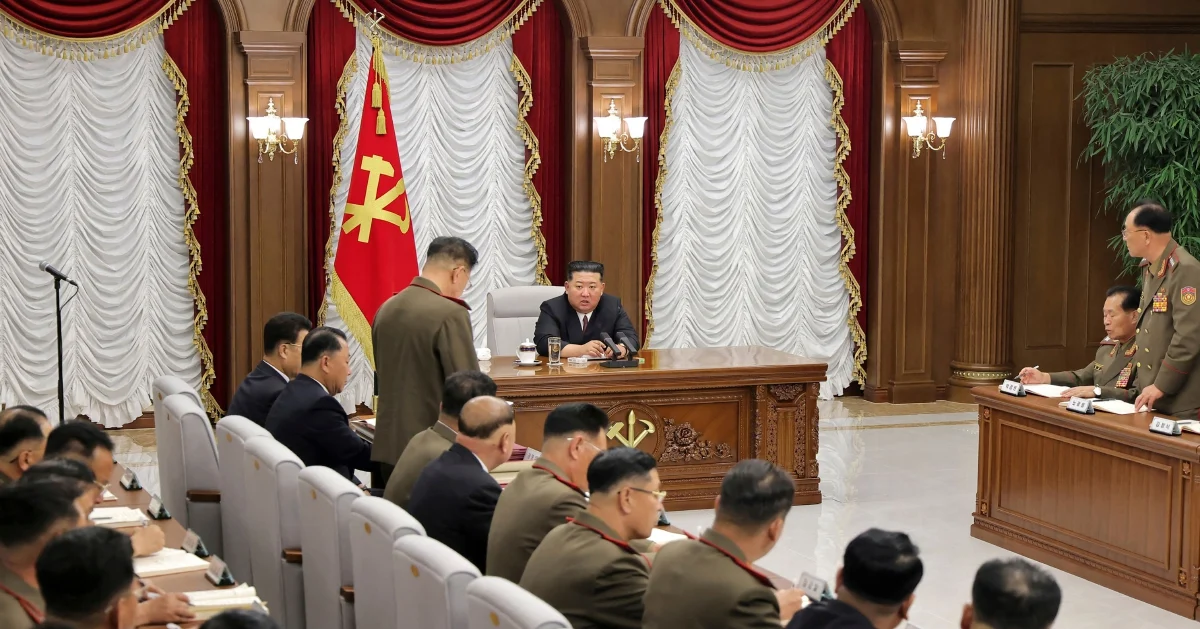
North Korea's leader Kim Jong Un has removed a high-ranking military official from the ruling Workers' Party of Korea over corruption allegations, with state media characterizing the breach as a grave political transgression rather than a mere administrative failure. The unprecedented public denunciation signals a hardening stance against illicit enrichment within Pyongyang's power structures, even among the military establishment that forms the regime's backbone.
The official in question allegedly accepted bribes whilst holding a position of influence, conduct that state media framed as fundamentally incompatible with party membership and loyalty to the regime. By labelling such behaviour a "political crime" rather than simply misconduct, Kim Jong Un has elevated the severity of the infraction in the eyes of the North Korean public and party cadres, suggesting that graft represents not just individual wrongdoing but a betrayal of socialist principles and collective governance.
This move arrives during a period when North Korea faces mounting economic pressures from international sanctions and the aftermath of pandemic-related disruptions. Corruption within military and administrative ranks can undermine both resource distribution and domestic morale, making visible enforcement actions strategically valuable for the regime. By demonstrating that even senior military figures face consequences for personal enrichment, Kim Jong Un reinforces the narrative that no individual is above party discipline, a message particularly important in maintaining cohesion across hierarchical structures that depend on perceived fairness and meritocratic advancement.
The North Korean military occupies a uniquely privileged position within the state apparatus, controlling significant economic enterprises and enjoying preferential access to resources. This status creates conditions where corruption can flourish unchecked if leadership fails to assert oversight. The public exposure of this particular case suggests that internal oversight mechanisms, whether through party inspectorates or security apparatus, have detected problematic patterns that warranted intervention at the highest levels.
Regional observers view such purges through the lens of leadership consolidation and factional balance. In North Korea's opaque political system, public removals from party positions often reflect deeper shifts in elite dynamics. The timing and intensity of this denouncement may indicate efforts by Kim Jong Un to centralise control over military patronage networks or to demonstrate responsiveness to systemic problems that could destabilise governance.
For Southeast Asian watchers, such internal discipline measures carry implications for North Korea's broader strategic posture. A leadership focused on internal corruption suggests simultaneous attention to state capacity and legitimacy—concerns that influence how Pyongyang manages external relationships and adheres to whatever international agreements it may undertake. States in the region monitoring North Korea's stability find such signals valuable for assessing the regime's resilience and potential vulnerabilities.
The characterisation of graft as a political rather than administrative matter also reflects ideological positioning. North Korea's state media regularly emphasises socialist principles and collective sacrifice, contrasting these with perceived Western decadence and individual greed. By framing corruption as a political transgression, authorities align punishment with broader propaganda narratives about systemic superiority and the dangers of ideological contamination from capitalist thinking.
Historically, North Korea has employed public dismissals and purges as tools for resetting narratives around leadership legitimacy and party discipline. These actions serve dual purposes: they remove potentially problematic individuals from positions of influence whilst simultaneously demonstrating to the broader elite that accountability mechanisms exist. Whether such mechanisms operate consistently or selectively remains unclear from external vantage points, but their deployment suggests leadership attention to perceptions of fairness within ruling structures.
The military official's removal from party ranks carries practical consequences beyond symbolic messaging. Expulsion from the Workers' Party can affect access to economic opportunities, social status, and family prospects within North Korea's rigid hierarchical society. The severity of consequences for alleged bribery underscores how seriously the regime treats corruption when political utility demands visible enforcement, even if selective application of such standards may characterise other cases within the bureaucracy.
For international observers and neighbouring states, this development contributes to broader assessments of North Korean governance quality and regime stability. Economies affected by sanctions and security challenges may face greater temptation for individual actors to engage in illicit enrichment, making periodic anti-corruption initiatives potentially necessary for maintaining administrative functionality. The effectiveness of such purges in actually reducing corruption versus serving primarily as political theatre remains a subject of analytical debate among specialists monitoring the peninsula.

