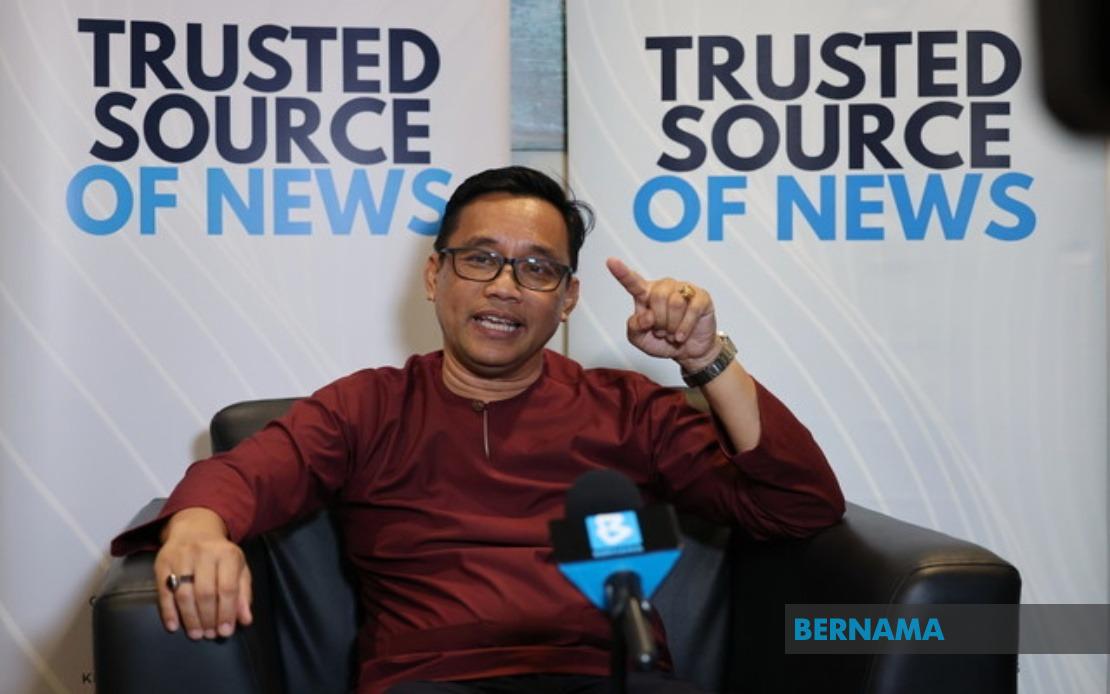
Pakatan Harapan candidate Mohd Khuzzan Abu Bakar is seeking to reclaim the Semerah state seat in Johor's 16th election, positioning his comeback not as a bid to overturn a previous defeat but as a continuation of the coalition's unmet commitments to the constituency. The 58-year-old, who previously held the seat before losing in the last state election, has framed his return as driven by an obligation to realise development aspirations that were halted when PH exited the Johor state government in 2020.
During his previous tenure as Johor Youth, Sports, Culture and Heritage Committee chairman between 2018 and 2020, Khuzzan initiated several infrastructure projects that were left incomplete following the political transition. Chief among these is the Taman Sri Sulong Youth Mini Complex, which remains unfinished and has become emblematic of the stalled agenda he hopes to resurrect. Beyond infrastructure, Khuzzan has identified persistent water supply deficiencies and recurring flash flooding in areas including Batu Pahat and Tanjung Laboh as immediate priorities requiring attention from the next administration.
Khuzzan's personal connection to the constituency underpins his determination to contest despite the political headwinds. Born in Jalan Mesjid, Batu Pahat, he carries deep roots in the broader region, while his wife hails from Semerah itself. This domestic tie to the area has motivated him to position himself as someone uniquely invested in the community's welfare and progress. He articulates this commitment as a personal obligation to contribute meaningfully to the community that helped shape his identity.
Economic development has emerged as another cornerstone of Khuzzan's platform, with particular emphasis on youth employment opportunities. Recognising that Johor's economic trajectory increasingly depends on investment and technology sectors, he has positioned employment creation for younger Johoreans as essential to the state's future competitiveness. His background as a former banking officer informs his approach to economic enablement, particularly through strengthening small and medium enterprises that form the backbone of Johor's economy.
Khuzzan proposes bolstering community-based commerce by enhancing support systems for SMEs, especially regarding access to and management of government financing schemes. He argues that programmes such as TEKUN Nasional and Amanah Ikhtiar Malaysia require complementary financial literacy and sustainable management guidance to genuinely enable entrepreneurs to expand operations and create employment. This dual-track approach—combining capital access with structured financial stewardship—reflects a more nuanced understanding of the barriers facing small business owners beyond mere funding availability.
The campaign machinery has evolved substantially since Khuzzan's last electoral contest, with digital platforms assuming unprecedented prominence. TikTok, Instagram, and Threads have become integral to voter engagement, allowing him to share community activities and articulate PH's policy positions directly to constituents. Notably, Khuzzan observed unexpected adoption of social media among senior citizens, indicating a demographic shift in platform usage that campaigns must now accommodate across age groups. This technological adaptation extends beyond social media into youth-focused community activities including e-sports tournaments, sepak takraw competitions, and carrom championships, alongside exposure programmes on artificial intelligence and digital technology designed to prepare younger voters for evolving economic demands.
The Semerah constituency presents specific electoral dynamics worth considering. According to Election Commission data, 47,431 voters are registered within its boundaries, with approximately 37.4 per cent—some 17,751 individuals—falling within the 18 to 39 age bracket. This substantial youth contingent offers both opportunity and challenge, requiring campaigns to address concerns around employment, housing affordability, and economic opportunity that resonate most acutely with younger voters. The constituency's demographic profile suggests that parties effectively mobilising youth support possess meaningful electoral advantage.
Khuzzan's assessment of the current political environment differs markedly from the 2022 Johor election, which occurred during the nation's post-pandemic recovery phase and was characterised by uncertainties surrounding economic stabilisation and public sentiment. The current 16th election, scheduled for July 11 with early voting on July 7, occurs within a more stabilised economic context, potentially enabling voters to make decisions based on developmental and policy considerations rather than immediate pandemic-related anxieties. Additionally, Khuzzan anticipates stronger voter participation, particularly among Johoreans employed in Singapore who may return to vote, potentially shifting electoral outcomes in ways not fully apparent during 2022.
Feedback from B40 and e-Kasih recipients—segments representing lower-income households and welfare beneficiaries—has reportedly buoyed PH's confidence in Semerah. These voter groups, economically vulnerable and dependent on government support schemes, represent particularly engaged constituencies during election cycles. Khuzzan's emphasis on SME support and employment creation carries implicit appeal to these demographics seeking economic mobility and stable income sources rather than welfare dependency. Their perceived receptiveness suggests PH perceives genuine opportunity to recapture the seat despite the incumbent BN-UMNO representative, Mohd Fared Mohd Khalid, having secured it in 2022 with a 4,041-vote majority.
The broader Johor electoral contest involves 172 candidates competing across 56 state seats, making seat-level contests like Semerah microcosms of larger state-level struggles between BN and PH. The outcome in constituencies such as Semerah will significantly influence whether PH can reverse its 2020 expulsion from Johor governance or whether BN consolidates its control. For Malaysian observers, these elections carry implications beyond Johor itself, offering indicators of electoral sentiment and voter receptiveness to opposition narratives about unfinished agendas and developmental commitments, lessons applicable to future federal electoral contests and coalition positioning.

