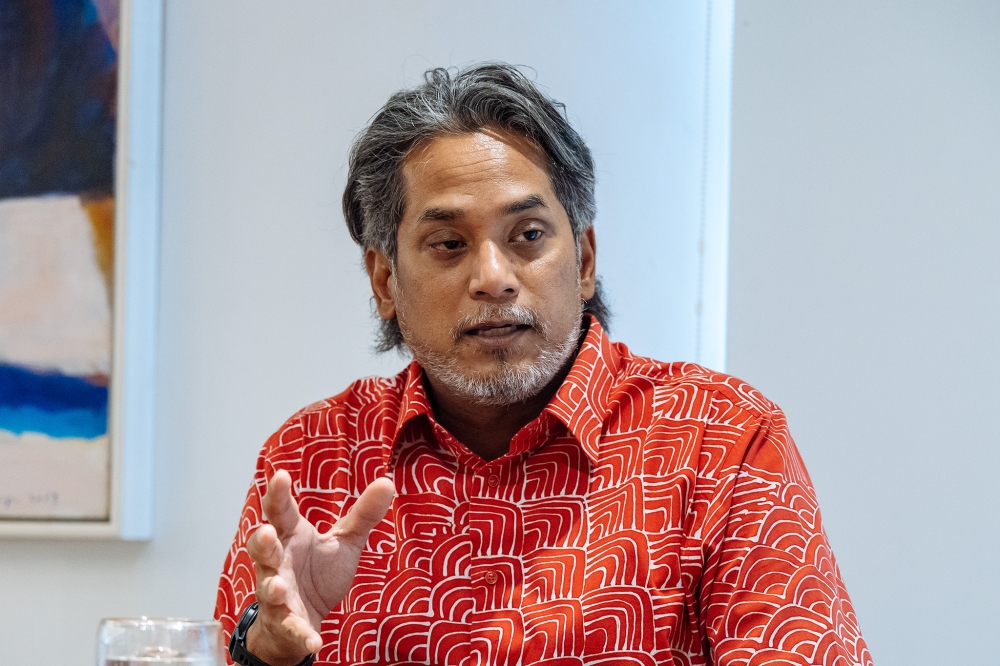
Khairy Jamaluddin, the prominent former Umno Youth chief, has surfaced as a potential candidate for the Rembau state assembly seat under Barisan Nasional's ticket, with speculation mounting that he could even be positioned for a menteri besar role in Negeri Sembilan, according to political observers tracking recent developments in the state.
The consideration of Khairy represents a significant strategic move by the Barisan coalition as it seeks to strengthen its electoral position in a state where political dynamics have shifted considerably in recent years. His profile as a nationally recognized political figure could bring heightened visibility and organizational firepower to the party's campaign machinery in Negeri Sembilan, a state that has become increasingly competitive across multiple constituencies.
Khairy's credentials span decades of involvement in Malaysian politics and policy-making. As former Umno Youth chief, he accumulated substantial experience navigating the party's internal politics and managing its grassroots networks. His subsequent roles in government, including ministerial positions focused on domestic and international affairs, have provided him with a track record of administrative responsibility that senior party figures often cite when evaluating candidacy for higher office.
The prospect of Khairy contesting from Rembau would place him in a constituency with distinct demographic and socioeconomic characteristics. Rembau, historically a competitive battleground, encompasses both urban and rural populations with varying political preferences and local concerns. A candidate seeking to consolidate support across these diverse voter groups would require both sophisticated campaign strategy and deep local engagement—factors that will test Khairy's ability to connect beyond his traditional urban constituency base.
Speculation surrounding a possible menteri besar nomination carries additional weight given the role's significance in state governance. The menteri besar position commands control over state administrative machinery, resource allocation, and legislative agenda-setting. For Barisan Nasional, securing or maintaining this seat is crucial for retaining substantive influence in Negeri Sembilan's governance structure, particularly as the party navigates post-2022 political realignments that have reshaped coalition fortunes across multiple states.
The timing of such considerations reflects broader Barisan strategizing ahead of what observers anticipate could be state-level electoral contests. The coalition has undergone internal reorganization and leadership transitions in several states, and the Negeri Sembilan situation demonstrates how senior figures are being repositioned to maximize electoral competitiveness. Khairy's elevation to state-level candidacy would represent a significant recalibration of his political trajectory following his previous focus on federal politics.
For Umno specifically, deploying senior leaders like Khairy to state constituencies serves multiple tactical purposes. It signals organizational confidence and resource commitment to voters, demonstrates that party leadership views the contest as strategically important, and potentially energizes grassroots cadres who respond positively to high-profile candidacies. Additionally, such moves strengthen party claims that it remains capable of fielding quality candidates across governance levels.
However, state assembly politics operates according to fundamentally different dynamics than federal politics, and candidates transitioning between these levels often encounter unexpected challenges. Local constituency issues—ranging from municipal services to land development concerns—frequently dominate voter discourse at state level, requiring candidates to demonstrate genuine engagement with hyperlocal concerns rather than relying solely on national political standing or previous policy achievements.
The menteri besar dimension adds another layer of complexity to any candidacy calculation. Coalition partners, state assembly members from various parties, and factional interests within Umno itself would all factor into menteri besar selection processes. Khairy's elevation would require not only electoral victory but also consensus-building among constituencies whose support remains essential for holding the position once won.
For Malaysian political observers tracking coalition movements, Khairy's potential Rembau candidacy exemplifies broader trends in how established political parties are reconfiguring their candidate selection strategies in response to evolving electoral landscapes. The deliberation surrounding his candidacy reflects calculations about how to deploy experienced political operators to maximum strategic advantage across different governance levels and constituencies.
Negeri Sembilan's political significance in the broader Malaysian context should not be underestimated. The state represents the kind of competitive electoral terrain where marginal seat gains or losses can shift coalition calculations across the country. Any moves by Barisan to reinforce its candidacy pool in the state warrant close attention from observers monitoring broader coalition stability and electoral capacity heading into potential electoral contests.

