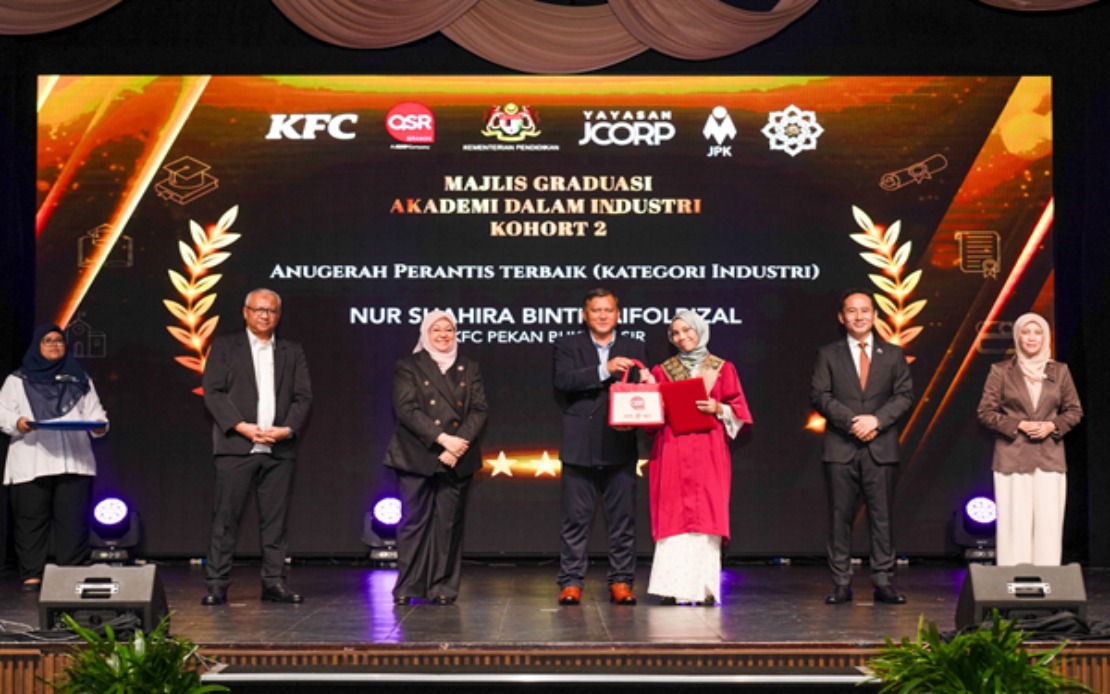
KFC Malaysia and Yayasan JCorp have marked a significant milestone in workforce development by producing another 37 skilled graduates through their Applied and Distributed Internship (ADI) programme, bringing the cumulative total to 60 trainees since the initiative commenced in June 2023. The graduation ceremony, held in Johor Bahru, underscores the growing importance of industry-academia partnerships in addressing Malaysia's vocational skills gap and creating meaningful employment pathways for young people seeking practical alternatives to traditional academic routes.
The ADI programme represents a pioneering collaboration in the Malaysian quick-service restaurant sector, uniting KFC Malaysia, the Department of Skills Development under the Ministry of Human Resources, and the Ministry of Education. This three-way partnership demonstrates how businesses can harness their operational infrastructure to support national workforce objectives whilst building a pipeline of capable employees aligned with their own operational needs. The model bridges a persistent gap in Malaysia's education system, where vocational training often remains disconnected from real commercial environments where graduates will ultimately work.
Each participant in Cohort 2 completed training modules focused on fast food preparation and service at KFC restaurants throughout Johor Bahru. Beyond mastering fundamental kitchen and counter operations, trainees gained exposure to comprehensive hospitality competencies including customer interaction protocols, food safety standards, inventory management and operational efficiency. This immersive learning environment contrasts sharply with traditional classroom-based vocational instruction, embedding professional conduct and industry-standard practices into everyday work routines rather than abstract scenarios.
The academic outcomes prove remarkably robust. All 37 graduates achieved perfect scores in Vocational Stream Subjects (MPAK) and secured dual certification at Malaysian Skills Certificate Levels 2 and 3. Impressively, 95 percent successfully cleared the Sijil Pelajaran Malaysia (SPM) examination, suggesting that the programme does not compromise secondary education completion. Each graduate receives five distinct credentials upon completion: Vocational SPM, SKM Levels 2 and 3, a programme completion certificate and a QSR Brands certificate of appreciation, providing multiple pathways to credential recognition across different employment sectors.
Zulkernai Fauzi, director of the Ministry of Education's Technical and Vocational Education and Training division, characterised the ADI initiative as an exemplary model for sector integration that merits national scaling. His endorsement carries weight given Malaysia's strategic pivot toward expanded vocational participation, reflected in recent policy initiatives promoting TVET pathways. Fauzi highlighted how the programme delivers what Malaysian technical education has historically lacked: genuine certification combined with contemporaneous hands-on competency development, allowing students to demonstrate concrete capabilities rather than theoretical knowledge alone.
The inaugural cohort, comprising 23 students who completed their apprenticeship in March 2025, established proof of concept for the model's viability. Cohort 2's expansion to 37 graduates indicates sustained demand from both trainees and their employer partners, validating assumptions that restaurant-based apprenticeships constitute viable alternatives to traditional schooling. The accelerating intake suggests KFC Malaysia perceives sufficient operational value in the arrangement to continue programme expansion, a crucial endorsement from the employer perspective that ensures sustainability beyond ceremonial corporate social responsibility gesturing.
Yayasan JCorp chairman Rozaini Mohd Sani emphasised how the ADI framework democratises access to vocational credentials and professional development opportunities, particularly for young people from disadvantaged socioeconomic backgrounds. By reducing financial barriers to skill acquisition and providing paid work experience, the programme removes structural obstacles that historically prevented lower-income youth from accessing vocational pathways. This democratisation dimension carries profound implications for social mobility in Malaysia, where educational access remains stratified by family resources.
Dr Sharifah Musainah Syed Alwi, chief human resources officer at QSR Brands, reframed the programme's success beyond quantitative metrics, emphasizing that genuine impact emerges from producing graduates who have genuinely mastered competencies demanded by contemporary restaurant operations. Her framing guards against credential inflation, a persistent risk when educational institutions prioritise certification volumes over substantive learning outcomes. The internal excellence awards presented during the ceremony—honouring categories including Best Apprentice (Industry), Best Apprentice (SPM) and Best Apprenticeship Documentation—further institutionalise quality benchmarks within the cohort structure.
For Southeast Asian policymakers observing Malaysia's vocational education evolution, the ADI model offers instructive lessons regarding public-private collaboration mechanics. Rather than mandating employer participation through regulatory imposition, the approach generates organic business engagement by demonstrating operational advantages: pre-trained, acculturated workforce entrants with reduced onboarding requirements. This incentive alignment proves more durable than compliance-based frameworks that invite grudging corporate participation.
The 100 percent pass rates across professional certifications raise legitimate questions about assessment rigour versus programme accessibility. Whilst flawless results may reflect genuine pedagogical excellence and carefully selected cohort composition, they equally warrant scrutiny regarding whether qualification standards remain sufficiently challenging to signal meaningful competency differentiation to employers and consumers. Calibrating assessment difficulty to maintain credential credibility whilst encouraging participation represents an ongoing tension within apprenticeship systems globally.
Moving forward, the programme's expansion trajectory will depend substantially on KFC Malaysia's capacity and willingness to absorb growing cohort sizes whilst maintaining training quality. As the ADI model potentially expands to additional restaurant locations or even other QSR Brands concepts including Pizza Hut operations, maintaining consistent mentorship, workplace safety and pedagogical standards becomes increasingly complex. The current concentration in Johor Bahru, whilst manageable, limits the programme's reach to other Malaysian regions where vocational training gaps equally exist.
The ADI initiative ultimately reflects broader global trends recognising apprenticeship models as credible alternatives to university-centric education systems, particularly in service sectors where employer-defined skill requirements evolve rapidly. Malaysia's demonstrated capacity to implement this model successfully positions the nation favourably within regional TVET discourse, potentially attracting greater international technical cooperation and investment in vocational ecosystem development across Southeast Asia.

