Malaysia's Ministry of Human Resources is moving to cushion the impact of prolonged global supply chain disruptions by deploying vocational retraining programmes for displaced workers across key economic sectors. Minister Datuk Seri R. Ramanan announced the initiative during an event in Johor Bahru, signalling the government's recognition that the ongoing supply chain crisis poses sustained employment risks that require active labour market intervention rather than passive adjustment mechanisms.
The reskilling strategy centres on Technical and Vocational Education and Training pathways, targeting individuals who have lost employment in three particularly vulnerable sectors: services, manufacturing, and construction. This sectoral focus reflects the uneven impact of supply chain disruptions, which have disproportionately affected labour-intensive industries dependent on just-in-time logistics and global trade flows. Workers in these sectors face not merely temporary layoffs but potential permanent job displacement if they lack skills transferable to emerging economic activities.
Integral to the support framework is PERKESO's MYFutureJobs platform, which will facilitate job matching between retrained workers and available opportunities. The emphasis on matching quality—with officials indicating commitment to ensuring placements align with workers' qualifications and career trajectories—suggests an attempt to move beyond simple employment statistics toward meaningful labour market reintegration. This approach acknowledges that poorly matched placements often result in churning, wage losses, and renewed unemployment.
The initiative arrives at a moment when Malaysia's manufacturing sector continues navigating structural shifts in global production networks. Supply chain reorganisation, accelerated by geopolitical tensions and pandemic-related lessons about concentration risk, has prompted multinational corporations to diversify sourcing away from traditional hubs. Workers in conventional assembly and logistics roles may find their skills increasingly obsolete without deliberate upskilling efforts, making vocational retraining programmes potentially critical for maintaining employment continuity during industrial transition.
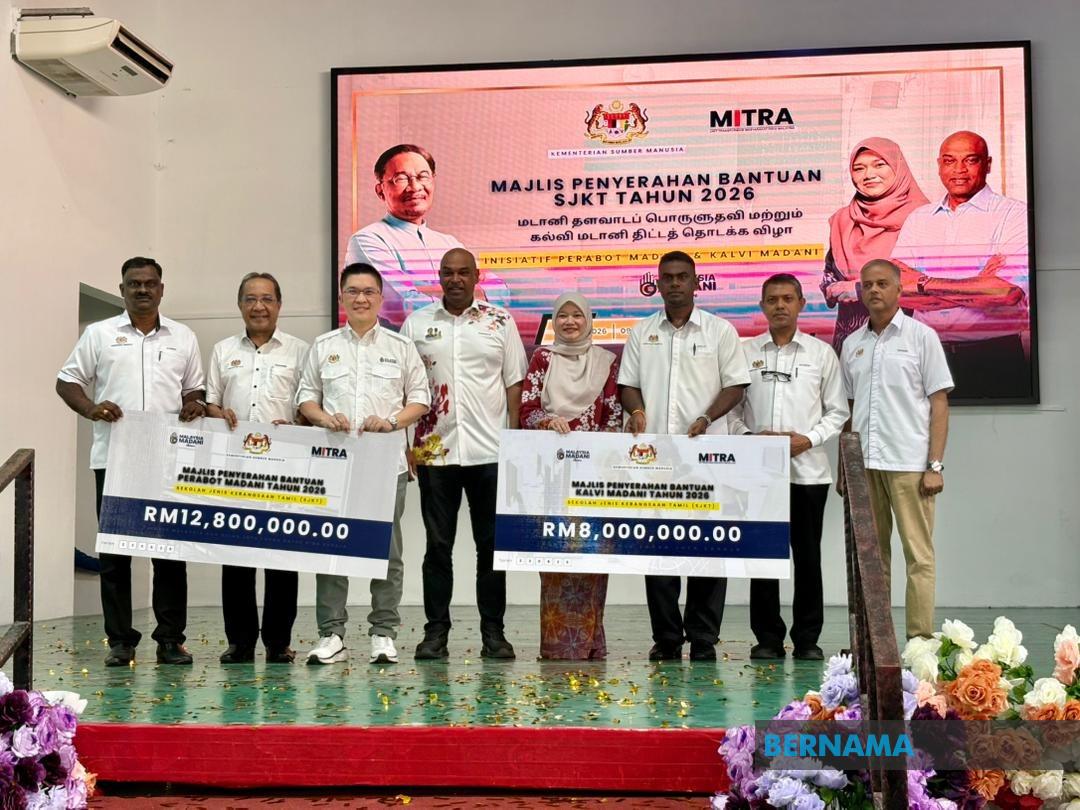
Beyond immediate employment assistance, the government has committed RM20.8 million toward strengthening Tamil vernacular education through two complementary initiatives launched alongside the labour reskilling programme. The MADANI Furniture Initiative directs RM12.8 million toward supplying high-quality classroom furniture and equipment to 361 government-aided Tamil schools, benefiting nearly 40,000 pupils and over 5,200 teachers. The allocation covers essential items—tables, chairs, cabinets, and fans—that constitute foundational infrastructure for functional learning environments. Phased delivery through August ensures manageable implementation across institutions.
The companion KALVI MADANI Programme represents a more comprehensive educational intervention, combining academic support with nutritional and welfare dimensions. At RM8 million, the programme targets nearly 10,410 Indian pupils across 315 selected Tamil vernacular schools, combining free tuition classes with learning materials and devices. Nutritional support and teacher welfare initiatives embedded within the programme reflect an integrated understanding that educational quality depends on addressing holistic student and educator needs rather than curriculum alone. Classroom furniture without adequate nutrition or teacher morale will yield limited learning gains.
These educational investments carry significance beyond immediate classroom utility. Tamil vernacular schools serve crucial roles in preserving minority language and cultural heritage while providing educational pathways for Indian Malaysian communities. The targeted allocation signals government recognition that equitable educational provision requires differentiated resource allocation, particularly when certain school systems face chronic infrastructure deficits. Students in well-equipped learning environments typically demonstrate better attendance, engagement, and academic progression than peers in under-resourced settings.
The connection between reskilling displaced workers and strengthening Tamil vernacular education reflects an implicit policy acknowledgment that labour market disruption and educational inequity frequently intersect within specific communities. Families experiencing income volatility due to employment instability become more vulnerable to withdrawing children from school, perpetuating intergenerational poverty and limiting future labour market flexibility. By simultaneously addressing workforce transitions and educational foundations, the government adopts a longer-term perspective on human capital development.
For Malaysian policymakers, the approach underscores growing acceptance that supply chain disruption represents not a temporary cyclical challenge but a structural feature of contemporary global commerce. Rather than anticipating quick restoration of previous trade patterns, the strategy prepares workers for genuine economic reorganisation through skills development. This reorientation away from passive expectation toward active adjustment capability positions Malaysia more favourably for capturing emerging opportunities in restructured supply networks, particularly in higher-value manufacturing and services where skilled workers command premium placements.
Regional implications extend across Southeast Asia, where similar supply chain vulnerabilities affect multiple economies. Malaysia's experience with deliberate reskilling intervention may inform policy approaches elsewhere in the region confronting comparable employment challenges. The integration of vocational retraining with platform-based job matching offers a replicable model for other nations navigating comparable labour market transitions triggered by external trade dynamics.
Implementation quality will ultimately determine programme effectiveness. Successful reskilling requires not merely available training slots but curriculum genuinely aligned with employer demand, instructor expertise adequately compensated to attract quality educators, and employer engagement ensuring graduates acquire skills matching actual job opportunities. The initial allocation signals governmental commitment, but sustained funding and adaptive management will prove essential as programme evaluation reveals which training pathways generate genuine employment outcomes versus statistics.
The dual focus on immediate labour market support and foundational educational strengthening reflects holistic human capital strategy appropriate to Malaysia's development aspirations. A workforce capable of adapting to repeated economic transitions requires both immediate crisis response and long-term educational investment, ensuring that future generations possess foundational capabilities for navigating sustained structural change. These initiatives, coordinated across multiple ministries, exemplify the integrated policy approach increasingly necessary as supply chain volatility becomes the normal operating environment for contemporary economies.