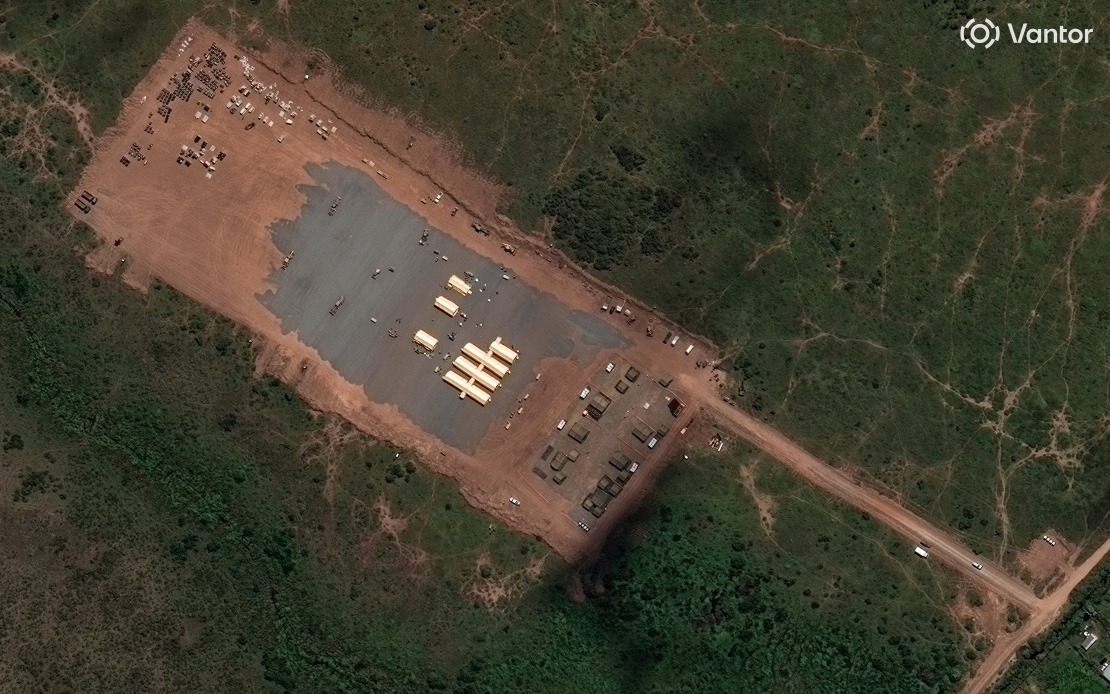
Kenya's High Court has found Health Minister Aden Duale guilty of contempt of court for flouting judicial orders that suspended construction of a controversial 50-bed Ebola quarantine facility at Laikipia Air Base in Nanyuki. Judge Patricia Nyaundi delivered the ruling on Monday, determining that Duale had persistently disregarded court directives issued on May 28 and reaffirmed on June 2 by continuing to oversee work on the facility. The minister now faces potential sanctions and has been ordered to appear before the court on Tuesday for mitigation and sentencing proceedings, a development that marks an escalation in a dispute that has consumed Kenya's public health landscape for months.
The underlying conflict revolves around a planned isolation and quarantine complex positioned approximately 8 kilometres west-northwest of Nanyuki and roughly 200 kilometres from Nairobi. According to government statements, the facility would serve as a holding centre for American citizens who might have encountered the Ebola virus while participating in response operations related to outbreaks in the Democratic Republic of the Congo and neighbouring regions. The technical specifications and security features of the installation have remained largely opaque to the Kenyan public, fuelling speculation and anxiety among residents of Laikipia County about its actual purpose and operational scope.
The project gained unexpected prominence when President William Ruto revealed in public statements that he had authorised the initiative following a direct request from United States President Donald Trump. This disclosure transformed what might have been a routine bilateral health arrangement into a politically charged matter, with critics questioning whether Kenya had surrendered sovereignty over important public health decisions to external pressure. The presidential approval, rather than dampening controversy, actually intensified scrutiny from opposition quarters and civil society organisations who viewed the process as undemocratic and lacking in transparency.
The constitutional rights organisation Katiba Institute filed the original petition that prompted the High Court to suspend the project. The group contended that the facility raised profound questions about Kenya's constitutional obligations, public health governance, and the need for meaningful community participation in decisions affecting local populations. Their legal arguments emphasised that such facilities should not advance without rigorous compliance with established procedural safeguards and inclusive deliberative processes that grant affected communities genuine input into plans potentially affecting their safety and welfare.
Government defenders of the project have positioned it as an essential component of Kenya's regional disease preparedness architecture. They argue that Kenya's geographic position as a major transport, commercial, and diplomatic crossroads in East Africa creates heightened vulnerability to epidemic threats originating elsewhere on the continent. From this perspective, establishing isolation capacity funded and technically supported by a developed nation represents rational risk management rather than capitulation to foreign interests. The United States Embassy in Kenya has reinforced these arguments by stating publicly that the facility poses negligible danger to surrounding populations and contributes to strengthening the entire region's capacity to rapidly identify, isolate, and contain potential Ebola cases before they spread across borders.
Yet these official reassurances have failed to persuade residents of Laikipia County, where demonstrations have recurred with notable frequency and intensity. Local protesters have rejected both government assurances and court-ordered construction pauses, viewing the project as evidence that their voices remain disregarded by both national authorities and international partners. The standoff between grassroots opposition and institutional power has occasionally turned violent, with law enforcement responding to demonstrations in ways that have resulted in at least three deaths according to accounts from police officials, eyewitnesses, and human rights monitoring organisations. These casualties have hardened local sentiment and converted what began as a technical health policy dispute into a broader conflict about governmental accountability and respect for citizen agency.
The High Court's contempt ruling represents a significant judicial pushback against executive overreach. By finding Duale personally culpable for disregarding suspension orders, the bench has signalled that no official—regardless of rank—stands above the law. The judge's decision to demand Duale's personal appearance for sentencing rather than accepting written submissions or delegated representation underscores the seriousness with which the court regards the violation. This judicial assertiveness carries implications beyond the immediate dispute, establishing important precedent about the enforceability of court orders in Kenya and the consequences when powerful officials treat judicial decisions as merely advisory rather than binding.
The case reflects broader tensions within East Africa regarding the appropriate balance between national sovereignty and international health cooperation. Many regional governments view such facilities as necessary infrastructure for managing transnational disease risks in an interconnected world. Simultaneously, populations in affected communities often experience such projects as imposed from above without adequate consultation or consideration of local concerns. The Kenya situation illustrates how health security initiatives, even when technically sound and well-intentioned, can generate profound legitimacy crises when deployed without robust democratic engagement and transparent decision-making processes.
For Malaysian observers, the Kenyan dispute offers instructive parallels to regional debates about infrastructure projects, foreign military or security installations, and the extent to which national governments can commit resources to external partnerships without extensive public consultation. The case demonstrates that courts increasingly serve as forums where communities challenge executive actions perceived as lacking democratic legitimacy, regardless of their technical merits. It also highlights how international partnerships, particularly those involving disease surveillance or quarantine infrastructure, can become lightning rods for broader anxieties about sovereignty and governance when implementation proceeds without genuine transparency and local participation.
The immediate question facing the Kenyan judiciary involves what sanctions appropriately punish ministerial contempt. Potential consequences range from fines to suspension from office, each carrying different political ramifications. However, the deeper issue concerns whether construction will ultimately proceed, whether the court's authority will prove enforceable in practice, and whether the government might seek legislative routes to circumvent judicial restrictions. The coming weeks will clarify whether Kenya's judicial system possesses sufficient independence and leverage to enforce orders against determined executive resistance, or whether this case marks another instance where formal legal procedures ultimately defer to political and international pressure.