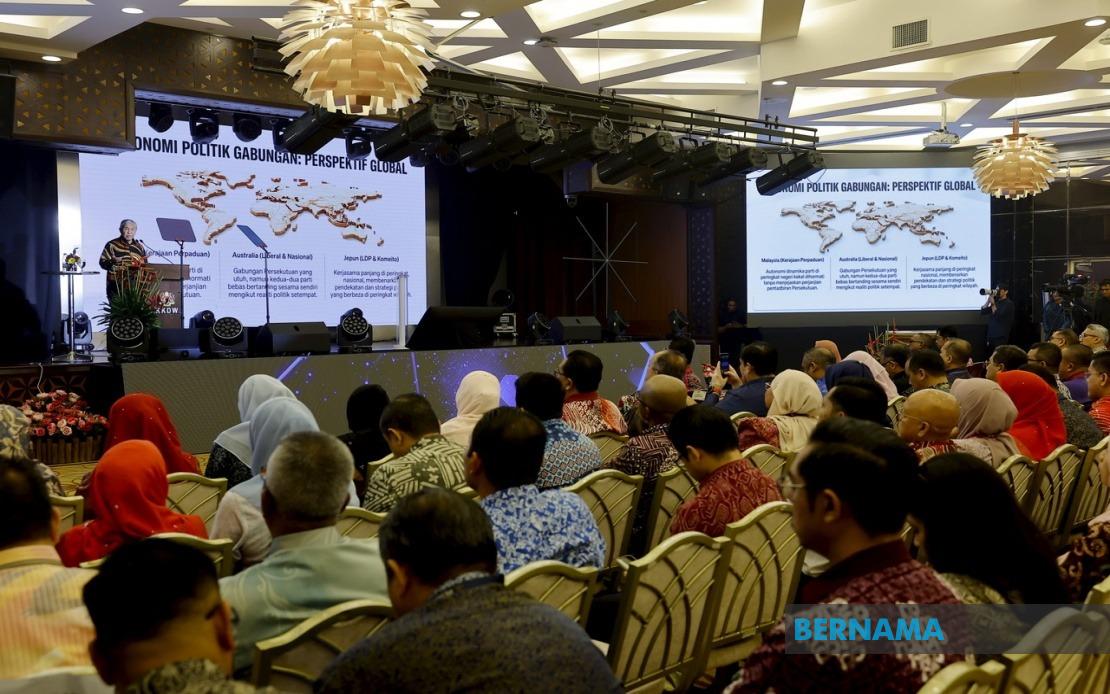
Deputy Prime Minister Datuk Seri Dr Ahmad Zahid Hamidi has unveiled an ambitious expansion programme for special needs early childhood education, pledging that the Community Development Department (KEMAS) will establish at least one Tabika Tunas Istimewa facility in every district across the country within the next three years. The announcement, made during KEMAS's monthly gathering in Putrajaya, signals a renewed government commitment to ensuring vulnerable children in underserved areas gain access to quality specialised kindergarten services without facing prohibitive costs.
The Tabika Tunas Istimewa Programme, which caters specifically to children with learning difficulties and developmental needs, currently operates through 19 classes nationwide. Under the proposed expansion framework, KEMAS intends to add approximately 132 new classes through a dual strategy encompassing the establishment of entirely new facilities alongside targeted infrastructure upgrades to existing premises. This substantial scaling up represents one of the most significant pushes in special education accessibility that rural Malaysia has witnessed in recent years, with the government maintaining an affordable fee structure of RM100 per month to ensure equity across socioeconomic strata.
Ahmad Zahid, who simultaneously holds the Rural and Regional Development portfolio, contextualised the kindergarten expansion within a broader rural development philosophy centring on tangible community impact. He emphasised that government effectiveness should ultimately be measured not through bureaucratic metrics but through demonstrable improvements in citizens' living standards and quality of life. This framing reflects an evolving approach within Malaysia's rural development apparatus, one that prioritises direct service delivery to marginalised populations over abstract developmental indicators. The kindergarten initiative thus functions as a flagship demonstration of this philosophy applied to one of the most vulnerable demographics: rural children requiring specialised educational support.
The timing of this announcement carries particular significance for Southeast Asia's developing education landscape. Malaysia, alongside its regional peers, faces persistent challenges in mainstreaming special needs education and ensuring disabled children receive early intervention services during critical developmental windows. The concentration of existing Tabika Tunas Istimewa classes in urban and semi-urban areas has traditionally created a two-tier system wherein rural families must either undertake substantial financial sacrifice and travel burdens to access services or forego specialised education entirely. By committing to district-level coverage, the government addresses a structural inequality that has long characterised Malaysia's special education provisioning.
Beyond the kindergarten initiative, Ahmad Zahid unveiled complementary rural development strategies designed to generate sustainable economic transformation across Malaysia's hinterland regions. Regional Development Authorities (LKW) have been assigned aggressive performance targets, specifically mandated to achieve a Return on Assets ranging between four and six per cent. This operational metric signals the government's determination to render its substantial real estate and infrastructure holdings economically productive rather than allowing them to function as dormant public assets. All LKWs must submit detailed Asset Activation Plans within a 100-day window, establishing concrete mechanisms through which government-controlled properties can generate revenue streams benefiting rural communities.
This asset activation framework reflects contemporary thinking around rural investment efficiency. Rather than perpetuating a traditional subsidy model dependent on recurring government outlays, the authorities are being directed toward self-sustaining operational models wherein government assets generate returns that fund ongoing development activities. Such an approach, when executed effectively, potentially reduces fiscal burden on the national budget whilst accelerating rural infrastructure utilisation and community benefit realisation. However, successful implementation hinges critically on judicious asset identification, appropriate commercialisation strategies, and robust governance frameworks preventing asset mismanagement or community displacement.
Complementing these structural initiatives, the Rural Economic Council Executive Committee approved an enhanced Sustainable Village Programme featuring a dedicated task force mechanism. This task force will concentrate on strengthening cooperative structures through targeted interventions addressing governance capacity, brand development, market access facilitation, and strategic network construction. Rural cooperatives represent crucial institutional vehicles for aggregating small-scale producers and enabling collective economic action, yet many Malaysian cooperatives have historically suffered from managerial shortcomings and market integration difficulties. By embedding governance support and market linkage services within the Sustainable Village architecture, the government acknowledges that rural prosperity requires not merely infrastructure investment but also institutional strengthening and business skill development.
For Malaysian policymakers and development practitioners, the announcement reflects evolved thinking regarding special needs education as both a social imperative and an efficiency opportunity. Early intervention through specialised kindergarten programmes demonstrably improves long-term educational outcomes and reduces downstream special education costs whilst enhancing social integration prospects for affected children. The RM100 monthly fee represents a carefully calibrated affordability threshold, balancing programme sustainability with accessibility aspirations. This pricing strategy merits comparison with regional peer countries, many of which maintain higher barriers to special education access through cost prohibitions or geographic unavailability.
The expansion timeline extending to 2027 provides a multi-year implementation window critical for managing the substantial logistical and personnel requirements inherent in establishing 132 new kindergarten classes nationwide. Such expansion demands recruitment and training of specialised educators, procurement of appropriate learning materials and adaptive equipment, physical infrastructure development, and establishment of community engagement mechanisms ensuring parental participation in their children's developmental journeys. The success or failure of this initiative will substantially depend on implementation rigour and resource allocation consistency across Malaysia's diverse districts, some of which face greater infrastructural and human resource constraints than others.
Stakeholders observing this initiative should monitor several implementation indicators. First, the rate of new facility establishment and the geographic distribution of newly created classes will reveal whether the government genuinely prioritises remote district coverage or concentrates development in more accessible semi-urban settings. Second, the qualifications and retention rates of educators staffing expanded programmes will determine service quality and programme effectiveness. Third, the actual fee structures implemented will demonstrate whether the government genuinely maintains the RM100 threshold or permits facility-level variations potentially excluding lower-income families. These implementation metrics will collectively indicate whether the Tabika Tunas Istimewa expansion represents transformative inclusive education policy or merely rhetorical commitment without substantive resource backing.
For Malaysian families with special needs children in rural areas, the announcement offers genuine prospect of reduced barriers to accessing critical early developmental services. The initiative acknowledges that special needs education represents not merely a discretionary social programme but a fundamental investment in human capital development and social inclusion. As Malaysia advances economically and aspires toward developed nation status, ensuring that no child—regardless of ability, location, or family circumstance—faces educational exclusion becomes increasingly central to national development narratives. The Tabika Tunas Istimewa expansion represents a concrete policy response to this imperative, translating inclusive education rhetoric into resource commitments and institutional expansion.

