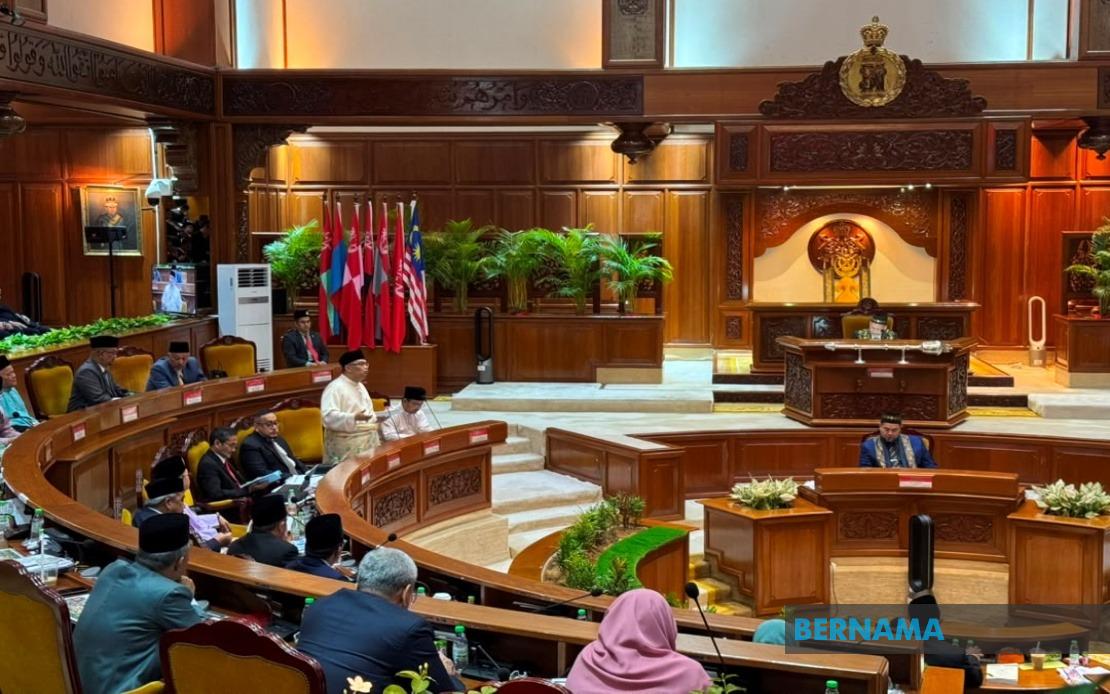
Kelantan has taken a significant step in Islamic legal reform by unanimously passing the Syariah Criminal Offences (Kelantan) Bill 2026 in its state legislative assembly, introducing a modernised framework that balances accountability with rehabilitation. The legislation, which comprises nine parts and 62 clauses, represents a comprehensive overhaul of the state's Islamic criminal justice system and signals an evolving approach to syariah law implementation across Malaysia's predominantly Muslim regions.
At the heart of the Bill's reforms lies a restorative sentencing model that fundamentally shifts the focus from purely punitive measures towards community reintegration. Under this framework, individuals convicted of certain offences must complete mandatory community service within a strictly enforced one-year timeframe. This approach mirrors sentencing philosophies increasingly adopted in secular jurisdictions worldwide, though its application within syariah law represents a notable development for Malaysia. Deputy Menteri Besar Datuk Dr Mohamed Fadzli Hassan emphasized that this reform aims to preserve dignity while ensuring offenders contribute meaningfully to societal rehabilitation rather than solely serving custodial sentences.
The Bill introduces a mechanism for compoundable offences, granting the Sultan of Kelantan authority to designate which infractions may be resolved through compensation or settlement rather than prosecution. This discretionary power, exercised through official gazette proclamations, allows flexibility in how certain violations are addressed, potentially reducing strain on the religious courts whilst providing victims with alternative dispute resolution pathways. The compounding provisions represent clauses 59 and 60 of the new legislation and enable relevant authorities to exercise prosecutorial discretion in lower-level cases.
Penalty escalation forms another cornerstone of the 2026 Bill, with lawmakers prioritising enhanced whipping sentences for serious moral and religious transgressions. These elevated penalties apply to offences including attempted apostasy—abandoning Islamic faith—as well as parental negligence in transmitting religious knowledge to children, violations of modesty obligations, consumption of intoxicating substances, gambling, consensual sexual relations outside marriage, and out-of-wedlock pregnancy. The recalibration signals legislative determination to strengthen enforcement of Islamic moral codes through deterrent sentencing.
The legislation introduces six novel clauses addressing previously uncodified or inadequately specified offences. These include provisions concerning neglect of obligatory prayers under Clause 10, which formalises the religious duty of daily congregational worship. Clauses 15 and 16 respectively address the obligation to guard private parts and the broader duty to protect non-intimate body parts, establishing legal frameworks around modesty and Islamic propriety standards. Clause 33 targets protection of intellectual faculties from substances or influences deemed harmful under Islamic jurisprudence, whilst clauses 59 and 60 operationalise the compounding mechanism.
The Bill fundamentally restructures provisions from Kelantan's 2019 Syariah Criminal Code Enactment (EKJS), repealing and re-enacting certain sections to enhance clarity and systematic organisation. Section 11 of the 2019 enactment concerning desecration of places of worship has been superseded by Clause 12, which specifically addresses interference with Muslim places of worship—a narrowed but more precisely defined prohibition. More significantly, Section 14's sodomy provision has been entirely replaced by Clauses 15 and 16, recategorising this offence within the broader framework of bodily modesty obligations rather than treating it as a distinct transgression.
This legislative restructuring reflects a sophisticated legal drafting approach, consolidating scattered provisions into a more coherent architecture across nine integrated parts. The Bill's comprehensive scope encompasses not merely criminal prohibitions but also procedural mechanisms, penalty schedules, and administrative processes for implementing syariah criminal justice. The single schedule accompanying the 62 clauses likely contains penalty tables, fine amounts, or procedural forms essential for consistent application across Kelantan's religious courts.
For Malaysia's broader legal landscape, Kelantan's Bill exemplifies how state governments are modernising Islamic criminal law within the federal framework. Whilst syariah matters fall under state jurisdiction, the approach adopted here—balancing traditional Islamic principles with contemporary criminal justice philosophy—could influence legislation in other Muslim-majority states. The restorative sentencing component particularly suggests a recognition that purely retributive models may not optimally serve community cohesion or individual reformation.
The unanimous passage through the Kelantan State Legislative Assembly indicates substantial political consensus behind these reforms, transcending typical partisan divisions. This unanimity suggests both government and opposition members recognise the necessity of updating Islamic criminal provisions to address contemporary challenges whilst maintaining religious integrity. The legislative confidence signals that these reforms represent mainstream Islamic jurisprudential thinking within Kelantan rather than fringe positions.
Implementation will prove critical, as the Bill's success depends on consistent application by religious courts and compliance by enforcement agencies. Judges must judiciously exercise discretion regarding compoundable offences and restorative sentencing recommendations, whilst authorities must complete community service programs meeting the Bill's one-year completion requirement. Training for syariah judiciary and court personnel will likely be essential.
The 2026 Bill reflects Islamic legal dynamism, demonstrating that syariah-based systems need not remain static but can evolve to incorporate modern criminal justice principles whilst preserving religious substance. For Malaysian observers across all communities, the legislation exemplifies ongoing negotiation between traditional Islamic law, contemporary jurisprudence, and state governance—a conversation increasingly central to Malaysia's constitutional and religious landscape as the nation navigates pluralism and modernisation.

