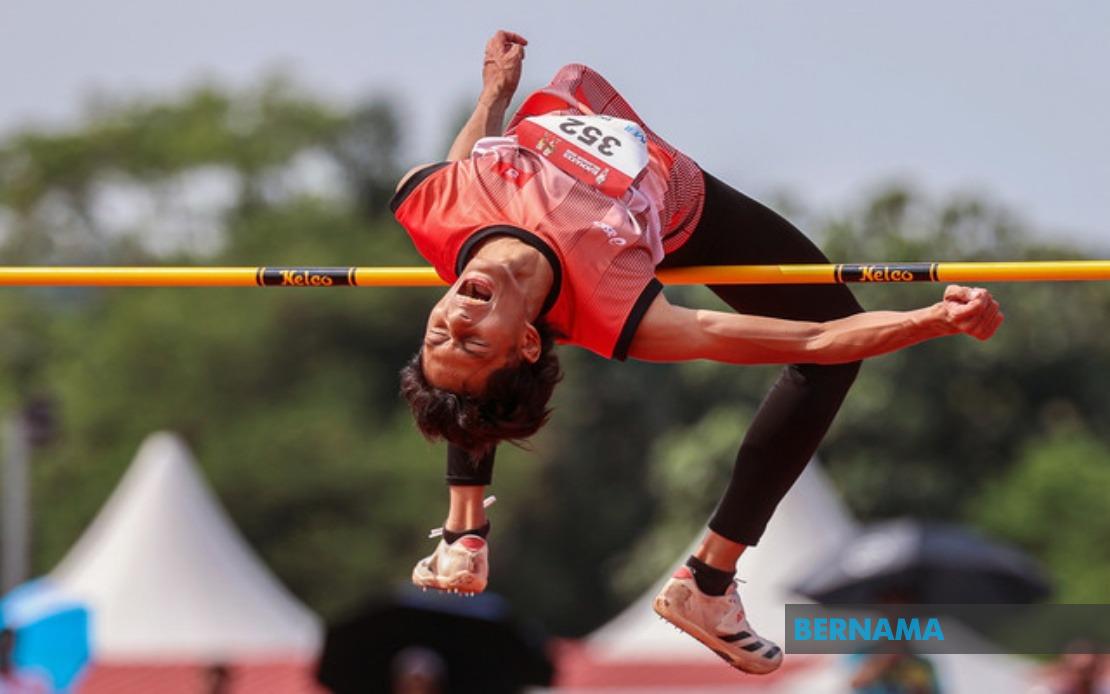
In a remarkable display of athletic improvement, Kelantan high jumper Dzul Darwisy Adam Khairulaswari clinched the gold medal in the men's high jump at the 2026 SUKMA Games in Selangor, capping a meteoric two-year rise that saw him leap from an 11th-place finish at the previous edition held in Sarawak. Competing at the Universiti Putra Malaysia Sports Centre in Serdang, the teenager cleared 2.09 metres to claim the top podium position and deliver Kelantan its second athletics gold medal at this year's biennial national sporting festival.
The jump represents a significant personal milestone for the 18-year-old, who had struggled to break through at Malaysia's premier domestic competitions. His ascent from the shadows of regional athletics competitions reflects the kind of developmental trajectory that national sporting bodies aim to cultivate across Malaysia's diverse state systems. Prior to his SUKMA breakthrough, Dzul Darwisy's highest-profile achievement had been a third-place finish at the 2023 Malaysian School Sports Council championships when he was still in Form Three, a respectable showing that nonetheless provided little indication of the performance improvements that lay ahead.
Dzul Darwisy's victory margin proved decisive in a competitive field. Kedah's Muhamad Nawawi Mohamad captured silver with a height of 2.07 metres, while his state teammate Muhammad Naufal Zulkifli secured bronze with a 2.04-metre clearance. The podium result underscores the growing depth of high jump talent emerging across Malaysia's athletic programs, with multiple states now fielding competitive performers in this technically demanding discipline. The presence of former national high jump champion Lee Hup Wei, who now works as the national reserve coach, added weight to the occasion as a testament to the calibre of competition on display.
In remarks following his victory, an elated Dzul Darwisy characterised his triumph as the culmination of sustained effort and spiritual support from those closest to him. He described his success as a blessing and acknowledged that observers might reasonably characterise the turnaround as miraculous given his previous struggles in high-profile competitions. The athlete's candour about his past disappointing performances—particularly his failure to achieve success at the previous SUKMA Games and his unremarkable track record at MSSM level—serves to amplify the significance of his breakthrough. He credited the prayers and encouragement of his parents, friends, and supporters as instrumental in his mental approach and competitive mindset heading into the championship final.
Acknowledging the physical challenges he navigated during the competition adds another dimension to the achievement. Dzul Darwisy revealed that he competed while managing pain stemming from a back injury, a revelation that underscores the mental resilience required alongside physical capability in championship athletics. Despite this discomfort, he managed to surpass his pre-competition personal best, improving from his previous mark of 2.03 metres to the winning height of 2.09 metres. However, he expressed some disappointment that his actual performance fell short of his internal target range, which he had set between 2.13 metres and 2.15 metres, suggesting that his potential may extend further still.
Looking forward, Dzul Darwisy has articulated an ambitious roadmap that will test whether his SUKMA breakthrough represents sustained progress or a singular peak performance. His immediate objective is to exceed the 2.16-metre mark, a threshold he believes would substantially strengthen his prospects for selection to compete at the Southeast Asian Games, the region's premier sporting competition held in 2027. Beyond that goal lies an even more daunting challenge: surpassing the SUKMA championship record of 2.21 metres established by Negeri Sembilan's A. Kavee Alagan at the 2012 Games in Pahang, a standard that has stood for nearly 14 years.
The trajectory from 11th place to championship gold reflects broader patterns visible in Malaysian athletics, where talent development often proves nonlinear and where breakthrough performances sometimes emerge after periods of apparent stagnation. For Kelantan athletics, the state's second gold medal in track and field events at SUKMA 2026 signals renewed competitive capacity in a discipline where the state has historically struggled to establish consistent excellence. Dzul Darwisy's success may also serve as inspiration for younger athletes in similar circumstances, demonstrating that earlier disappointments need not determine future achievement.
The context of his achievement within the Selangor 2026 Games also positions Kelantan as a contender in the broader SUKMA medal race. While individual gold medals contribute importantly to state pride and sporting prestige, the concentration of quality performances across multiple athletes and events determines overall competitive standing. The presence of competitive performances from other states, particularly Kedah's strong showing in the high jump itself, indicates that the championship remains genuinely contested across multiple regions rather than dominated by traditional powerhouses.
From a Southeast Asian perspective, Dzul Darwisy's progression raises questions about talent identification and development systems across the region. Malaysia's relatively well-established network of school and state-level athletics programs has historically produced regional competitors, yet individual breakthroughs like his demonstrate both the system's capacity to develop talent and the unpredictable nature of athletic development in teenage athletes. His trajectory toward potential SEA Games selection will provide a test case for Malaysian athletics programme effectiveness in preparing athletes for regional and international competition.
As Dzul Darwisy embarks on his next competitive phase, the combination of genuine improvement, increased confidence from championship success, and clear performance targets suggests a young athlete entering his prime years with momentum. The extent to which he can maintain focus on his stated objectives while managing the pressure and expectations that inevitably follow breakthrough performances will substantially influence whether his SUKMA gold represents the beginning of sustained excellence or an isolated peak. For Malaysian athletics, his development pathway over the coming months will offer valuable insights into programme effectiveness and talent management at the national level.

