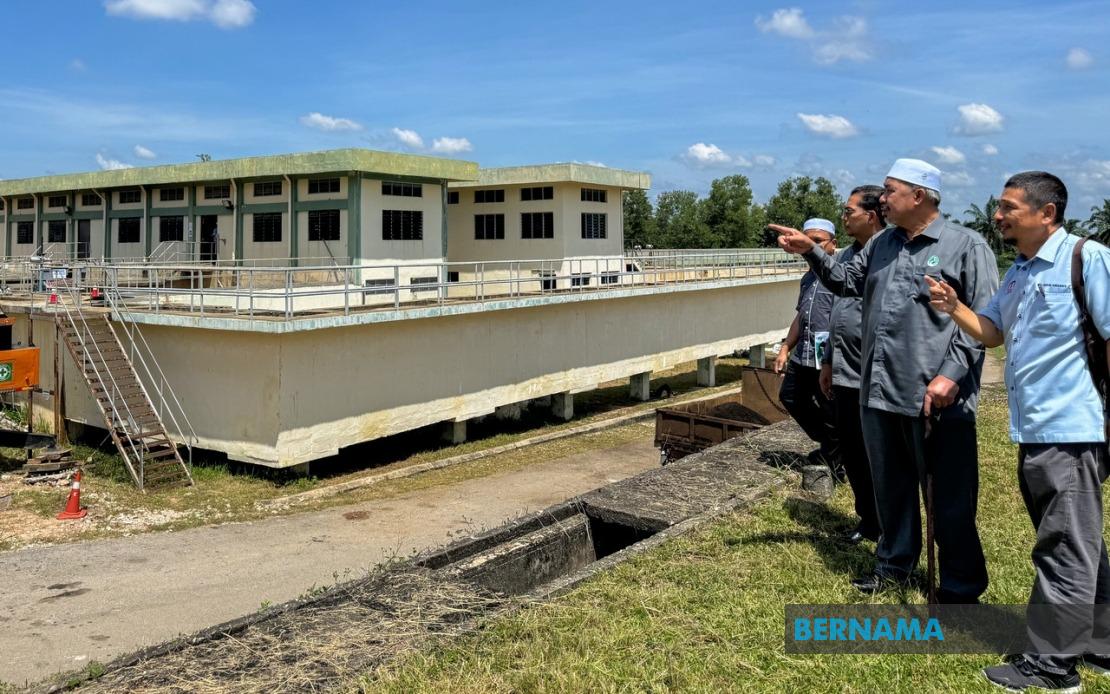
Residents across three Kelantan districts can expect significantly improved water reliability from next month, following the completion of a major infrastructure overhaul at the state's main treatment facility. The RM11.5 million upgrade to the Merbau Chondong Water Treatment Plant will substantially boost output capacity, addressing long-standing supply constraints that have plagued Machang, Pasir Puteh, and southern Kota Bharu for years. Approximately 34,000 account holders stand to benefit once the enhanced system begins operations in early September, marking a crucial milestone in resolving one of Kelantan's persistent utility challenges.
The centrepiece of this infrastructure investment is a technological advancement that fundamentally changes how the plant processes raw water. By implementing the Xylem Underdrain Leopold filtration system, the facility can now handle between 70 to nearly 90 million litres of raw water daily—a dramatic improvement over previous limitations. This enhanced processing capacity allows the plant to safely increase treated water output to 80 million litres per day, compared with the previous ceiling of 45 million litres. The distinction is crucial: water authority officials previously refused to push the plant harder because they feared compromising water quality, effectively creating an artificial bottleneck that left consumers short.
Water quality standards have simultaneously improved through the upgrade, a development that underscores how modern filtration technology can deliver both quantity and safety gains. The filtration system's effectiveness is measured by the Nephelometric Turbidity Unit, a technical indicator of water clarity and purity. Engineers have successfully reduced turbidity readings from over 10 NTU to just three NTU—a substantial decrease that brings the output closer to international best practices. For households receiving the water, this translates to clearer, cleaner tap water with fewer suspended particles that could harbour contaminants or create aesthetic concerns.
Kelantan's Public Works, Infrastructure, Water and Rural Development Committee chairman Datuk Dr Izani Husin outlined the project timeline during a recent facility visit, confirming that construction work is expected to conclude by month-end, with distribution from the enhanced system commencing in early September. This phased approach allows engineers to thoroughly test the new equipment before connecting it to the broader distribution network, minimising disruption risks to the tens of thousands of households already relying on this supply source. The deliberate schedule reflects learned lessons from similar water infrastructure projects across the region, where rushing deployment has sometimes created temporary shortages or quality dips.
The upgrade represents immediate relief, but the state government is simultaneously charting a longer-term strategy to permanently resolve water scarcity issues across Kelantan. A second major project in development involves constructing the Machang 1 Water Treatment Plant, a RM120 million facility expected to reach completion by 2030. This future plant will supply an additional 50 million litres daily, specifically designed to serve Machang district's growing residential and commercial needs. By establishing this dedicated facility, the state intends to free up production capacity at the upgraded Merbau Chondong plant, allowing surplus output to be redirected toward other water-stressed districts within Kelantan that currently experience periodic shortages.
The Machang 1 project currently awaits finalisation of agreements between the Kelantan state government and Pengurusan Aset Air Berhad, the federal water asset management company. Once these contractual frameworks are settled, the procurement process for selecting contractors can proceed—a sequence that typically takes several months even for straightforward infrastructure developments. This procedural reality means residents should not expect rapid visible construction activity, though the planning phase represents genuine progress toward addressing structural supply deficiencies that have plagued the state for decades.
Data released through these infrastructure announcements reveals how comprehensively water supply problems have affected Kelantan's population. Air Kelantan Sdn Bhd, the state's primary water utility, reports having addressed approximately 70 percent of water supply issues affecting 270,000 user accounts statewide. This means roughly 81,000 accounts still experience supply challenges—an uncomfortable reminder that despite the Merbau Chondong upgrade and future Machang plans, substantial portions of Kelantan's water infrastructure require modernisation. The utility has established an ambitious target to resolve at least 90 percent of these issues by 2035, a goalpost that requires sustained investment and consistent execution across multiple districts and treatment facilities.
For Malaysian observers tracking water security across peninsular states, Kelantan's experience illustrates both the challenges and solutions within state-managed utility systems. Unlike Selangor and Kuala Lumpur, where federal involvement through entities like Syabas and Air Selangor provides additional capital and technical expertise, Kelantan's water authority operates with more limited resources and technical capacity. The Merbau Chondong upgrade represents substantial commitment from a state government with constrained finances, suggesting either improved federal support or prioritisation of water infrastructure above competing development demands—both positive signals for residents long frustrated by supply unpredictability.
The technological choice of the Xylem Underdrain Leopold filtration system deserves particular attention, as it reflects global trends toward modular, efficient treatment solutions that can be retrofitted into existing infrastructure rather than requiring complete facility replacement. This approach offers significant advantages for regional governments facing aging water plants: modern filtration can dramatically improve performance without the multi-year construction disruptions and astronomical costs associated with building entirely new treatment centres. Other Malaysian states with similar aging infrastructure—particularly Perlis, Terengganu, and rural portions of Pahang—may find Kelantan's solution template worth studying and potentially replicating.
Beyond technical specifications, the September timeline carries social significance for affected households. Water supply unreliability creates cascading effects throughout residential and commercial life: families struggle with basic hygiene and domestic needs, small businesses operating in food services face regulatory compliance challenges, and the broader quality of life deteriorates when essential utilities cannot be relied upon. Three months remain until the upgrade comes online, providing the window for final quality assurance testing. If deadlines hold, residents enduring Kelantan's water constraints will finally access the reliable supply that other Malaysian states take for granted—a development that could modestly improve the state's economic competitiveness and residential appeal.

