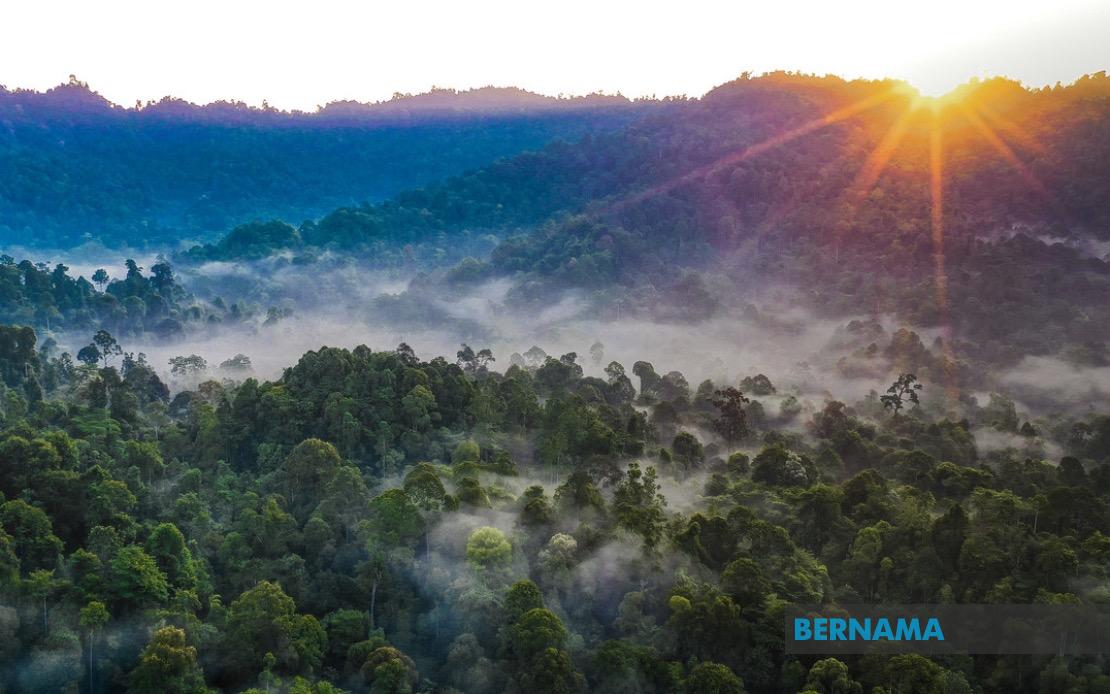
Kelantan's state government has pledged to maintain the total extent of protected forest cover by replacing any reserve areas that are removed from the forest reserve registry for industrial or developmental purposes. The commitment was announced by Deputy Menteri Besar Datuk Dr Mohamed Fadzli Hassan following an executive council meeting at the state administrative centre in Kota Bharu, signalling the administration's intention to balance economic development with environmental stewardship.
The assurance becomes particularly significant given recent scrutiny over the degazetting of Temangan Forest Reserve in the Machang district, an area whose removal from protected status has drawn public attention due to its connection with approved granite extraction activities. The controversy highlights the tension that often emerges in resource-rich regions where development pressures intersect with conservation objectives, a dynamic increasingly familiar across Southeast Asia as states prioritise revenue-generating industries whilst attempting to maintain environmental credentials.
According to Datuk Dr Mohamed Fadzli, the granite mining approval in question originated over a decade ago, with formal permission granted in 2009 to an unnamed company to undertake extraction operations within the reserve boundaries. The decision to degazette Temangan Forest Reserve represents the formal implementation of that long-standing approval, effectively removing the land from protected status to permit the mining company to proceed with commercial activities. This extended timeline between initial approval and actual degazetting suggests bureaucratic processes moving at a deliberate pace, though it also raises questions about the original approval's environmental assessment standards and whether current conservation priorities have evolved since 2009.
The Deputy Menteri Besar indicated that the state forestry department has confirmed its commitment to the replacement principle, whereby any degazetted area must be matched by an equivalent portion of forest being formally protected elsewhere within Kelantan's jurisdiction. This mechanism, if properly implemented, would theoretically prevent net loss of forest reserve coverage, a concept gaining traction among policymakers globally as pressure mounts to preserve carbon-sequestering ecosystems. However, the practical effectiveness of such replacements depends critically on factors including the ecological equivalence of replacement areas, their protection adequacy, and whether monitoring systems genuinely prevent future degradation of newly protected zones.
Kelantan's forest reserves hold particular strategic importance given the state's historical reliance on forestry resources and its ongoing development aspirations. The state encompasses significant portions of the peninsula's northern forest complex, with reserves that support biodiversity, watershed functions, and carbon storage—services that carry economic value beyond immediate extraction activities. Any degazetting therefore warrants careful scrutiny to ensure genuine replacement occurs and is not merely a procedural formality that provides political cover for net reductions in protected area.
The case also illuminates broader challenges facing Malaysian state governments as they navigate competing pressures from resource industries, environmental advocates, and federal regulatory frameworks. Granite and other stone aggregates remain essential inputs for Malaysia's construction sector, and states with significant reserves face genuine demands from quarrying companies seeking access to economically viable deposits. Simultaneously, growing awareness of climate change and biodiversity loss has elevated expectations regarding conservation commitment, particularly among younger voters and urban constituencies attuned to environmental issues.
For investors and companies operating in resource extraction, the clarification provides some certainty regarding development timelines, as the degazetting formalises approvals that had remained operationally constrained. The confirmation that replacement mechanisms will be applied may also enhance investor confidence by signalling that the state government has thought through environmental implications and is attempting responsible resource management rather than simply maximising short-term revenue.
Yet scepticism regarding replacement effectiveness remains warranted. Environmental literature documents numerous instances globally where replacement forests prove inadequate due to factors including inferior soil quality, different vegetation composition, lower biodiversity value, or insufficient long-term protection. Kelantan's government should therefore clarify publicly which specific areas will serve as replacements, provide scientific documentation justifying their equivalence to Temangan Forest Reserve, and establish independent monitoring mechanisms to track replacement forest condition over time.
The announcement reflects evolving global norms around just transition frameworks that acknowledge economic realities whilst attempting environmental safeguards. Rather than outright bans on resource extraction, many Southeast Asian governments increasingly adopt conditional approaches permitting development provided offsetting conservation occurs. Success depends entirely on implementation rigour and political will to enforce commitments despite post-approval pressures from both extractive industries and those seeking to circumvent protections.
Looking forward, Kelantan's experience with Temangan Forest Reserve may establish precedent affecting future degazetting decisions throughout the state and potentially influence how other Malaysian jurisdictions approach forest reserve management. If replacement genuinely occurs and replacement forests are well-maintained, the model could demonstrate viable coexistence between development and conservation. Conversely, if replacements prove inadequate or protections fail, scepticism regarding government assurances will deepen, potentially complicating future environmental management efforts and investor relations.

