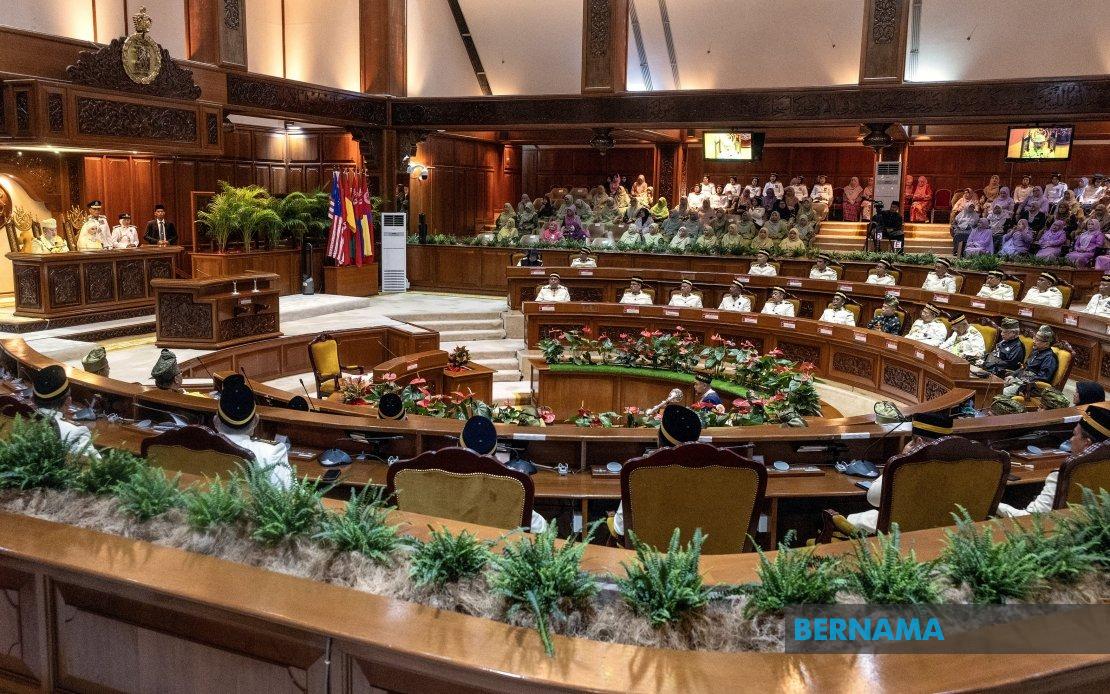
The Kelantan state government is preparing to introduce comprehensive replacement legislation governing religious criminal offences, marking a significant step in clarifying the constitutional boundaries between state and federal religious authority. Deputy Menteri Besar Datuk Dr Mohamed Fadzli Hassan announced that the Syariah Offences (Kelantan) Bill 2026 will be tabled before the State Legislative Assembly next Tuesday, with debate to follow immediately. The new law represents a deliberate recalibration of Kelantan's religious criminal framework following a landmark Federal Court decision that fundamentally reshaped the legal landscape for Islamic law enforcement across Malaysia's states.
The foundation for this legislative overhaul traces back to February 2024, when the Federal Court delivered an 8-1 majority ruling that struck down 16 of 18 contested provisions within the Kelantan Syariah Criminal Code (I) Enactment 2019. The constitutional challenge, initiated by Kelantan-based lawyer Nik Elin Zurina Nik Abdul Rashid, centred on whether state legislatures possess the authority to criminalise offences that fall within Parliament's jurisdictional remit under the Federal Constitution. The court determined that Kelantan's legislature had transgressed constitutional boundaries by attempting to legislate in areas already assigned to federal jurisdiction, creating immediate uncertainty about the validity of numerous state-level religious laws.
This decision reverberated throughout Malaysia's legal and religious governance structures, prompting nationwide discourse regarding the proper division of legislative powers between Putrajaya and state governments in religious matters. The ruling exposed tensions between the constitutional framework—which grants states limited authority over Islamic law—and the practical reality that states have long assumed broader regulatory roles in religious affairs. For Kelantan, which maintains a strong Islamic governance profile, the judgment necessitated comprehensive legislative reconstruction to ensure compliance with constitutional requirements while preserving religious enforcement mechanisms.
Kelantan's response has been methodical and consultative. Work on drafting replacement legislation commenced in mid-2024, reflecting a deliberate commitment to producing constitutionally sound provisions. The Kelantan government established a dedicated Committee for the Amendment of the Kelantan Syariah Criminal Code (I) Enactment 2019, assembling diverse expertise spanning civil and religious legal practitioners, constitutional law scholars, academic specialists, and serving Syariah judicial officers. This multidisciplinary approach signals recognition that crafting religiously appropriate yet constitutionally defensible legislation requires integrated perspectives.
Additionally, the drafting process incorporated formal review by the Kelantan Council of Ulama operating under the Kelantan Islamic Religious and Malay Customs Council (MAIK), ensuring theological and religious considerations informed the legislative structure. This consultation mechanism underscores efforts to balance constitutional compliance with Islamic jurisprudential principles—a delicate equilibrium that has proven contentious across Malaysia's plural legal system. The involvement of religious scholars alongside constitutional experts reflects awareness that legislation must satisfy both legal and religious legitimacy standards within Kelantan's context.
The resulting Bill demonstrates substantive architectural changes from its predecessor. The new legislation comprises nine distinct parts, encompasses 62 operative clauses, and includes a schedule of supplementary material, representing a comprehensive reconsideration of how Kelantan structures religious criminal law. According to Deputy Menteri Besar Mohamed Fadzli, the drafting methodology emphasised the constitutional doctrine of "pith and substance," whereby provisions are evaluated based on their essential character rather than superficial framing. This doctrinal approach aims to ensure that each provision genuinely addresses matters within state jurisdiction, avoiding the constitutional overreach that invalidated the previous enactment.
The Bill incorporates what officials describe as "new and reformative provisions," suggesting the government has not merely reproduced invalidated content but genuinely reconsidered religious criminal law's appropriate scope. This reformative dimension acknowledges that the Federal Court's decision, while constraining state authority, provides opportunity for more carefully calibrated religious legislation that respects constitutional architecture while maintaining enforcement capacity. Whether these reforms represent substantive policy evolution or primarily technical adjustments to satisfy constitutional requirements remains to be assessed once the legislation is publicly debated.
The timing and context of this legislative initiative carry significance beyond Kelantan's borders. States across Malaysia that operate Syariah legal systems face analogous constitutional vulnerabilities revealed by the Federal Court decision. Kelantan's approach to legislating within newly clarified constitutional boundaries will likely influence how other states formulate or revise their own religious criminal frameworks. The outcome in Kota Bharu could establish practical precedents for reconciling robust Islamic governance with federal constitutional supremacy—a challenge shared by Terengganu, Pahang, Johor, and other jurisdictions with active Syariah enforcement systems.
Deputy Menteri Besar Mohamed Fadzli has explicitly sought unified state assembly support, appealing to all assemblymen to endorse the Bill. This request for consensual passage reflects recognition that religious legislation functions more effectively when perceived as having broad political legitimacy across party lines. In Kelantan, where the Islamic Party dominates but opposition assemblymen participate in legislative proceedings, securing cross-factional backing would strengthen the new law's democratic credentials and legal standing. However, the request also implies potential political sensitivity around religious legislation—a characteristic feature of Malaysia's confessional politics.
The Bill's substantive provisions will warrant careful scrutiny once tabled. Constitutional scholars, civil society organisations focused on religious liberty and constitutional governance, and state opposition representatives will presumably examine whether the new framework genuinely addresses the Federal Court's concerns or merely repositions problematic provisions. Questions may arise regarding offences touching on personal conduct, family matters, and religious expression—areas where the line between permissible state regulation and prohibited federal encroachment remains contested. The Federal Court's detailed grounds of judgment, which the drafting process acknowledged and incorporated, provide reference points for assessing constitutional compliance.
For Malaysian observers, the Kelantan bill represents a concrete constitutional test case. The Federal Court decision established binding legal doctrine; the state's implementation through new legislation demonstrates how that doctrine translates into practical lawmaking. Success would suggest that states can effectively calibrate religious governance within constitutional parameters. Difficulty or subsequent legal challenges would indicate deeper structural tensions between Malaysia's federal architecture and states' Islamic governance aspirations. Either outcome carries implications for religious law administration throughout the federation and for ongoing debates about constitutional interpretation in plural societies.
The legislative sequence beginning next Tuesday—tabling, debate, and passage—will unfold relatively quickly given advance preparation. Deputy Menteri Besar Mohamed Fadzli's confidence regarding assembly support suggests the government expects smooth legislative progression. The Bill's ultimate substantive impact, however, depends not only on parliamentary approval but on practical implementation and potential future constitutional scrutiny. Kelantan's effort to reconstruct its religious criminal law framework within constitutional boundaries represents an important real-world application of federalism doctrine to contentious questions about religious authority in a Muslim-majority democracy.

