Kelantan's forestry landscape covers 778,708.34 hectares, representing just over half the state's total landmass at 51.79 per cent, state leaders confirmed in the legislative assembly this week. The figure underscores the northeastern state's continued alignment with the Peninsular Malaysia Forestry Policy framework, which sets a minimum threshold of 50 per cent forest and tree cover across the nation. For a state often characterised by its agricultural and resource-based economy, maintaining this benchmark demonstrates a deliberate effort to balance environmental stewardship with developmental pressures.
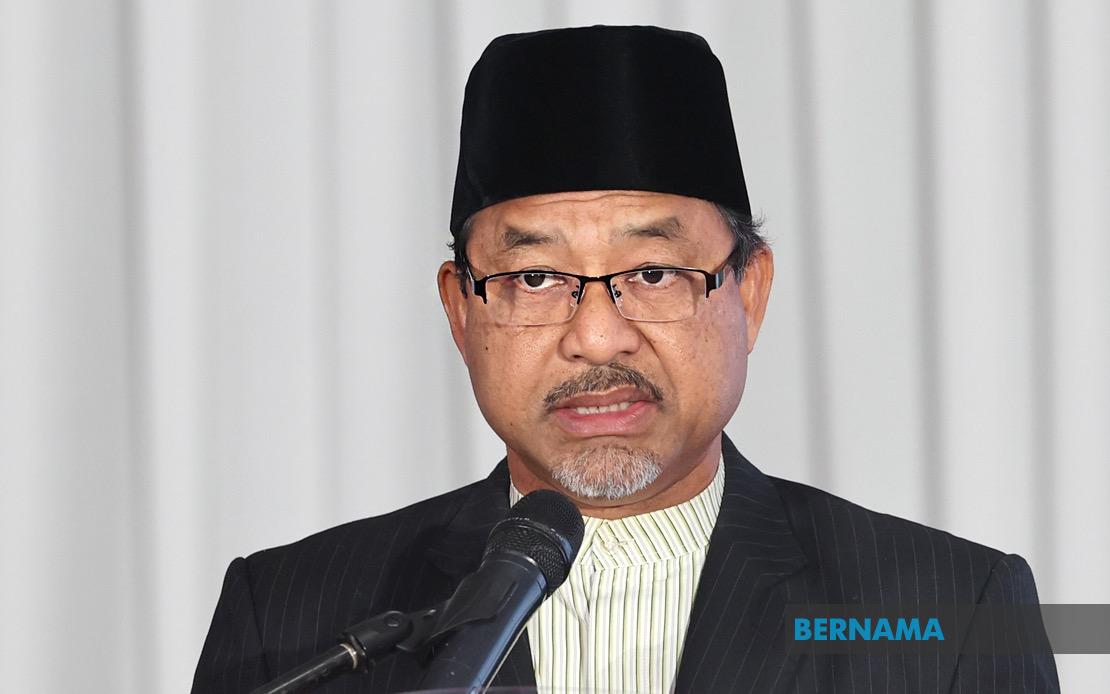
Menteri Besar Datuk Mohd Nassuruddin Daud outlined the multi-layered approach the state government has adopted to preserve and expand its green heritage. The Kelantan Forestry Department operates with a specific mandate: identifying suitable government-owned lands that qualify for formal designation as Permanent Reserved Forests (HSK). This administrative process, while seemingly technical, carries significant weight in the Malaysian context, where such designations provide legal protection against unauthorised conversion and encroachment. The formal gazetting of these forests under section 10 of the National Forestry Enactment framework establishes them as protected corridors, categorised according to their intended ecological or economic function.
The state government has integrated forest protection with nationwide environmental initiatives, particularly through participation in the Greening Malaysia campaign. This initiative encompasses active reforestation and tree-planting programmes designed to restore degraded areas and increase overall vegetation cover. Such efforts reflect recognition that maintaining forest percentages is not merely about preventing loss, but about active regeneration and ecosystem health. For Kelantan, this becomes particularly pertinent given the state's economic reliance on timber and agricultural sectors, where competing land-use demands create persistent tension with conservation objectives.
Central to the state's strategy is what officials describe as a "balanced approach"—the explicit acknowledgment that conservation and economic development need not be mutually exclusive. This framing, increasingly common across Southeast Asia, attempts to address the reality that rural states depend heavily on resource extraction and agricultural expansion for revenue and employment. Kelantan's articulation of sustainable development, particularly the reference to meeting current needs without undermining future generations' capacity to do the same, invokes the widely accepted Brundtland definition but faces real implementation challenges when timber quotas and plantation expansion remain economically vital.
Technological advancement has become integral to forest management in Kelantan. The state employs remote sensing and satellite-based monitoring systems to detect changes in forest extent and identify potential encroachment in real time. This represents a significant evolution from traditional ground-based surveillance, allowing authorities to track forest boundary alterations across vast areas efficiently. Early detection capability theoretically enables faster intervention, though effectiveness ultimately depends on the resources available for follow-up action and enforcement.
Verification protocols add a layer of procedural rigour to the monitoring framework. Rather than acting on satellite data or reports alone, the Kelantan Forestry Department conducts on-ground patrols and field inspections to confirm suspected violations before enforcement measures are initiated. This approach protects against false positives while also providing documentation for any subsequent legal action. However, the interval between detection and verification can create windows for further damage if encroachment is intentional.
The question posed by assemblyman Zuraidin Abdullah of Chetok, a PAS representative, signals ongoing legislative scrutiny of forest management. In Malaysia's federal system, forestry remains largely a state matter, making state-level oversight particularly crucial. The fact that the question specifically prompted a comprehensive reply reflects both public concern about forest loss and the political salience of environmental issues, even in states where resource extraction has historically taken priority.
Kelantan's forest cover percentage sits above the national minimum, yet the region faces mounting pressures from agricultural expansion, infrastructure development, and ongoing demand for timber resources. The 51.79 per cent figure, while meeting the policy threshold, leaves limited room for further degradation. This tight margin underscores why the state government emphasises its restoration programmes and technological monitoring—margin for error has shrunk considerably across Malaysian states as cumulative land conversion accelerates.
The Peninsular Malaysia Forestry Policy itself reflects broader regional trends toward formalising environmental commitments. Across Southeast Asia, governments have adopted similar forest cover targets as part of climate pledges and international obligations. Kelantan's adherence to the 50 per cent benchmark positions the state as compliant with national and increasingly regional environmental norms, though critics argue such thresholds may be insufficient for biodiversity preservation or climate resilience.
For Malaysian observers and regional analysts, Kelantan's performance offers a mixed signal. The state has avoided the kind of dramatic forest loss documented in some neighbouring jurisdictions, yet structural challenges remain. Agricultural conversion, particularly for oil palm cultivation, and ongoing logging pressures continue in peripheral forest areas. The emphasis on government land identification for forest gazetting suggests that much commercially valuable forest may already be in private or corporate hands, potentially beyond the reach of expanded protection.
The integration of technology into forest management, while promising, raises questions about implementation capacity and political commitment in the medium term. Satellite systems and monitoring protocols require sustained funding, technical expertise, and institutional consistency—resources that can fluctuate with changes in administration or budget allocation. Kelantan's stated approach represents best practice in principle, but realisation depends on factors beyond policy documents.
Looking forward, the state's forest trajectory will likely be determined less by monitoring systems or reforestation rhetoric and more by macro-level decisions regarding land allocation between conservation and development. As Southeast Asia continues experiencing population growth, urbanisation, and economic pressures, states like Kelantan will face intensifying demands on forest resources. Maintaining the 51.79 per cent threshold while accommodating these pressures will require not just technical innovation but political will to prioritise long-term environmental stability over short-term economic gains.

