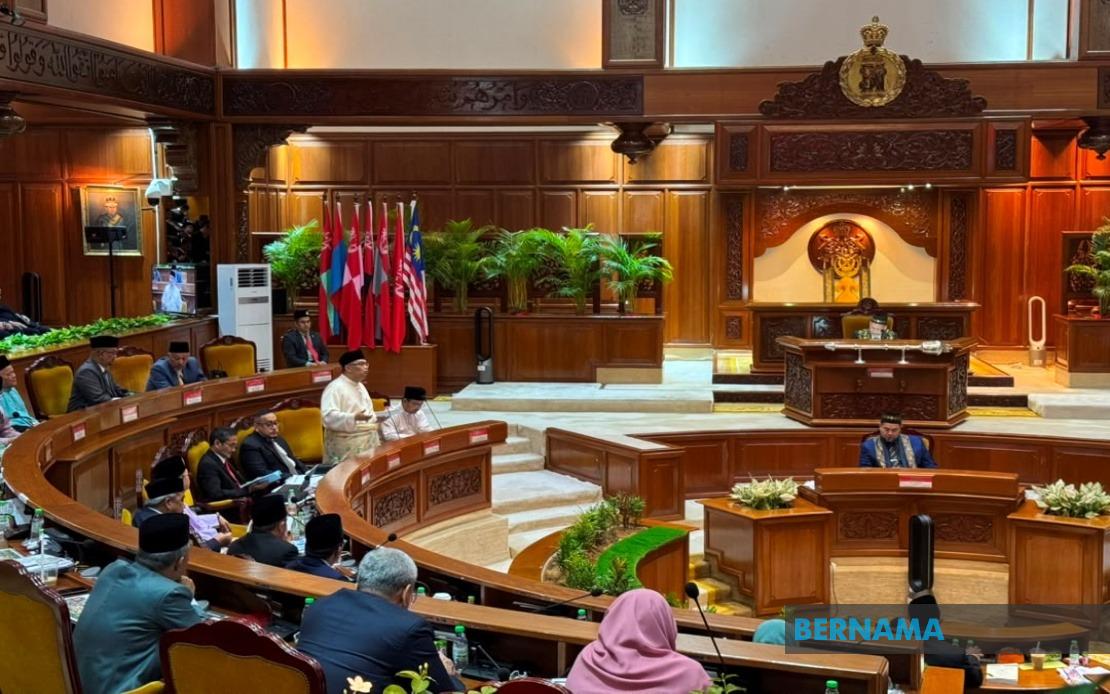
Kelantan's state legislative assembly has unanimously passed the Syariah Criminal Offences (Kelantan) Bill 2026, marking a significant legislative milestone in the state's ongoing effort to refine its Islamic criminal law framework. The passage of the Bill represents an attempt by the Kelantan government to address constitutional concerns that had previously derailed similar legislation, following a landmark Federal Court ruling that questioned the state's legislative authority over certain Syariah offences.
Deputy Menteri Besar Datuk Dr Mohamed Fadzli Hassan tabled the Bill, which subsequently underwent debate among six state assemblymen representing constituencies across the state: Pasir Tumboh, Melor, Galas, Jelawat, Kota Lama and Chempaka. The comprehensive discussion preceding the final vote underscored the legislative significance of the measure within Kelantan's political context. Following the winding-up remarks delivered jointly by Mohamed Fadzli and Menteri Besar Datuk Mohd Nassuruddin Daud, the assembly moved to second and third reading before approving the Bill without dissent, with proceedings overseen by Kelantan state assembly Speaker Datuk Mohd Amar Nik Abdullah.
Menteri Besar Mohd Nassuruddin emphasised that the Bill's development had not proceeded hastily or without substantial groundwork. He characterised the legislation as having undergone meticulous refinement through multiple deliberative phases before reaching the assembly floor, suggesting that policymakers had incorporated lessons from previous constitutional challenges. This measured approach reflects the political necessity of crafting legislation resilient to legal scrutiny, particularly given the contentious nature of state-level Syariah lawmaking in Malaysia's federal system.
The Bill's structural architecture is notably comprehensive, consisting of nine distinct sections, 62 individual clauses and supplementary schedules. Among its key substantive provisions are reforms addressing obligatory prayer performance, regulations concerning bodily autonomy and organ protection, safeguards relating to intellectual and rational faculties, the introduction of restorative justice mechanisms, prioritisation of corporal punishment within the sentencing hierarchy, and streamlined compounding procedures for certain offences. This detailed codification suggests an attempt to create a systematic and internally coherent legal regime rather than ad hoc legislative responses.
The constitutional backdrop to this Bill is crucial for understanding its significance within Malaysia's evolving religious governance landscape. On February 9, 2024, the Federal Court rendered a decisive 8-1 majority judgment that declared 16 of 18 provisions in Kelantan's Syariah Criminal Code (I) Enactment 2019 constitutionally invalid. The court's reasoning centred on the proposition that Kelantan's state legislative assembly lacked jurisdictional authority to enact legislation concerning offences that fall within Federal purview under Malaysia's constitutional division of powers. This landmark decision effectively dismantled much of the 2019 enactment and sparked sustained debate regarding the proper allocation of legislative responsibility for Syariah criminal matters between Putrajaya and the states.
The Federal Court's intervention was precipitated by a constitutional petition filed by a lawyer practising in Kelantan, indicating that challenges to state Syariah legislation increasingly attract serious constitutional contestation. The 8-1 majority reflected substantial judicial consensus, with only one judge dissenting, suggesting the court's interpretation commanded broad judicial support. This degree of consensus amplifies the legal weight of the decision and raises the stakes for any subsequent state attempts to legislate in this domain, as future courts may view the 2024 judgment as settled constitutional doctrine.
Mohd Nassuruddin's articulation of the Bill's philosophical underpinnings reveals an attempt to anchor the 2026 legislation within established constitutional principles. He described the Bill's normative foundation as rooted in values already embedded in the 2019 Enactment, thereby presenting the new measure not as radical legislative innovation but rather as evolution and clarification of pre-existing legal principles. By framing the Bill as embodying continuity with prior Kelantan Syariah law, the state government seeks to maintain ideological coherence while navigating constitutional limitations that the Federal Court had identified.
The unanimous passage of the Bill in the state assembly provides a clear political endorsement, but its ultimate constitutional validity will likely depend on Federal scrutiny. Given the Federal Court's prior willingness to invalidate similar provisions, serious questions linger regarding whether the 2026 Bill's drafting sufficiently accommodates the constitutional objections articulated in the 2024 judgment. The specific nature of changes incorporated to address federal-state power allocation tensions remains publicly unclear, and constitutional lawyers may scrutinise whether the Bill represents genuine constitutional accommodation or essentially repackaged previous provisions.
For Malaysian federalism more broadly, this legislative cycle illustrates the persistent tension between state-level religious autonomy and Federal constitutional supremacy. Kelantan, led by an Islamic administration, clearly possesses strong constituent support for ambitious Syariah criminal legislation, yet the Federal Court has functioned as a constitutional check on state legislative ambitions. The pattern of Kelantan attempting comprehensive Syariah criminal codes, Federal courts striking them down, and then revised versions being introduced, suggests an ongoing constitutional chess match rather than final resolution of the underlying federalism question.
Regional observers, particularly from other Malaysian states with significant Muslim populations and from neighbouring Southeast Asian jurisdictions grappling with religious law integration, will monitor whether Kelantan's legislative persistence eventually overcomes judicial obstacles or whether the Federal Court maintains its constitutional boundaries. The Bill's passage demonstrates the political salience of Syariah law reform in Kelantan's electoral and governance dynamics, while the earlier Federal Court decision demonstrates the institutional limits the Malaysian constitutional order imposes on unilateral state action in this contentious area.
The practical implications of the Bill, should it withstand legal challenges, remain significant for Kelantan residents subject to Syariah jurisdiction. The provisions addressing obligatory prayer performance and bodily autonomy represent substantive criminal law innovations that would affect individual conduct and expose violators to state enforcement mechanisms. The emphasis on restorative punishment and expanded compounding procedures might theoretically offer greater flexibility in case resolution, though implementation details will determine actual impact on accused persons and communities. How Kelantan's Syariah courts subsequently interpret and apply these provisions will shape their real-world significance beyond their formal legislative text.

