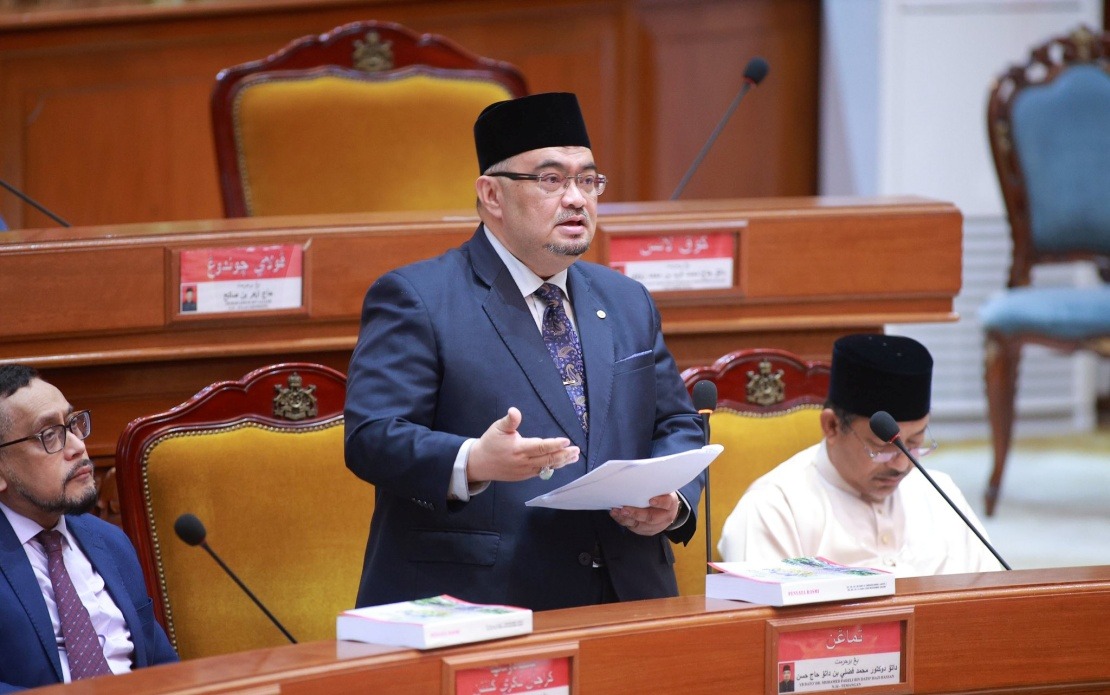
Kelantan's state government has intensified its crackdown on illegal mining and land encroachment, opening 63 investigation papers in connection with such activities from the beginning of 2025 through June this year, according to Datuk Dr Mohamed Fadzli Hassan, the state's Deputy Menteri Besar. The cases stem from 77 enforcement operations that targeted hotspot areas in Gua Musang, Kuala Krai, Jeli and Tanah Merah districts, reflecting the scale of the authorities' push to stamp out unauthorised mining and land-clearing operations that have plagued the northern state for years.
The scope of Kelantan's enforcement response reveals the organised nature of illegal mining operations in the state. Beyond simply opening investigation papers, authorities have taken the significant step of seizing 65 excavators and related heavy machinery estimated to be worth RM15.8 million. This asset seizure strategy directly targets the operational capacity of illegal mining rings, making it substantially more difficult for them to continue their activities even if they evade criminal prosecution. The confiscation of such expensive equipment represents a material blow to the economics of illegal mining syndicates, which typically operate on thin profit margins once enforcement costs are factored in.
The geographical concentration of illegal mining in Kelantan's eastern and interior districts underscores a persistent vulnerability in the state's resource management. Gua Musang, Kuala Krai, Jeli and Tanah Merah are predominantly rural areas with significant limestone, mineral and sand deposits, making them attractive targets for unscrupulous operators seeking quick profits outside formal licensing frameworks. These districts also share characteristics that facilitate illicit operations: they are relatively remote, have limited presence of government monitoring infrastructure, and often sit near state borders or forested reserves where enforcement becomes jurisdictionally complicated.
The investigation papers filed with the Prosecution Unit of the Kelantan Land and Mines Office represent the formal gateway into Malaysia's criminal justice system for these cases. Each paper documents alleged violations of state land laws, mining regulations and environmental statutes. However, the conversion of investigation papers into successful prosecutions hinges on investigative quality and prosecutorial resources, areas where Malaysian enforcement agencies have historically struggled in cases involving organised illegal mining.
A critical dimension that Mohamed Fadzli acknowledged is the involvement of organised networks beyond the visible operators wielding excavators. The authorities have committed to investigating the middlemen, financiers, masterminds and individuals who may be providing protection to illegal mining operations—whether through official positions, local political connections or organised crime affiliations. This recognition is significant because it moves beyond treating illegal mining as a low-level environmental crime and frames it as a potential corruption and organised crime issue requiring multi-agency investigation and intelligence sharing.
The decision to lodge police reports and open formal investigations into suspected networks benefiting from illegal mining reflects a shift in enforcement strategy. Rather than focusing solely on catching equipment operators in the field, authorities are now explicitly pursuing those who allegedly authorise, finance or shield such activities. In Malaysia's context, this approach is essential because illegal mining frequently cannot operate without tacit consent or active facilitation from officials, landowners or local power brokers.
Kelantan's consideration of strengthened penalty frameworks for repeat offences suggests that current legal sanctions may be insufficient to deter recidivism. Repeat offenders typically face modest fines that can be recovered within days of resuming operations, creating a cost-benefit calculation favourable to continued illegal activity. By reviewing penalties and potentially increasing them for subsequent violations, the state government acknowledges that deterrence mechanisms must scale with the profitability of illegal mining.
The implications of Kelantan's enforcement push extend beyond the state boundaries. Illegal mining in Kelantan can generate downstream environmental and public health consequences affecting neighbouring Terengganu and other states. Unregulated sand and mineral extraction contaminates water sources, destabilises landscapes prone to landslides during monsoon seasons, and depletes resources that legitimate industries and communities depend upon. The Kelantan government's action therefore has relevance for the broader Peninsular Malaysia region and sets an example for neighbouring states grappling with similar challenges.
For Malaysian stakeholders in construction, manufacturing and other industries dependent on legitimately sourced aggregates and minerals, the enforcement campaign could have mixed implications. In the short term, stricter supply-side enforcement might tighten supply chains and marginally increase raw material costs as illegal supplies diminish. However, sustained enforcement reduces the unfair competitive advantage that illegal operators gain by avoiding taxes, environmental compliance costs and licensing fees—advantages that distort formal markets and depress prices for legal miners and legitimate suppliers.
The Deputy Menteri Besar's public commitment to investigating networks and revisiting penalty structures signals that Kelantan's approach is maturing beyond reactive field enforcement. This represents progress, yet the sustainability of the campaign depends on consistent resourcing, political will unaffected by electoral cycles, and interagency coordination that Malaysian bureaucracies sometimes struggle to maintain. The 63 cases opened must ultimately translate into convictions and meaningful sentences to establish genuine deterrence.
From a Southeast Asian perspective, Kelantan's experience mirrors challenges faced across the region, where illegal mining in border zones, forested areas and developing regions generates significant environmental externalities and fuels corruption. The state's focus on identifying financial networks and organised crime connections offers a model that other Malaysian states and regional governments could potentially adapt to their own enforcement contexts.
Looking forward, the critical test for Kelantan will be whether the enforcement surge proves sustainable and whether investigations into organisers and beneficiaries yield prosecutions that fundamentally disrupt illegal mining supply chains. The seizure of RM15.8 million in equipment is noteworthy, but only meaningful sentences against key network players will signal that the state government's campaign has matured beyond asset confiscation into genuine criminal accountability.

