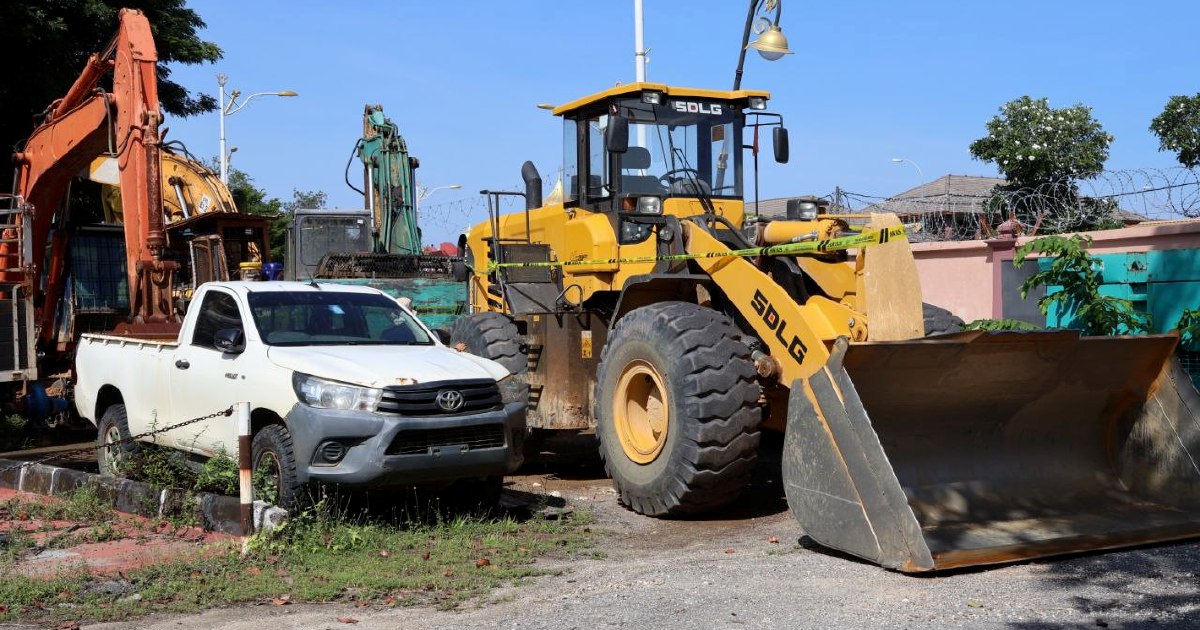
Kelantan authorities have formally launched an investigation into an extensive illegal gold mining enterprise discovered in Gua Musang, with confiscated mining equipment valued at RM4.2 million serving as key evidence in what promises to be a significant enforcement action against unregulated resource extraction in the state.
The opening of an official investigation paper marks a turning point in the authorities' response to unlicensed mining operations that have increasingly plagued Malaysia's northeastern state. The discovery and seizure of sophisticated heavy machinery indicate that the operation was not a small-scale venture but rather an established enterprise with considerable capital investment, suggesting potential links to organised syndicates with resources to procure and operate industrial-grade equipment.
Gua Musang, a district in northern Kelantan known for its mountainous terrain and mineral-rich landscape, has become an emerging hotspot for illegal extraction activities in recent years. The geology of the region makes it naturally attractive to both legitimate resource exploration and clandestine mining operations seeking to exploit valuable deposits without regulatory oversight or payment of proper licensing fees and royalties.
The RM4.2 million valuation of confiscated machinery underscores the scale of infrastructure investment these operators have committed to their activities. Such equipment typically includes excavators, bulldozers, crushers, and processing machinery—tools that require significant financial outlay and suggest these operations have access to substantial funding sources. The willingness to invest such capital points to either considerable profitability or backing from criminal networks.
Illegal mining operations present multifaceted challenges to Malaysian authorities and communities. Beyond the economic impact of lost licensing revenue and royalties that should accrue to state coffers, these operations frequently cause severe environmental degradation, including habitat destruction, soil erosion, water pollution from mining sediments and chemical leaching, and landscape scarring that can require decades to rehabilitate. Local waterways downstream from mining sites often suffer contamination, affecting agricultural activities and domestic water supplies for rural communities downstream.
The investigation initiated by Kelantan's government will likely examine several critical dimensions of the operation. Authorities will seek to identify the individuals and organisations behind the enterprise, trace the supply chain for equipment and operational resources, investigate financial transactions and funding sources, determine how long the operation had been active, establish how much gold or other minerals were extracted and processed, and identify any corrupt officials or intermediaries who may have facilitated the activity by overlooking or enabling illegal operations.
Kelantan's proactive stance on this matter reflects heightened awareness among state authorities of the serious implications of uncontrolled mining activities. The state government has faced mounting pressure from environmental and community groups to crack down more aggressively on illegal extraction, particularly as environmental costs have become increasingly visible to residents and as international scrutiny on Malaysia's natural resource management has intensified.
The operation also raises questions about enforcement capacity and vigilance within Kelantan and similar states across Malaysia. The fact that such a substantial operation could establish itself and operate long enough to accumulate RM4.2 million in equipment suggests possible gaps in field monitoring, coordination between enforcement agencies, or community reporting mechanisms. Strengthening intelligence networks and community engagement in reporting suspicious mining activities has become essential in combating these enterprises.
Regionally, Malaysia faces competition from Southeast Asian neighbours over mining governance and environmental standards. Investors and international observers monitor how effectively the country addresses illegal extraction and enforces regulations. Poor enforcement can undermine legitimate mining operators who comply with regulations, creating unfair market advantages for illegal actors and damaging Malaysia's reputation as a jurisdiction committed to sustainable resource management.
The investigation's outcome could establish important precedents for how Kelantan and other Malaysian states prosecute illegal mining cases. Successful prosecution and significant penalties would send deterrent signals to would-be operators, while lenient outcomes might encourage further illegal activity. Authorities will likely pursue not only criminal charges against operators but also asset forfeiture proceedings to prevent reinvestment of confiscated equipment or sale of seized machinery.
For Malaysian citizens concerned about resource governance and environmental protection, this investigation represents a crucial test of institutional commitment. The thoroughness of the inquiry and severity of consequences imposed will indicate whether states can effectively regulate their natural resources while maintaining the environment for future generations. Beyond Kelantan, residents across Malaysia will be watching how this case develops, as it reflects broader struggles between economic resource extraction and environmental stewardship that characterise modern Malaysian governance.
As the investigation progresses, Kelantan authorities must maintain pressure on this case while simultaneously preventing new illegal operations from taking root elsewhere in the state. The confiscated equipment, though valuable, represents only the visible component of the problem—the institutional and systemic factors that enabled such operations in the first place must also be addressed through improved coordination between federal and state agencies, enhanced field monitoring, and stronger penalties that make illegal mining economically unviable for potential operators.

