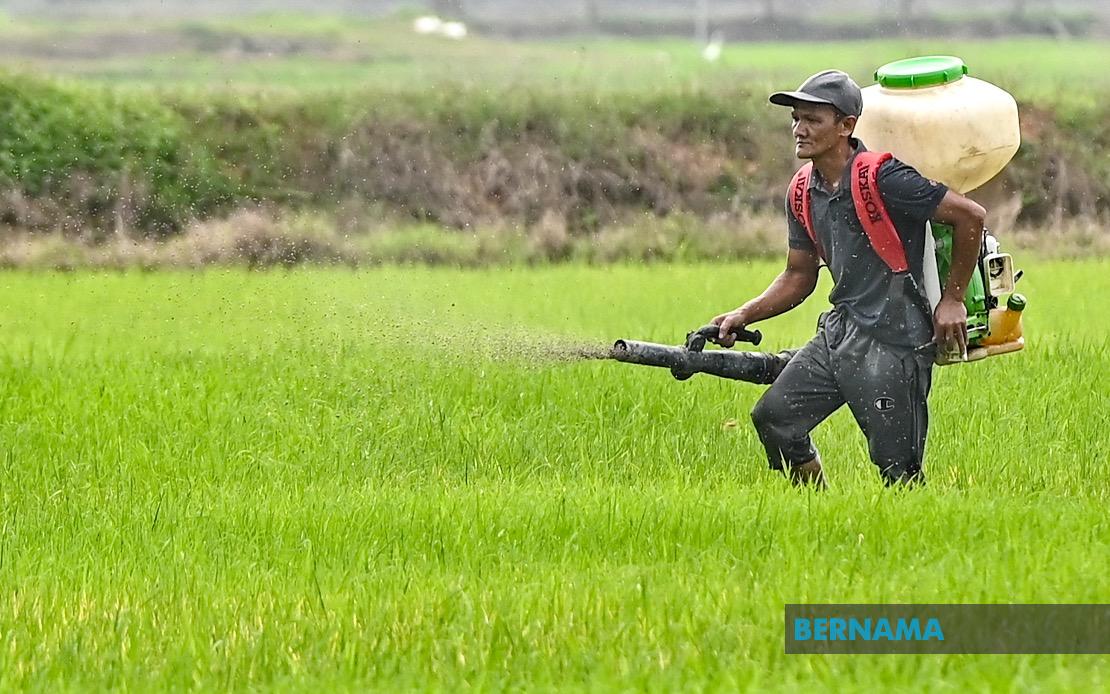
Kelantan's state government has committed RM3.64 million towards revitalising its agricultural sector through a comprehensive suite of development initiatives spanning crop cultivation, animal husbandry and marine farming. The funding allocation, tabled in the State Legislative Assembly at the Kota Darulnaim Complex in Kota Bharu, represents a significant intervention to mobilise idle farmland and diversify production across commodities, vegetables and fruits while simultaneously strengthening the state's entrepreneurial ecosystem in agribusiness.
Datak Tuan Mohd Saripudin Tuan Ismail, who chairs the State Agriculture, Agro-Food Industry and Commodity Committee, outlined the scope of the 10 projects during proceedings of the assembly. The initiatives are designed to catalyse broader economic participation among rural communities and unlock productive capacity within the agricultural value chain. By targeting specific subsectors with tailored support, the government aims to create sustainable livelihoods while simultaneously addressing national food security concerns—a priority that resonates across Malaysia as the country grapples with import dependency and volatile global supply chains.
Commercial agricultural production has become a focal point for development efforts through the Kelantan State Agriculture Development Corporation (PKPNK), which is spearheading operations at the Rong Chenok Agro Valley. This facility is pioneering modern farming techniques in chilli fertigation systems, honeydew melon cultivation and hydroponic vegetable production. Such infrastructure investments signal a broader shift towards technology-enabled agriculture in the state, moving beyond traditional subsistence farming towards value-added commercial enterprises that can generate higher margins and attract younger generations into farming.
Livestock farming has emerged as a particularly vibrant sector, with the state government's programmes benefiting more than 380 breeders through direct support schemes. These initiatives encompass diverse animal husbandry operations ranging from cattle and goats to more specialised rearing of deer, buffalo and quail. The provision of equipment support alongside technical guidance reflects a comprehensive approach to productivity enhancement, recognising that smallholder farmers often lack capital for necessary infrastructure investments. This targeted assistance model is particularly relevant for Southeast Asian agricultural contexts where land fragmentation and limited mechanisation remain structural challenges.
Fisheries and aquaculture represent another critical pillar of Kelantan's agricultural strategy, with substantial capital flows directed towards breeding and hatchery operations. During the past financial year, the state channelled RM382,094 to support 122 fish and prawn breeders, contributing to a sector that generated RM76.2 million in revenue from 7,901.74 tonnes of aquaculture production in 2025. The state has established an ambitious target of 8,000 tonnes for the current year, indicating confidence in expanding output despite market volatility and environmental constraints that often affect coastal farming communities.
The infrastructure underpinning aquaculture expansion demonstrates significant commitment to sector capacity-building. Over 130 artificial hatcheries have been constructed, with coordinated releases of 1.26 million fish and prawn fry into public waters aimed at bolstering wild stocks and supporting broader fisheries sustainability. The PKPNK facility operates at impressive scale, producing up to one million catfish fry and 500,000 tilapia fry annually, while its white prawn operation at Pantai Geting in Tumpat generates approximately 400,000 kilogrammes yearly. Such production capacity positions Kelantan as a significant supplier within Malaysia's aquaculture landscape and potentially enhances regional supply security.
Entrepreneur development has become integral to the state's agricultural strategy, with recognition that infrastructure alone cannot generate sustainable growth without corresponding business acumen and market access. As of June of the previous year, the government had established 74 marketing infrastructure facilities and 99 outlets serving 1,560 entrepreneurs across the sector. These facilities function not merely as physical spaces but as ecosystems supporting business formation, knowledge transfer and collective marketing power that individual smallholders cannot achieve independently.
The Kota Bharu Rural Transformation Centre (RTC) exemplifies this integrated approach, functioning simultaneously as a marketing hub, distribution nexus and entrepreneurial incubator for the agro-food sector. Since its inception in 2012, the facility has housed approximately 800 businesses and generated cumulative sales of RM4.16 billion across its operational lifespan. These metrics underscore the profound multiplier effects that can emerge when government provides both physical infrastructure and market connectivity for rural enterprises, enabling producers to access urban consumers while reducing intermediation costs that typically erode farmer margins.
For Malaysian policymakers observing regional agricultural development, Kelantan's model offers instructive lessons about integrated sectoral development. Rather than siloing support across crops, livestock and fisheries, the state's approach recognises interdependencies and synergies—agricultural residues support livestock, aquaculture byproducts enrich soil, and entrepreneurial hubs consolidate products for efficient distribution. This systemic thinking contrasts with compartmentalised approaches that characterise some agricultural interventions across Southeast Asia.
The allocation also reflects awareness that food security transcends production statistics alone. By emphasising entrepreneur development and market infrastructure alongside production support, Kelantan acknowledges that farmers must capture adequate value from their output to sustain operations and reinvest in productivity improvements. The emphasis on marketing outlets and distribution infrastructure addresses a persistent vulnerability in Malaysian agriculture—the capacity gap between production and commercialisation that often leaves rural producers vulnerable to exploitative intermediation.
Looking forward, Kelantan's agricultural investment priorities signal confidence in sector resilience despite broader economic headwinds. The diversification across multiple commodities and value chains provides some insulation against price shocks affecting any single product, while infrastructure investments create public goods that should generate returns over extended timeframes. These considerations matter particularly for a state where agriculture remains a significant employment source and rural communities depend substantially on farming incomes.

