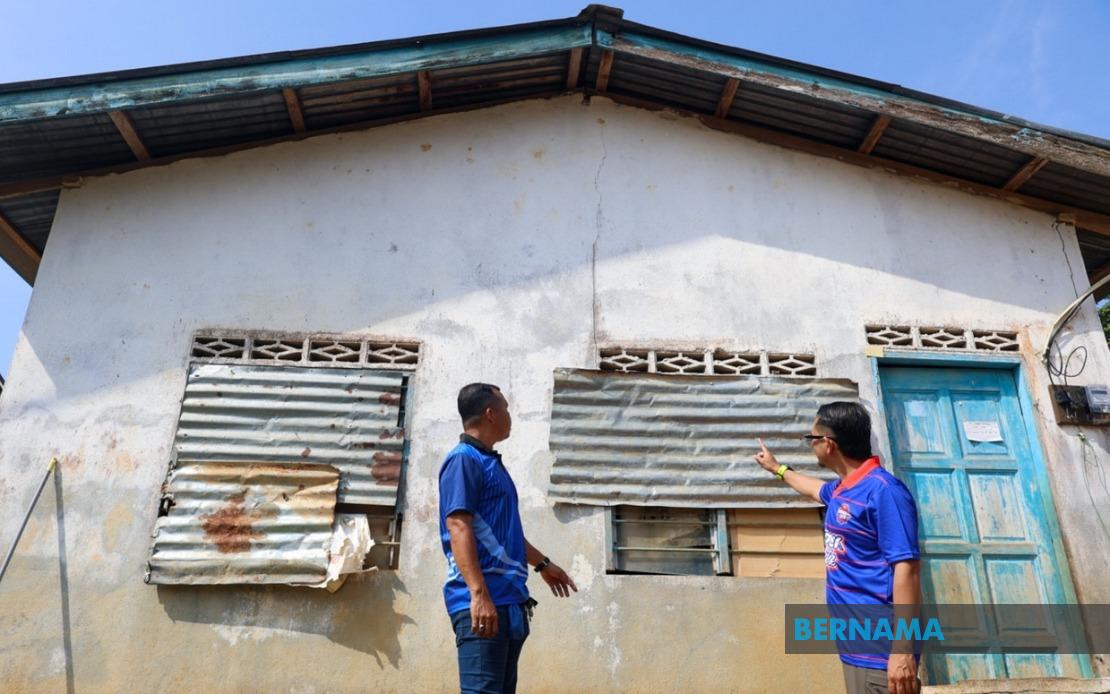
The Kelantan state government has mapped out an urgent development roadmap for indigenous communities living in two of the state's most remote settlements, identifying five pressing needs that require immediate government intervention. Speaking in Gua Musang, Nenggiri Assemblyman Mohd Azmawi Fikri Abdul Ghani outlined the findings from recent visits to Pasik Resettlement Scheme (RPS) and Kampung Kuala Wok, which together house 1,524 Orang Asli residents who have long struggled with inadequate infrastructure and limited access to essential services.
The assemblyman's assessment reveals a community grappling with multiple interconnected challenges that threaten both living standards and safety. Housing conditions represent the most visible crisis facing these settlements. During visits conducted on August 3 and 4, officials documented widespread structural deterioration across residential units, with numerous homes requiring immediate remedial work. Roofing defects, weakened structural integrity, and dangerous electrical installations have created an environment where basic shelter cannot be guaranteed. Beyond repairs to existing structures, residents have also formally requested the construction of new dwelling units to accommodate population growth, particularly for young couples establishing households. This demand underscores a demographic reality often overlooked in policy discussions: Orang Asli communities continue to grow naturally, yet development planning has failed to keep pace with expanding family units.
Wildlife-human conflict has emerged as a destabilising force since 2022, when wild elephant incursions into the settlements escalated significantly. The presence of these large animals has fundamentally altered daily life, constraining residents' freedom of movement and creating genuine safety hazards for agricultural activities and even routine travel within their own communities. The psychological impact of sustained threat cannot be underestimated; residents must constantly weigh routine activities against potential danger. The government's acknowledgment of this issue marks an important first step toward developing targeted mitigation strategies that balance conservation concerns with livelihood protection.
Electricity access, surprisingly, remains incomplete in these settlements despite Malaysia's advanced development status. While some infrastructure exists, the reliability and adequacy of power supply falls short of meeting contemporary needs. Mohd Azmawi Fikri indicated that authorities intend to collaborate with the Department of Orang Asli Development (JAKOA) to address this fundamental requirement, suggesting that electricity infrastructure upgrades will feature prominently in the next phase of development planning.
The Essential Goods Distribution Programme has emerged as a lifeline for residents, but the government is exploring its expansion to include RON95 petrol. This reflects the practical reality of these communities' geographical isolation—the nearest petrol station lies approximately 50 kilometres away, rendering fuel procurement a significant logistical challenge. Including fuel under the essential goods subsidy would represent a meaningful quality-of-life improvement for a population dependent on motorised transport for survival. Similarly, the Jualan Rahmah programme, which provides price-controlled staple goods, addresses food security concerns in an area where commercial alternatives are geographically and economically inaccessible.
Access to these settlements themselves remains a critical bottleneck that amplifies all other development challenges. Reaching RPS Pasik and Kampung Kuala Wok requires specialist four-wheel-drive vehicles and a cumulative round-trip journey of approximately 200 kilometres from Gua Musang town. This extreme remoteness means that any medical emergency, government service delivery, or commercial transaction becomes an expedition rather than a routine activity. The physical distance transforms simple administrative tasks into major undertakings and discourages regular government presence or investment in permanent infrastructure.
These findings highlight a broader pattern affecting indigenous communities throughout Peninsular Malaysia: isolation breeds deprivation. The concentration of multiple deficiencies—inadequate housing, wildlife threats, unreliable utilities, limited commercial access, and geographic separation—creates a compound disadvantage that cannot be solved through single-sector interventions. Successful development in RPS Pasik and Kampung Kuala Wok will require coordinated action spanning several government departments, sustained budget allocation, and most importantly, meaningful consultation with residents themselves regarding implementation priorities and timelines.
The identification of these five priority areas by Kelantan authorities provides a foundation for structured intervention, but the critical question now turns to implementation. How quickly will JAKOA act on housing construction requests? What timeline can residents expect for elephant mitigation measures? Will the Essential Goods Distribution Programme expansion to include fuel proceed promptly? The window for preventive development in these communities is narrowing as resource pressures and environmental degradation intensify.
For Malaysian policymakers and regional development practitioners, the Kelantan experience offers instructive lessons about the persistent challenges facing indigenous minorities in Southeast Asia. Economic growth and national development statistics often mask profound inequalities experienced by populations living in remote forest margins. The situation in RPS Pasik and Kampung Kuala Wok resembles conditions faced by indigenous communities across Thailand, Indonesia, and other neighbouring countries—demonstrating that despite geographic and political boundaries, certain structural inequities transcend borders. Addressing these disparities requires moving beyond rhetoric about indigenous rights and welfare toward concrete resource allocation and sustained government presence in difficult-to-access areas.

