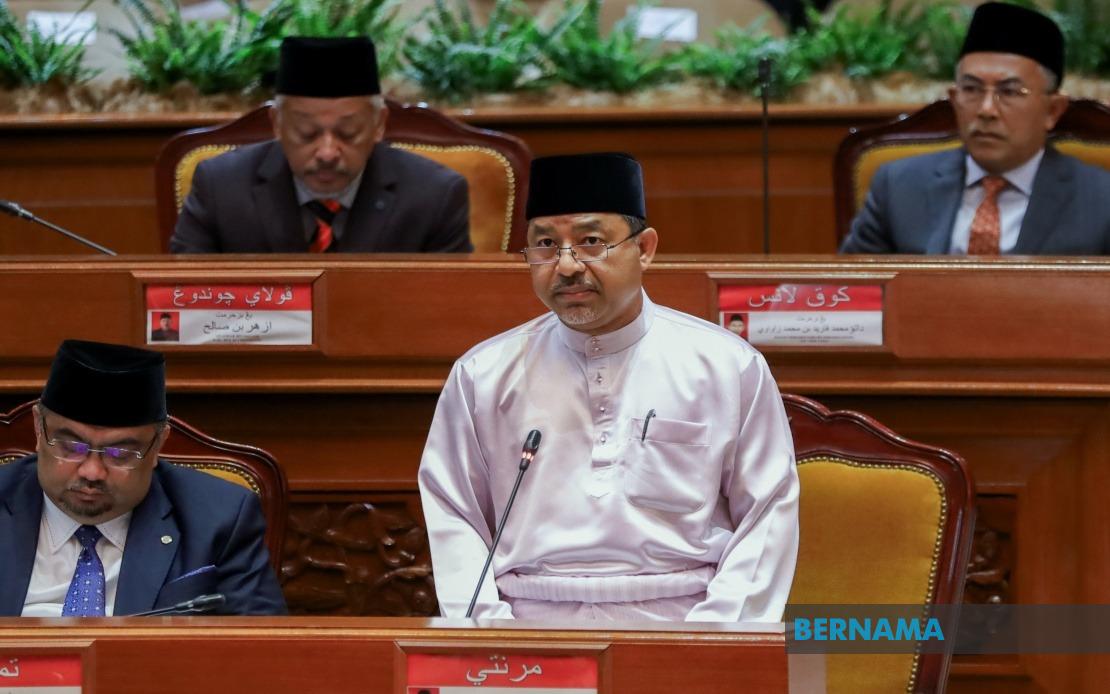
Kelantan has reaffirmed its position as Peninsular Malaysia's leading state in terms of Malay reserve land holdings, with extensive tracts protected under constitutional frameworks designed to safeguard indigenous Malay interests. According to Menteri Besar Datuk Mohd Nassuruddin Daud, the state's documented Malay reserve territory encompasses 526,083 hectares, accounting for 91.5 per cent of the total landmass and affecting 816,020 individual ownership titles as tallied in June this year. This commanding proportion underscores Kelantan's distinctive demographic and land distribution profile within Malaysia's peninsular states.
The complementary category of non-Malay reserve land in Kelantan occupies a substantially smaller footprint, measuring 48,344 hectares or 8.4 per cent of the state's land inventory, with such properties registered under 43,255 separate titles. When aggregated, the state's entire documented land ownership base reaches 574,427 hectares across 859,275 registered titles, painting a comprehensive picture of Kelantan's territorial composition and ownership patterns. These figures, drawn from official land administration records maintained through June 2026, reflect comprehensive surveys conducted across the state's complete eleven-district administrative structure.
The geographic distribution of Malay reserve land across Kelantan reveals significant concentration disparities, with certain districts commanding vastly greater protected acreage than others. Gua Musang emerges as the dominant holder of such reserves, encompassing 122,735 hectares—a figure substantially exceeding all competing districts. Pasir Mas and Tanah Merah follow with 56,656 and 56,246 hectares respectively, while Kuala Krai contributes a further 53,473 hectares to the protected inventory. This uneven distribution reflects historical settlement patterns, demographic composition, and the varying economic profiles of individual districts within the state.
When measured by proportional concentration rather than absolute area, the rankings shift considerably, revealing which districts have achieved near-total protection of their territories under Malay reserve designation. Tanah Merah achieves the highest conversion rate at 99.9 per cent, essentially complete reserve status, followed by Tumpat, Pasir Puteh, Bachok, Pasir Mas, Kota Bharu, and Jeli. This metric demonstrates the intensity of protection rather than its scale, indicating communities where Malay land ownership has achieved near-universal compliance with reserve classifications. The variation between absolute area and proportional coverage underscores the complex interplay between district size, population distribution, and historical land tenure patterns.
Kelantan's maintenance of this extensive reserve network stands in marked contrast to trends observed in other Malaysian states, where gradual conversions and administrative adjustments have periodically eroded protected land inventories. The Menteri Besar explicitly confirmed that Kelantan has experienced zero reduction in its Malay reserve land base, suggesting stable stewardship and consistent enforcement of protective mechanisms. This distinction carries significant political and cultural resonance within Kelantan's largely Malay-Muslim population, where land protection represents a cornerstone of community identity and socioeconomic security across generations.
The legal framework governing Kelantan's Malay reserve system derives substantial authority from Section 13A of the Kelantan Malay Reservations Enactment, a legislative instrument that creates carefully calibrated permissions within protective boundaries. The enactment permits non-Malay individuals to acquire ownership interests within designated reserve areas, introducing a degree of flexibility to an otherwise restrictive regime. This provision acknowledges practical realities—including intermarriage, economic necessity, and commercial development—while maintaining overall Malay demographic dominance and control of the land base.
Equally significant, Section 13A empowers state authorities with robust regulatory capacity over transactions affecting reserve land, extending beyond mere administrative record-keeping to include discretionary authority to prohibit specific transfers when deemed injurious to collective Malay interests. This veto mechanism functions as a backstop against speculative activity, unwanted foreign acquisition, or developmental patterns perceived as threatening to the reserve system's foundational purposes. The provision reflects a sophisticated understanding that land protection requires ongoing active management rather than passive restriction.
For Malaysian policymakers and regional observers, Kelantan's land profile offers instructive contrasts to developmental trajectories in neighbouring states where reserve mechanisms have experienced greater erosion or modification. The state's experience demonstrates that constitutional protections, when consistently applied and politically supported, can maintain land distribution outcomes across decades. Simultaneously, Kelantan's willingness to permit non-Malay participation within restricted bounds suggests that inflexible absolutism proves neither politically sustainable nor economically optimal.
The implications for Kelantan extend beyond nostalgic preservation of historical land patterns. As Malaysia continues navigating tensions between developmental imperatives, ethnic-based protections, and individual economic freedom, the state's reserve system functions as both practical asset and symbolic commitment. The land base provides collateral for rural credit, inheritance security for agricultural communities, and a foundation for small-holder entrepreneurship among Bumiputera populations. These material benefits complement the system's significance as marker of constitutional commitment to indigenous communities.
Looking forward, Kelantan's substantial reserve inventory positions the state distinctly within competing narratives about Malaysian land policy. While some policymakers advocate further liberalisation to accelerate economic development and attract external investment, Kelantan's model suggests that protective frameworks and development need not remain fundamentally incompatible. The state's continued emphasis on reserve maintenance, even as it permits measured non-Malay participation, indicates a search for equilibrium rather than ideological purity in land governance.

