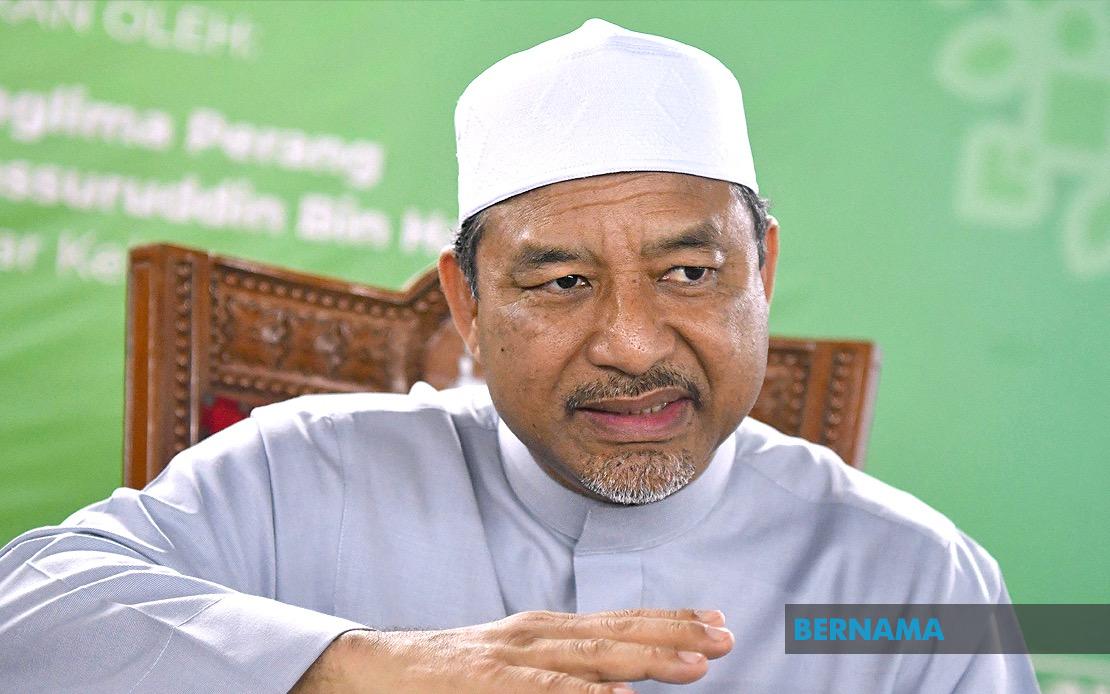
Kelantan's government will persistently champion the preservation and advancement of the state's distinct artistic and cultural legacy, provided these initiatives remain consistent with Islamic doctrine, according to Menteri Besar Datuk Mohd Nassuruddin Daud. Speaking at the conclusion of the Kelantan Arts Festival (FKRK) 2026 in Pasir Puteh, he outlined how cultural stewardship serves multiple strategic purposes for the state, encompassing community identity reinforcement and economic stimulus through tourism development.
The administration has adopted a nuanced approach toward traditional practices that have endured across generations, rejecting outright suppression in favour of refinement and adaptation. Rather than dismissing customs as merely antiquated, Kelantan's policymakers have instead pursued a methodical process of evaluation and calibration, ensuring that inherited artistic expressions evolve within carefully defined ethical and moral parameters rooted in Islamic teaching. This philosophy reflects a deliberate positioning that views cultural development not as antagonistic to religious values but as fundamentally compatible when properly guided.
Mohd Nassuruddin articulated that cultural expression in Kelantan operates within structured boundaries rather than absolute restrictions. The framework acknowledges that artistic and cultural pursuits possess inherent value while simultaneously insisting they develop alongside principles of virtue, propriety and ethical conduct as prescribed by Islam. This balancing act has formed the operational foundation for how the state government evaluates, manages and curates its cultural inventory over an extended period. The administration refrains from categorical rejection of traditional forms simply because of their historical origins; instead, the emphasis rests on refinement mechanisms that enable these traditions to flourish without transgressing established moral guidelines.
Certain traditional performances previously faced restrictions due to containing elements perceived as inconsistent with Islamic principles, yet Kelantan's authorities have signalled openness toward reinstating such performances once problematic components are addressed and discontinued. This conditional reactivation demonstrates flexibility within the state's cultural governance framework, suggesting that the prohibition on particular practices stemmed not from rigid ideological opposition but from specific technical concerns about incompatible elements. The government's willingness to revisit past restrictions conditional on modification indicates an underlying pragmatism about how cultural heritage can be simultaneously honoured and adapted.
Kelantan's Islamic development trajectory has historically fostered an environment where knowledge creation, artistic expression, linguistic development and cultural practice have taken deep root within value systems derived from Islamic scholarship and teaching. This historical foundation suggests that the contemporary approach toward cultural preservation represents continuity with established patterns rather than a novel policy initiative. The state's accumulated experience in navigating this intersection between heritage protection and religious alignment provides institutional memory and practical experience that inform current decision-making around cultural stewardship.
The Menteri Besar identified Kelantan's cultural inheritance as encompassing diverse manifestations ranging from ceremonial performances and recreational traditions to skilled craftsmanship, artisanal production and culinary practices. Each category of cultural expression represents accumulated wisdom, philosophical frameworks and communal understanding developed within Malay civilization and deserves preservation for succeeding generations. This inclusive conceptualization of cultural heritage extends beyond conventional artistic categories to embrace the full spectrum of social practices and knowledge systems that constitute a living cultural ecosystem. The implicit argument suggests that dismantling or neglecting any component of this multifaceted inheritance represents a loss to community continuity and social fabric.
The FKRK 2026 event transcended conventional festival operations focused primarily on entertainment provision or tourist attraction marketing. Instead, the gathering functioned as a substantive platform facilitating convergence among individuals engaged in cultural creation and preservation, enabling systematic exchange of expertise and methodologies among practitioners. The festival simultaneously served economic stimulation purposes while positioning Kelantan's distinctive characteristics before external visitors. This multi-dimensional functionality reflects sophisticated understanding of how cultural events can simultaneously advance preservation objectives, economic goals and promotional interests without compromising the authenticity or integrity of the underlying heritage being celebrated.
The revival of traditional recreational activities including gasing uri, congkak, dam aji and tating received particular commendation from the Menteri Besar, who recognized their potential capacity to offset technology's pervasive influence on contemporary youth behaviour and lifestyle patterns. These games, rooted in pre-digital entertainment paradigms, offer developmental and recreational value through modes of engagement fundamentally different from screen-based alternatives. By encouraging younger generations to participate in these inherited amusements, authorities theoretically enable exposure to cultural knowledge while simultaneously providing developmental benefits through gameplay mechanics emphasizing strategic thinking, social interaction and physical engagement without technological mediation.
The four-day FKRK 2026 celebration represents one installment within an ongoing annual programme coordinated through collaborative effort between the Ministry of Tourism, Arts and Culture and the National Culture and Arts Department (JKKN) Kelantan. This institutional framework ensures systematic, regular engagement with cultural preservation and promotion rather than sporadic or ad-hoc initiatives. The established annual calendar signals formal commitment to sustained cultural stewardship integrated within governmental structures and resource allocation processes. Such institutionalization provides continuity, predictability and dedicated attention to heritage management, distinguishing systematic cultural governance from occasional ceremonial recognition.
Kelantan's experience demonstrates how Muslim-majority jurisdictions can construct coherent approaches to cultural preservation that neither abandon inherited traditions nor subordinate them entirely to restrictive interpretation. The state's methodology suggests possibilities for other Southeast Asian societies navigating comparable tensions between modernization pressures, religious adherence and heritage protection. By emphasizing refinement rather than rejection, Kelantan proposes a third pathway beyond stark binaries of either wholesale tradition maintenance or cultural erasure in pursuit of perceived religious purity. This approach carries implications beyond Kelantan itself, offering pragmatic examples for how diverse communities can consciously shape their cultural futures while maintaining continuity with accumulated inheritance.

