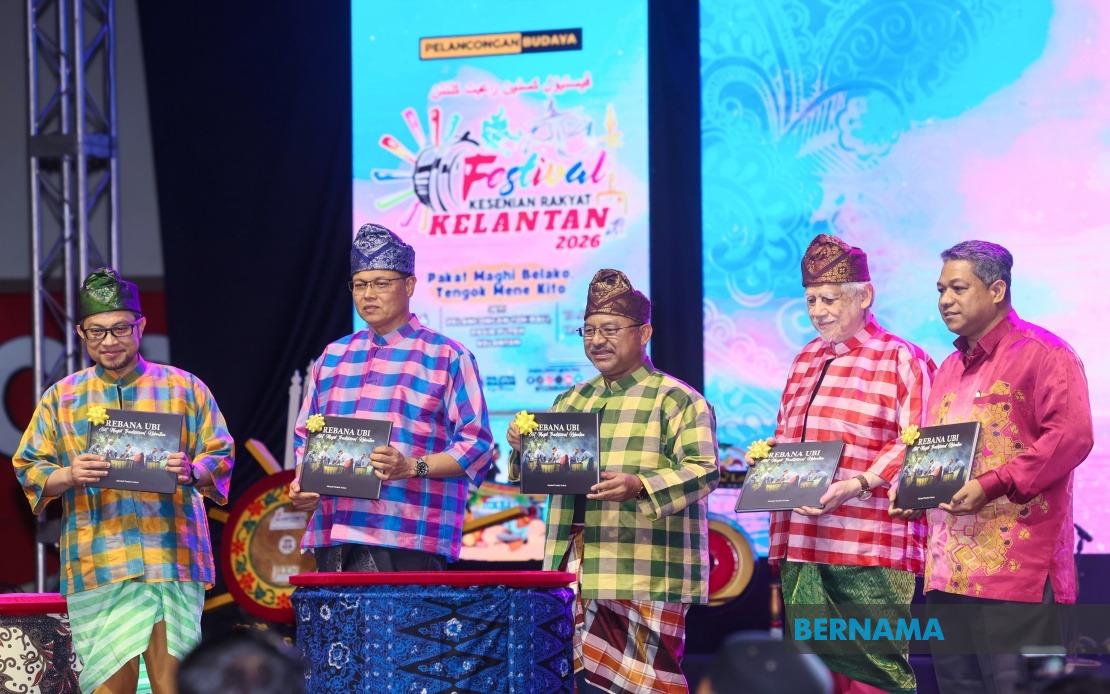
The Kelantan Arts Festival (FKRK) 2026 concluded its four-day run at Tok Bali Tourism Jetty in Pasir Puteh with a demonstrated commitment to preserving and celebrating the state's distinctive cultural legacy while fostering intercommunal harmony. The National Department for Culture and Arts (JKKN) framed the gathering as integral to promoting the broader Malaysia MADANI narrative, which emphasises unity, prosperity, and cultural inclusivity across the nation's diverse communities.
The festival's programming reflected a deliberate curatorial approach to representing Kelantan's artistic traditions. The centrepiece was the 'Titih Bonda Pusaka Ayahanda' special performance, which incorporated a multi-racial percussion ensemble specifically designed to embody and communicate the principle of social cohesion. By bringing together musicians from different ethnic backgrounds, the organisers sought to demonstrate that traditional arts could serve as a bridge between communities rather than markers of separation, a message particularly resonant in Malaysia's plural society.
The calibre of performers assembled underscored the festival's regional significance within Malaysia's cultural calendar. Established figures including Roy Kapilla, Amy Search, and Datuk Dr Lim Swee Tin appeared alongside traditional specialists such as the Dikir Barat Kala Mahajara ensemble and the Mak Yong Kijang Mas troupe. This mixing of contemporary and heritage-based artists created a narrative arc suggesting that Kelantan's arts scene successfully bridges past and present, a point of particular importance for states seeking to maintain cultural distinctiveness while remaining economically and socially relevant.
Beyond headline performances, the festival's structure prioritised active participation from attendees. A traditional dance competition targeting children introduced younger generations to classical forms, while the Mek and Awe Comey competition—essentially a traditional costume fashion showcase—updated heritage dress codes for contemporary contexts. The ADABI cooking competition highlighted the intersection of culinary practice and cultural identity, recognising that food traditions constitute a vital but often underappreciated dimension of heritage preservation.
The festival incorporated experiential learning opportunities that extended beyond passive consumption of performances. Folk sports demonstrations offered visitors hands-on engagement with recreational practices historically embedded in Kelantan's communities, creating informal educational settings where cultural knowledge transferred through participation rather than explanation. Simultaneously, craft product sales and exhibitions by government agencies and non-governmental organisations positioned the festival as a marketplace for cultural commodities, acknowledging that heritage sustainability increasingly depends on economic viability and consumer interest.
The community feast represented a significant structural element, transforming the festival from an entertainment venue into a shared social space. This gathering function matters considerably in an era when digital media and urban migration fragment traditional community bonds. By creating occasions for collective consumption of food and performance, festivals like FKRK 2026 attempt to regenerate the social infrastructure through which cultural knowledge and values historically propagated within small-scale societies.
The institutional architecture supporting the festival reveals the Malaysian government's multi-level investment in cultural preservation. The Tourism, Arts and Culture Ministry (MOTAC) provided overarching direction through JKKN, while the Kelantan state government contributed local legitimacy and resources. This collaboration extended to district-level bodies including the Pasir Puteh Land and District Office and Pasir Puteh District Council, suggesting that cultural policy implementation in Malaysia operates through nested governmental structures where federal, state, and local authorities coordinate messaging and resource allocation.
The opening ceremony's guest list indicated the festival's importance within Kelantan's political calendar. Kelantan Menteri Besar Datuk Mohd Nassuruddin Daud, State Tourism, Culture, Arts and Heritage Committee chairman Datuk Kamarudin Md Nor, and JKKN director-general Mohd Amran Mohd Haris attended the proceedings. This high-level participation reflects the strategic significance governments now attach to cultural events, viewing them not merely as entertainment but as policy instruments through which broader national narratives gain local resonance and political legitimacy.
The festival's thematic framing around Malaysia MADANI positions cultural celebration within a broader governance philosophy. Rather than treating heritage preservation as nostalgic backwardness, the organisers embedded Kelantan's traditional arts within a contemporary narrative of inclusive national development. This rhetorical move matters because it potentially counters perceptions that heritage focus represents retreat from modernity, instead arguing that cultural strength and economic progress constitute complementary rather than competing objectives.
The involvement of commercial partners, specifically Nasrom Travel Sdn Bhd, highlights how cultural festivals increasingly operate within market-driven frameworks. Tourism operators benefit from events that attract visitors, generating accommodation and transportation revenue while providing authenticity-seeking experiences for increasingly experiential consumers. This partnership model raises complex questions about commodification and cultural integrity, yet it also provides sustainable revenue streams that government budgets alone struggle to finance.
For Malaysian and Southeast Asian observers, FKRK 2026 illustrates evolving approaches to cultural policy in the region. As globalisation and urbanisation create pressures on traditional practices, governments increasingly employ large-scale festivals as preservation mechanisms and legitimacy-building exercises. Kelantan's approach combines competitive elements that motivate participation, commercial opportunities that sustain practitioners, multi-level governmental coordination, and explicit linkage to national development narratives—a comprehensive strategy increasingly visible across Southeast Asian capitals seeking to balance heritage retention with modernisation imperatives.
The festival's success in attracting participation from diverse communities and the breadth of programming suggest that demand exists for spaces where cultural identity can be publicly expressed and celebrated. In plural societies like Malaysia, such occasions serve functions beyond entertainment, providing contexts where intercommunal understanding potentially develops through shared appreciation of artistic traditions. Whether FKRK 2026 achieves lasting impact beyond the four-day event period will depend on whether participants translate festival experiences into sustained engagement with traditional arts and whether cultural knowledge transmission to younger generations extends beyond novelty-seeking festival attendance.

