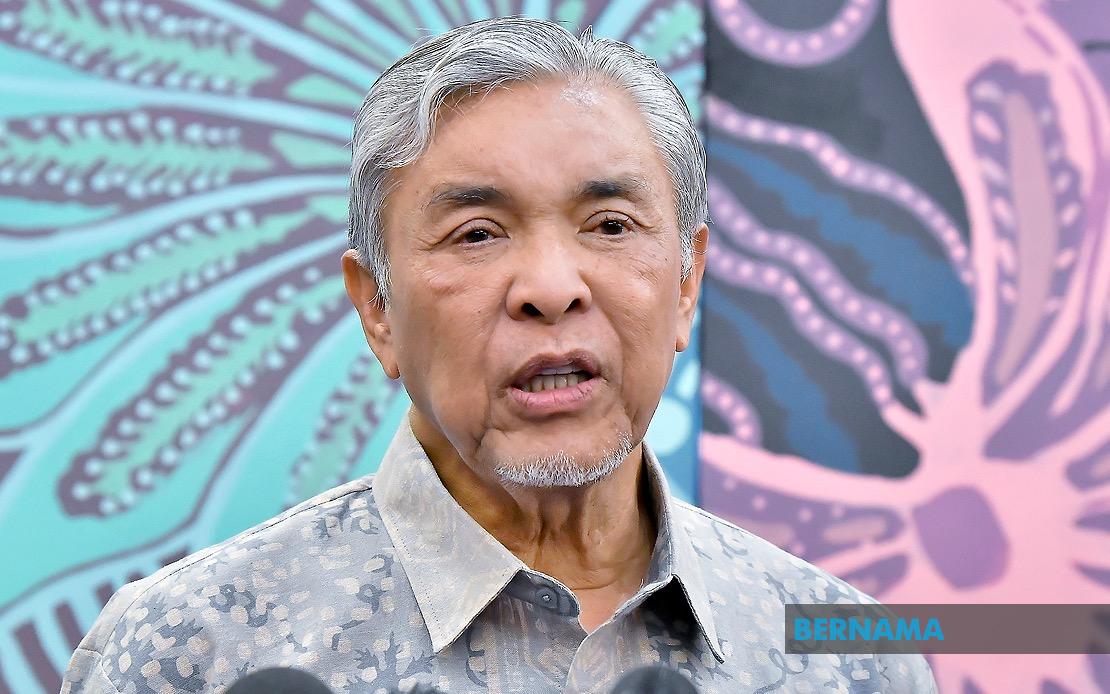
Deputy Prime Minister Datuk Seri Dr Ahmad Zahid Hamidi moved to counter public concerns about the South East Johor Development Authority's proposed expansion, emphasising that the initiative prioritises coordinating development initiatives across the region rather than assuming ownership of properties in the targeted areas. The clarification comes as KEJORA pursues a broader footprint to consolidate its operational influence across south-eastern Johor, a region undergoing substantial transformation driven by infrastructure investments and tourism ventures.
Speaking at an official ceremony in Kota Tinggi, Ahmad Zahid, who holds the Rural and Regional Development portfolio, acknowledged that misunderstandings had circulated regarding KEJORA's true intentions. He sought to assure residents and stakeholders that the agency functions as a coordinating body to streamline development rather than as a mechanism to divest landowners of their property rights. This distinction carries particular weight in Malaysia, where land ownership remains a sensitive issue tied to constitutional protections and communal trust.
The push for expansion gains momentum from KEJORA's demonstrated operational competence. The authority has achieved a 98.3 per cent success rate across its implemented projects, a metric that evidently underpins ministerial confidence in extending its mandate. This track record suggests the organisation has developed institutional capacity to manage complex development portfolios effectively, making it an attractive instrument for advancing the Johor government's regional growth ambitions. The success rate reflects years of accumulated expertise in site selection, project management, and stakeholder engagement across a diverse portfolio spanning industrial, tourism, and infrastructure sectors.
Pengerang represents a focal point of this expansion strategy. The district, positioned as a gateway to mega-projects and tourism development, has experienced accelerated economic activity in recent years. By broadening KEJORA's administrative reach to encompass this burgeoning zone, authorities aim to harness the authority's proven capabilities to channel growth productively and prevent uncoordinated development. The proposal thus reflects a calculated effort to leverage existing institutional strengths to manage rapid transformation in areas experiencing infrastructure strain.
Public sentiment appears receptive to the proposal. A consultation exercise undertaken by KEJORA drew 96 per cent approval from respondents, suggesting broad community acceptance of the expansion despite earlier apprehensions. This level of support indicates that transparent communication about the expansion's actual mechanics—focusing on coordination rather than expropriation—has resonated with residents and local stakeholders. Such public backing strengthens the political foundation for advancing the initiative through the formal approval processes required at the highest levels of state governance.
However, Ahmad Zahid emphasised that implementation hinges on constitutional approval. The consent of His Majesty Sultan Ibrahim, the King of Malaysia, and Tunku Mahkota Ismail, the Regent of Johor, remains essential before KEJORA can formally extend its operational boundaries. This requirement reflects Malaysia's constitutional framework, wherein state rulers retain custodial authority over territorial matters and regional governance structures. The stipulation underscores that development authority expansion, despite its technical and administrative dimensions, ultimately remains a matter requiring royal sanction.
Financial commitment underpins the expansion plans. The Rural and Regional Development Ministry has allocated approximately RM138 million to KEJORA for regional development initiatives, supporting 107 already-implemented programmes with approximately 350 additional smaller-scale projects in the pipeline. This substantial injection of capital signals sustained governmental dedication to south-eastern Johor's development trajectory and provides concrete resources for KEJORA to translate its expanded mandate into tangible infrastructure and economic gains.
Datuk Seri Azalina Othman Said, the Minister in the Prime Minister's Department handling law and institutional reform, was present at the announcement. As Member of Parliament for Pengerang, Azalina has advocated for elevating the district to full administrative status, reflecting local leaders' ambitions to match governance structures to the region's expanding economic significance and population growth. Her support for both the KEJORA expansion and district status upgrade suggests coordination among federal and state political actors regarding Pengerang's developmental trajectory.
Azalina separately proposed constructing a new hospital facility in Pengerang to address healthcare infrastructure gaps emerging from rapid population expansion. This complementary initiative acknowledges that physical development and economic growth must be accompanied by proportionate investment in social services and public amenities. A modern healthcare facility would serve the burgeoning population while enhancing the region's attractiveness to investors and residents requiring quality medical services.
The KEJORA expansion occurs within a broader Southeast Asian context of developmental federalism, wherein coordinating authorities increasingly manage regional growth to balance efficiency, equity, and community engagement. Malaysia's approach through KEJORA reflects efforts by regional governments to move beyond ad-hoc project implementation toward institutionalised frameworks capable of managing complex growth patterns. For Malaysian readers, the expansion illustrates how established development bodies may expand influence by demonstrating measurable success and building public confidence.
Regional observers should note that KEJORA's expansion strategy mirrors patterns emerging across Southeast Asia, where governmental entities seek to consolidate development coordination amid rapid economic transformation. The emphasis on public consultation, demonstrated competence, and formal constitutional procedures reflects institutional maturity in regional governance. For stakeholders across Johor and the broader region, the expansion signals continued prioritisation of south-eastern development while anchoring growth initiatives within established bureaucratic and constitutional frameworks.
Moving forward, KEJORA's expanded scope will test its capacity to manage additional territories while maintaining the operational standards that have underpinned its success record. The initiative also invites scrutiny regarding how coordination mechanisms function in practice, whether expanded authority genuinely serves regional interests, and how growth pressures interact with land rights protections. These considerations will shape both KEJORA's effectiveness and public confidence in development authorities more broadly throughout Malaysia.

