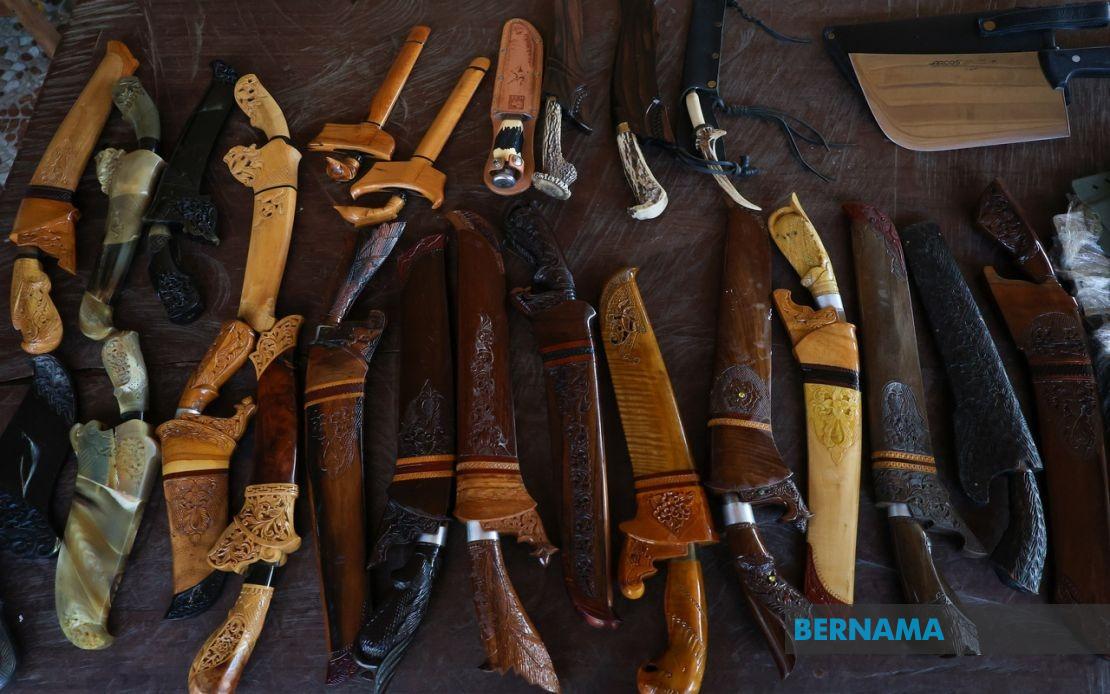
Ahmad's private arsenal of more than 100 traditional and modern weapons represents far more than a collector's passion—it embodies a desperate race against time to save Kelantan's blacksmithing heritage before an entire generation of master craftsmen vanishes forever. The 71-year-old guardian of steel has accumulated pieces spanning continents, from Germany and Sweden to Japan and Portugal, but his most treasured items are those bearing the unmistakable imprint of local Kelantanese makers whose hands have long since stilled. Among his most prized acquisitions are a knife fitted with a deer-antler hilt sourced from Sarawak and an intricately crafted keris featuring a black kemuning wood blade paired with a golden kemuning wood hilt—each representing the irreplaceable artistry of blacksmiths whose knowledge dies with them.
The bird-headed golok that lends its name to Ahmad's broader mission symbolises how deeply cultural identity can be embedded in utilitarian objects. The distinctive bird-shaped hilt serves a practical purpose, offering craftsmen an ergonomic grip that reduces hand fatigue during extended use, yet simultaneously carries profound historical and artistic weight. Ahmad explains that this avian motif connects contemporary Kelantanese craftsmanship to ancient maritime traditions, evoking the Petalawali bird figure that once adorned ceremonial boats employed by the Kelantan Sultanate. Such layered symbolism—where function, aesthetics, and history intertwine—characterises the traditional weapons that Ahmad now guards with meticulous devotion. Every curve, every decorative element, every choice of material reflects generations of accumulated knowledge about what works, what endures, and what speaks to the soul of a people.
Ahmad's entrance into this world of preservation happened almost accidentally, beginning approximately two decades ago when he assisted a personal friend who worked as a blacksmith. Those early experiences crafting weapon hilts and scabbards awakened in him a deeper appreciation for the discipline and artistry involved. What began as occasional assistance evolved into a consuming passion for understanding, collecting, and safeguarding examples of the craft before they disappeared entirely. His estimated RM20,000 collection now encompasses machetes, knives, swords, and keris pieces that span geographical origins and temporal periods, creating a comprehensive archive of both local and international weaponcraft traditions.
The accelerating crisis facing Kelantan's blacksmithing community underscores a larger Southeast Asian pattern where traditional crafts face existential threats. When master craftsmen pass away without having successfully transmitted their knowledge to younger generations, centuries of accumulated expertise evaporates instantly. Ahmad articulates this sobering reality with the clarity of someone who has witnessed the loss firsthand: "Whenever a blacksmith passes away, part of that craft and knowledge disappears too, unless it is passed on to the next generation." This is not merely nostalgia or romantic attachment to the past—it reflects a pragmatic understanding that handcrafted pieces possess inherent value precisely because each represents the maker's singular identity, artistic vision, and technical mastery. In an era of industrial standardisation, every blade becomes a distinct work of heritage with its own embedded story.
The economic value of traditional weapons has paradoxically increased as their scarcity has grown. Collectors from across Malaysia and internationally have expressed interest in acquiring pieces from Ahmad's collection, recognising their rarity and cultural significance. Yet Ahmad has consistently refused to sell, understanding that pieces crafted by deceased blacksmiths represent something beyond monetary value—they are irreplaceable documents of human skill and creativity. This stance distinguishes genuine cultural preservation from mere commodity speculation. Ahmad views himself as a custodian rather than an owner, recognising that his responsibility extends beyond his lifetime to ensuring these objects remain available for future study, appreciation, and learning.
Preserving antique weapons requires knowledge that Ahmad has developed through careful observation and dedicated practice. His storage methods reflect professional conservation principles: pieces rest in a dedicated cabinet where environmental conditions can be controlled and monitored. Every three months, Ahmad conducts systematic inspections of each item, applying protective oil to blades to arrest rust development and deterioration. This preventive maintenance regimen represents the difference between preservation and slow decay. The seemingly modest acts of regular inspection and proper oiling constitute an ongoing dialogue between custodian and object, a commitment of time and attention that demonstrates respect for the craftsman's original labour and the material's continuing integrity.
Malaysia's broader challenge lies in transitioning from loss-focused preservation toward sustainable revival of traditional blacksmithing as a living craft. Ahmad advocates for a balanced approach that embraces innovation while maintaining the core identity and cultural values that define the tradition. Rather than consigning blacksmithing to museums or academic study alone, he envisions pathways where contemporary artisans might adapt historical techniques to contemporary contexts, ensuring the craft evolves rather than fossilises. This perspective acknowledges that culture must remain dynamic to survive; rigid insistence on unchanged replication often hastens extinction rather than preventing it.
The implications for Southeast Asian heritage preservation extend beyond Kelantan's borders. Similar patterns of craft extinction threaten traditional weaponry, textiles, metallurgy, and countless other disciplines across Indonesia, Thailand, the Philippines, and Cambodia. Individual collectors like Ahmad provide temporary bulwarks against complete loss, yet institutional support, formal apprenticeship systems, and market mechanisms that reward quality craftsmanship remain underdeveloped. Malaysia's government and cultural agencies face pressure to implement coherent heritage strategies that move beyond celebrating the past toward actively sustaining living traditions. Without deliberate intervention, the coming decades will witness the disappearance of knowledge that took centuries to accumulate.
Ahmad's collection ultimately represents both achievement and indictment—proof that dedication can preserve fragments of our heritage, yet testimony to systemic failure in transmitting traditional knowledge across generational divides. His RM20,000 arsenal, while impressive, occupies a single cabinet in a private home rather than commanding significant institutional resources or media attention. The true measure of success will not be how many pieces Ahmad maintains, but whether his example inspires younger Malaysians to invest in learning, preserving, and advancing the blacksmith traditions that shaped their ancestors' material culture. Until blacksmithing becomes valued as a viable career path and culturally significant practice—rather than a quaint relic—collectors will continue conducting rearguard actions against inevitable loss.

