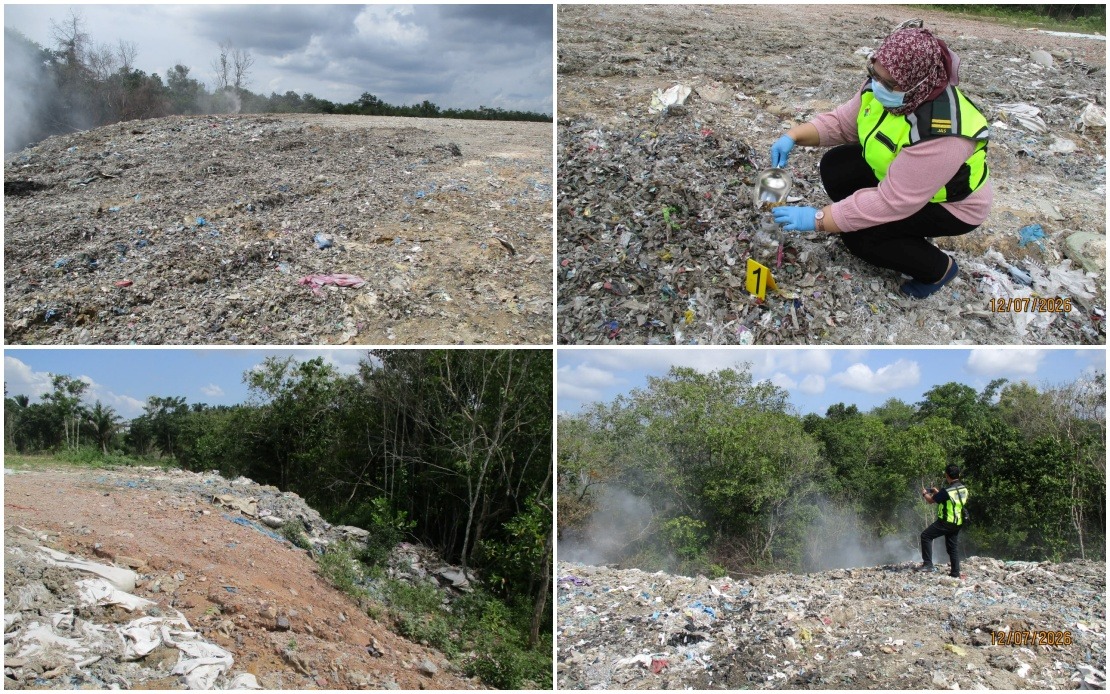
Environmental regulators in Kedah have discovered a substantial illegal waste disposal operation in Bukit Banyan following community complaints about acrid smoke and foul odours drifting across the locality. The Kedah Department of Environment launched an investigation after residents reported the burning smell, leading officials to a heavily contaminated plot of land where domestic and industrial waste had been dumped without authorisation.
State DOE director Sharifah Zakiah Syed Sahab detailed findings from the enforcement operation, explaining that investigators found approximately 250 square metres of cleared ground carpeted with discarded solid waste materials. The visible smoke at the site pointed to unauthorised burning activity, a common practice among unscrupulous operators attempting to extract valuable metals from electronic waste and other refuse through crude incineration.
The operation has been established as illegal on multiple fronts. Preliminary investigations indicate the site was operated without the mandatory written approval from the Environment director-general, a foundational requirement for any solid waste management activity in Malaysia. The disposal method itself—open burning—represents an egregious breach of environmental protocols and contributes significantly to air pollution, a persistent concern across Southeast Asia's densely populated regions.
Authorities have traced the illegal activity to what appears to be a waste collection contractor operating across industrial zones within the district. These contractors, supposedly licensed to collect domestic waste from manufacturing facilities and warehouses, appear to have diverted materials to this unauthorised dumping ground rather than transporting them to approved facilities. This diversion suggests either deliberate evasion of proper disposal costs or opportunistic metal recovery schemes.
The environmental violations carry serious legal ramifications under Malaysia's regulatory framework. Investigators are pursuing charges under Section 29A(1) of the Environmental Quality Act 1974, which addresses illegal open burning on land, and Section 34A(6) of the same legislation, covering unauthorised operation of sanitary solid waste landfill facilities. These provisions carry substantial penalties designed to deter environmentally damaging conduct.
To establish the full extent of contamination, DOE personnel collected waste samples from the site for comprehensive analysis at the Department of Chemistry. Laboratory testing will determine the composition of materials and identify any hazardous substances present, information crucial for assessing environmental and health risks to nearby residents and for guiding remediation efforts.
The case now moves into the enforcement phase under the Solid Waste and Public Cleansing Management Corporation, the national body responsible for solid waste management oversight. SWCorp's intervention signals escalation to a federal level, ensuring coordinated action and preventing the operator from simply relocating the operation to another jurisdiction. This multi-agency approach reflects Malaysia's structured response to environmental violations, though questions remain about how such operations escape detection initially.
The discovery in Bukit Banyan exemplifies broader challenges facing environmental authorities across the region. Rapid industrialisation and inadequate disposal infrastructure create opportunities for contractors to bypass expensive, properly licensed waste management facilities. Open burning, particularly prevalent in informal waste recovery operations, poses acute risks to air quality and public health, contributing to the transboundary haze events that periodically affect multiple Southeast Asian countries.
For Malaysian readers, this incident underscores the importance of proper waste segregation and reporting suspicious dumping activities. Industrial waste management represents a genuine public health concern, as informal burning of mixed waste releases toxic compounds including dioxins, heavy metals, and particulate matter. Communities near industrial zones should remain vigilant and utilise environmental hotlines to report violations promptly.
The regulatory response also highlights gaps in contractor accountability. Waste collection companies must be held answerable for the final destination of collected materials, with surprise audits and tracking requirements to prevent diversion to illegal sites. The practice of metal recovery through crude incineration, while economically motivated, represents an unsustainable approach that externalises environmental costs onto the broader population.
Looking forward, authorities will likely pursue both criminal prosecution and civil remediation measures, including site cleanup and potentially compensation for affected residents. The case should prompt reviews of waste contractor licensing protocols and more rigorous monitoring of disposal practices across Kedah's industrial areas. Without enhanced vigilance, similar operations will continue proliferating, particularly in regions where regulatory enforcement remains sporadic or underfunded.

