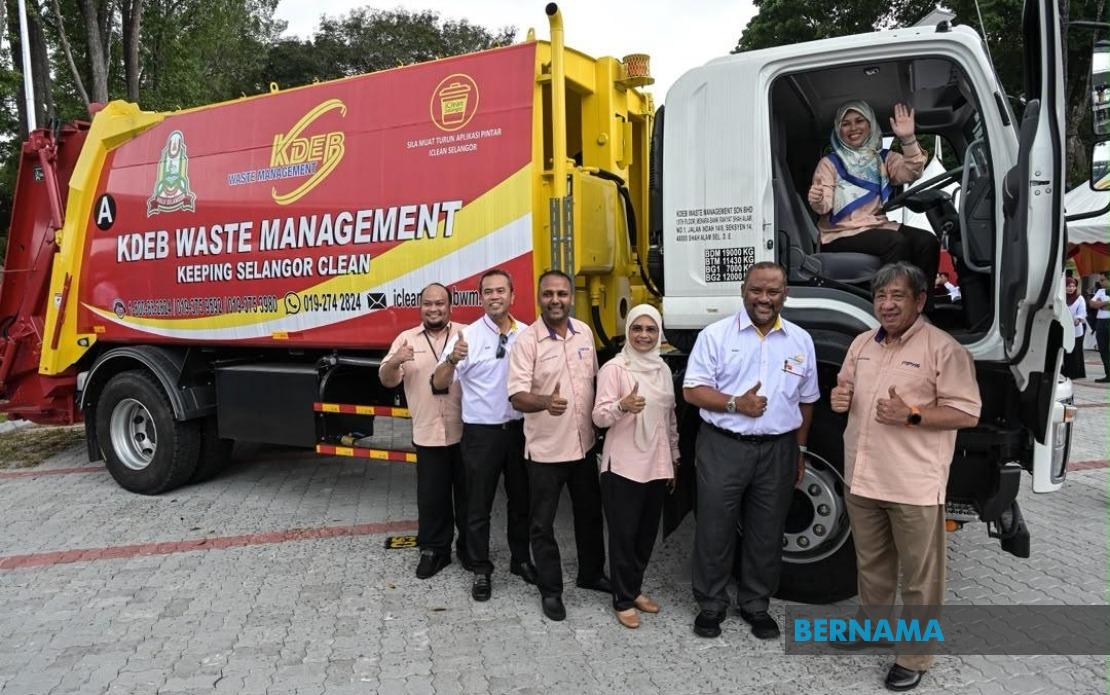
Hulu Selangor's domestic waste management infrastructure received a substantial upgrade this month when KDEB Waste Management (KDEBWM) commenced operations under a fresh seven-year contract with the local municipal authority, rolling out a fleet of 33 newly acquired compactor lorries designed to modernise rubbish collection across the district. The equipment handover marks the beginning of an expanded service agreement spanning until June 30, 2033, representing continuity and investment in regional waste handling following the company's initial seven-year tenure that concluded at the end of June.
The new vehicle fleet comprises a carefully selected mix of commercial trucks suited to the district's topography and collection demands. Among the 33 lorries are 18 Isuzu units, five Mitsubishi Fuso vehicles, and ten UD Trucks, each specified with contemporary technology aimed at enhancing operational efficiency while maintaining rigorous safety and environmental compliance standards throughout the collection cycle. According to KDEBWM managing director Datuk Ramli Mohd Tahir, this investment underscores the company's commitment to modernising waste services in the region, with the vehicles engineered to handle the substantial volume fluctuations characteristic of a growing municipal area.
The financial commitment underpinning this service expansion is substantial. The partnership between the municipal council and KDEBWM extends across seven years at a total value of RM117.2 million, translating to approximately RM16.7 million in annual expenditure. This investment reflects the council's recognition that effective waste management requires sustained capital deployment and professional operational standards, particularly as residential and commercial development accelerates throughout the Hulu Selangor district.
A notable indicator of service demand growth emerged from operational data spanning the previous contract period. During the initial seven years of KDEBWM's engagement, waste collection volumes ranged between 100 and 150 tonnes daily. This metric has now expanded considerably, with current operations processing between 150 and 250 tonnes per day, with projections suggesting daily volumes could eventually reach 300 tonnes as the district continues expanding. This trajectory reveals not merely population growth but shifting consumption patterns and increased commercial activity across the municipality, phenomena common throughout Malaysia's expanding suburban regions.
Central to the service transformation is the introduction of a door-to-door collection system commencing July 1, fundamentally altering how residents interact with waste disposal. Rather than relying on communal collection points or leach bins positioned along roadways, KDEBWM contractors now collect refuse directly from residential properties and commercial premises according to predetermined schedules. This approach reduces neighbourhood visual clutter and minimises vermin attraction, though it places corresponding responsibility on householders to prepare materials correctly.
To facilitate this transition, municipal authorities have established clear preparation protocols that residents must observe. Households must procure covered waste bins with minimum 120-litre capacity, clearly labelled with their house or lot number to prevent collection confusion in densely populated areas. All domestic waste requires placement within tied plastic garbage bags before being deposited into bins, with covers remaining sealed at all times to exclude rainwater and prevent stray animals from scattering refuse across properties. These specifications represent standard practice across developed municipalities but represent procedural evolution for communities previously reliant on less regimented collection systems.
The municipal council is simultaneously addressing industrial waste streams emanating from the small and medium enterprise sector throughout Hulu Selangor. Rather than incorporating business waste into domestic collection systems, the authority is coordinating with KDEBWM to ensure specialised concession panel companies handle SME waste streams according to industrial waste management standards. This segmentation prevents contamination of domestic waste streams and ensures hazardous or bulky commercial refuse receives appropriate processing, reflecting environmental consciousness increasingly demanded by Malaysian regulators and consumer expectations.
The service expansion carries implications extending beyond mere logistical convenience. Hulu Selangor's position within Selangor's broader development trajectory has witnessed significant urbanisation, with satellite communities sprouting around the district as metropolitan pressures encourage outward expansion. Upgrading waste infrastructure in such regions directly supports continued residential and commercial investment by assuring potential residents and businesses that municipal services meet contemporary standards. Failure to maintain waste systems contemporaneous with population growth often triggers community dissatisfaction and environmental degradation that subsequently undermines property values and economic vitality.
From a regional Southeast Asian perspective, Malaysia's municipal waste management evolving toward contractual professionalisation and technology-enhanced collection represents a development pathway that emerging economies throughout the region are progressively adopting. Countries grappling with rapid urbanisation increasingly recognise that waste management requires sustained investment, professional oversight, and resident participation rather than ad hoc municipal approaches. The Hulu Selangor model, wherein responsibility transfers to specialised private contractors operating under defined performance metrics and safety protocols, reflects international best practices increasingly adopted across developing Asian municipalities.
The transition to structured door-to-door collection also carries environmental ramifications. By minimising exposure of refuse to weather and wildlife, enclosed collection systems reduce organic decomposition in open air, thereby diminishing methane and odorous compound emissions at source. Systematic collection schedules permit more efficient routing, reducing fuel consumption and vehicle emissions compared to reactive collection responding to overflowing communal bins. Over the seven-year contract period, these incremental environmental improvements accumulate meaningfully, particularly across a district where thousands of households participate simultaneously.
Residents' reception of the new system will substantially influence whether the operational framework achieves its efficiency objectives. Compliance with preparation standards—using appropriate bin sizes, securing covers, containing waste within bags—directly determines whether collection operations proceed smoothly or encounter delays and contamination. Municipal authorities recognise this interdependence and have invested in resident communication campaigns explaining requirements and rationale. However, behavioural change typically progresses gradually, with full community adaptation requiring sustained reinforcement and occasional corrective interventions.
Moving forward, the sustainability of this arrangement depends upon KDEBWM maintaining service quality across the full seven-year period while Hulu Selangor continues its developmental trajectory. Population growth and increased waste volumes will test whether the 33-vehicle fleet remains adequately scaled or whether expansion becomes necessary. Similarly, technological advances in waste collection—including route optimisation algorithms and vehicle tracking systems—may eventually be incorporated to enhance efficiency further. The partnership's success will likely establish a template influencing how other Malaysian municipalities approach waste service contracting and technology integration.

